Finding
Time
So much
for my vow to post shorter travelogue pages more often. I get so
caught up in what I'm doing day after day that there just
doesn't seem to be time to sit down and write about it. The
trick and the challenge is to find the time.
Time
itself is different on the road than it is at home. Albert
Einstein proved time is relative, and although he was relating
it to objects in motion the notion rings equally true for the
earthbound traveler. Time slows down when you travel. It's
fuller. Unlike the mind-numbing repetition of normal home life,
each day traveling is a succession of new experiences, lots of
them. The senses have to work overtime observing, assessing,
categorizing, maneuvering, recording and filing each one of
them. Constant newness demands your full attention just to
navigate through it. This tends to keep your mind in the
"here and now," especially if you're seeing Alaska for
the first time.
This is
how it is for me. Most of the time I'm living moment to moment,
as spontaneous as combustion, heading off on sudden tangents and
absorbing new input constantly until I am giddy with it. Bear
with me if I get distracted and don't write about it so often.
Eleven
Days (seems like a month)
I left
Molly Leary's house and hid out in an eerie, mist-bound mountain
pass north of Palmer to give the 4th of July weekend traffic
time to get wherever it was going. On Saturday the 3rd, I
emerged and headed for the one place I was sure would be empty.
Sure
enough, the city of Anchorage was largely deserted. Everyone who
could get away had gotten. I spent the day seeing some sights,
getting online at an Internet cafe, and picking up a few
supplies. There was a large flea market downtown, where booths
selling native art and crafts vied with food vendors featuring
such local delicacies as buffalo burgers and caribou hot dogs.
Anchorage is Alaska's largest city, but it's not big by Lower 48
standards. Population about 270,000, it boasts a couple of
museums and theaters, a few high-rise hotels and some office
buildings, but most of it is low profile. Still, there are
stores and businesses of every description, which become less
touristy and more useful as you move away from the city center.
|
After
spending a quiet night camped in the parking lot of a
huge shopping plaza along with a dozen other RV's, I
arose early and headed south towards the Kenai
Peninsula. I didn't have to go very far to find my
next Alaskan adventure.
|
|
Girdwood
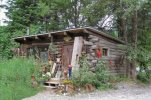 |
Hardly
an hour out of Anchorage I exited the two-lane highway
for a tiny town that The Rough Guide to Alaska
describes as being "popular with neo-hippies,
outdoor enthusiasts and escapees from Anchorage."
Well, that seemed to sum me up pretty well, so I went
to check it out.
|
Girdwood
village used to be on the shores of the Turnagain Arm, a 45-mile
saltwater tendril of Cook Inlet that boasts the second greatest
tidal range in North America, something like 39 feet! However,
the entire town sank in the great earthquake of 1964 and had to
be abandoned. It was rebuilt a few miles inland alongside a
broad, shallow river, surrounded on three sides by glacier-clad
mountains. It seems like a quiet place off the main tourist
route.
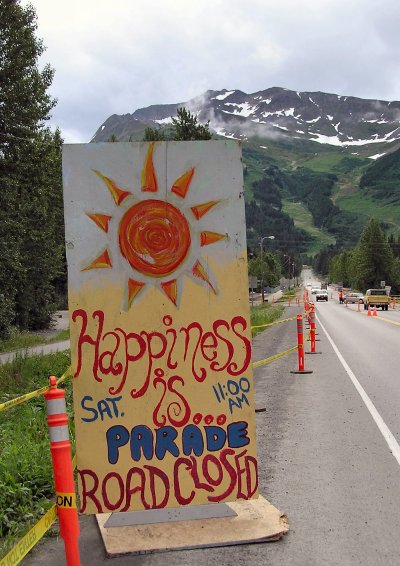
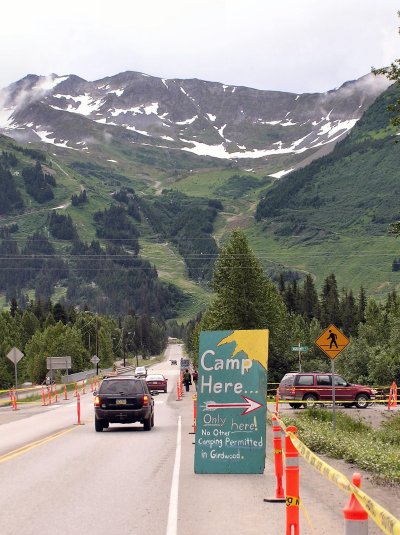
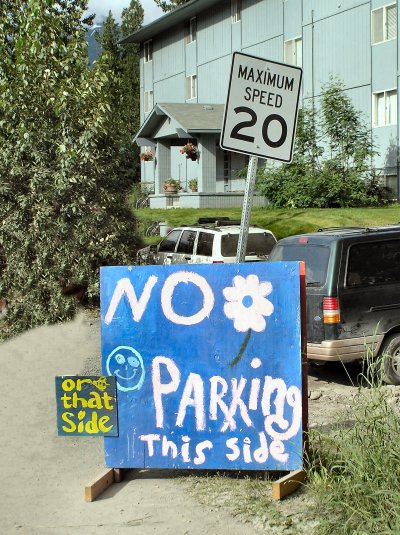
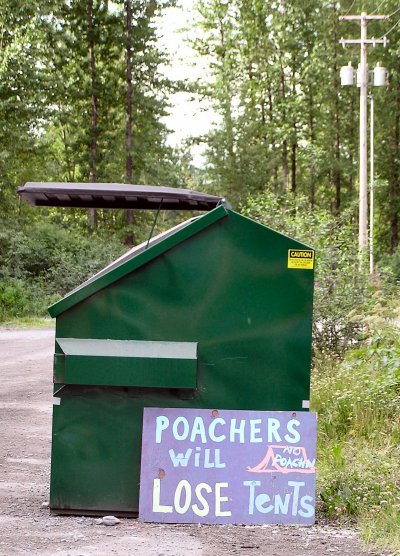
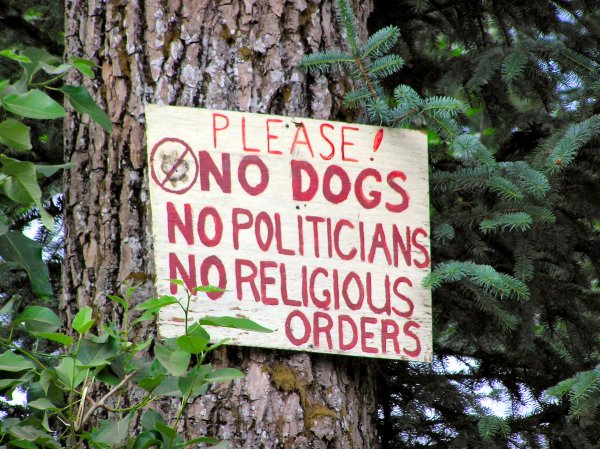
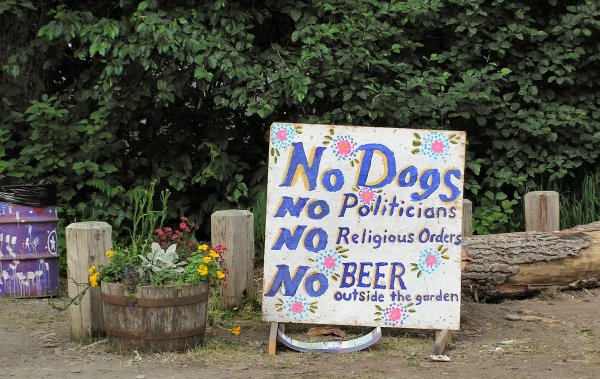
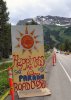
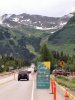
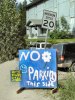
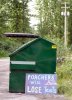
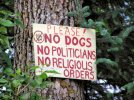
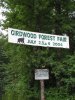
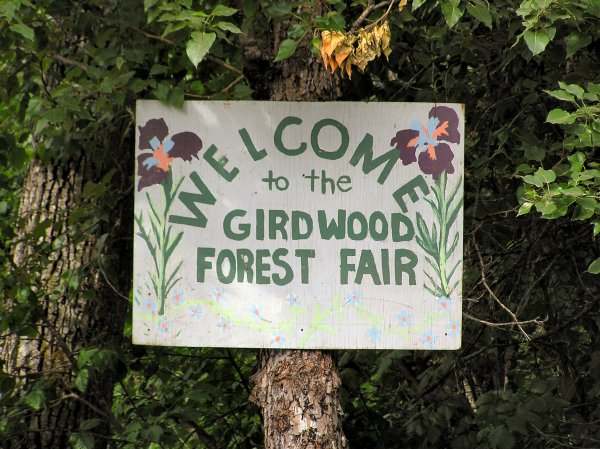
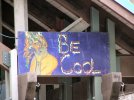
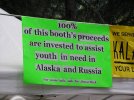
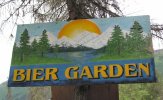
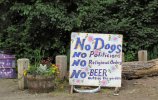
My first
indication that something unusual was happening in Girdwood was
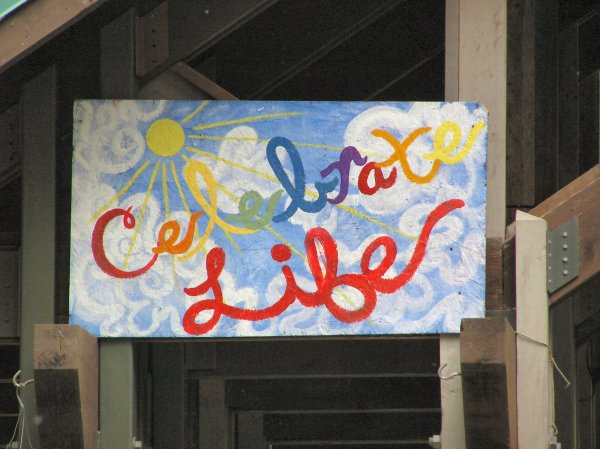
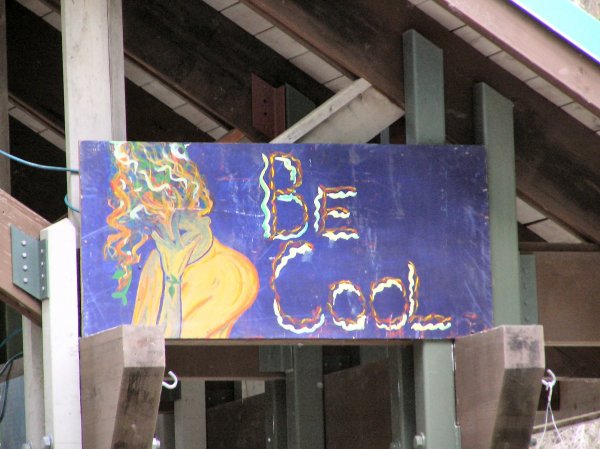
the appearance of hand-painted signs, lots of them. It didn't
take long to figure out that this little town was celebrating
the holiday weekend in a big way.

|
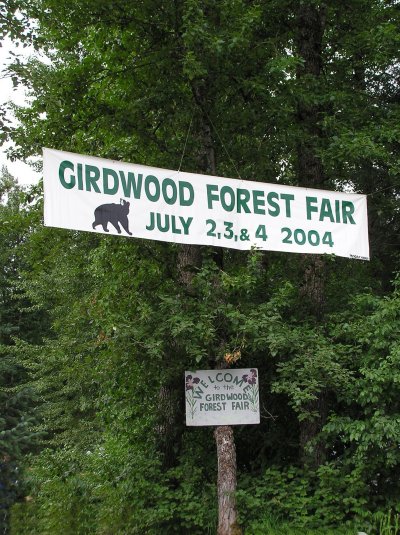
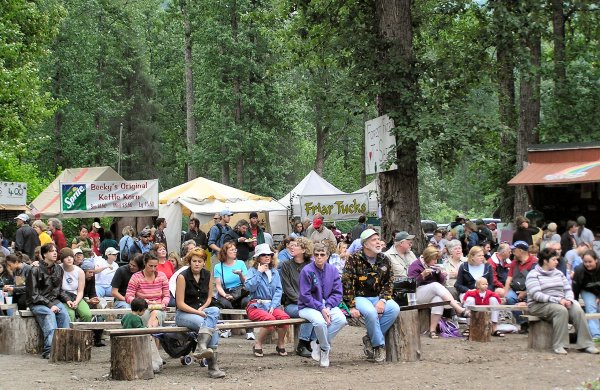
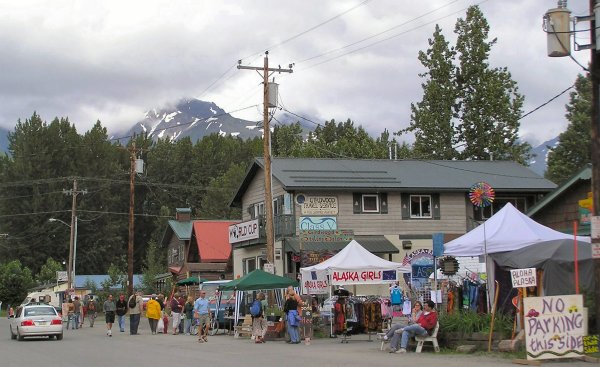
Girdwood's
annual Forest Fair is apparently one of Alaska's
bigger summer events. Several thousand people
converged on the hamlet for the weekend, many from as
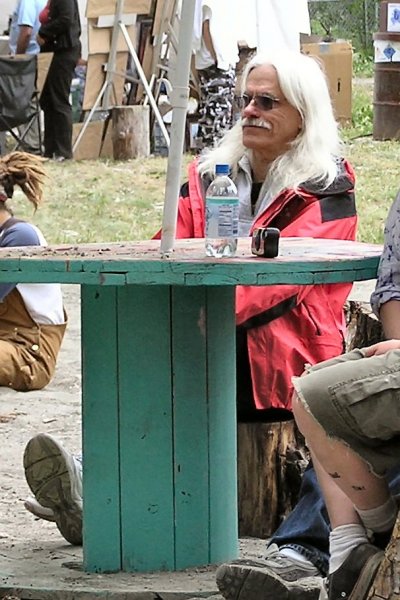
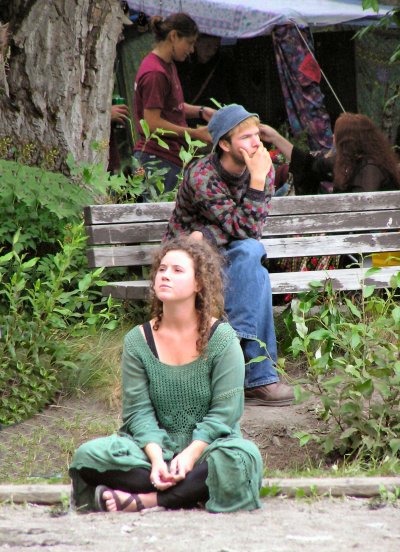
far away as Fairbanks. A lot of them were young,
"Dead Head" type hippies. Even though I can
no longer hangout with hippies - they being too young
and I being too... mature - I still like seeing them.
They remind me of my own long-haired bohemian days.
Today's batch seems more inclined towards body
piercing & tattoos and less interested in world
peace, free love and mind-expanding drugs. Oh, well,
that's their loss.
|
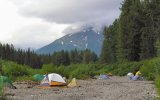 |
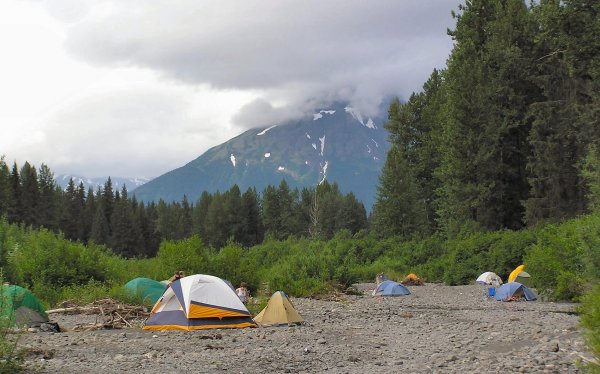
They
pitched their small tents by the score along the broad, rocky
riverbed & banks, and throughout the adjacent woods. I opted
to commute from the nearby National Forest, since I was hearing
that the river parties went on much later into the night than I
was likely to appreciate.
It was
still early Sunday morning when I arrived in Girdwood. The
parties had ended hours ago, and the Forest Festival wouldn't
get going until later, so I parked out at the edge of town,
launched my mountain bike, and went exploring. After checking
out the two-block town center, the quiet festival grounds and
the nearby river campsites & trails, I headed out of town
and picked up a narrow footpath that ran into the forest proper,
following a noisy stream. There were fewer tents out this way,
but some were tucked into the dense underbrush and along the
banks of the stream.
|
Abruptly
the trail ended in a clearing populated by a loose
group of college age kids, most of whom weren't quite
awake or recovered yet from the previous night's
revelries. One fellow who was up and about greeted me
in a friendly way and invited me to join him for
coffee, which was brewing on the campfire. So I leaned
my mountain bike against a tree and pulled up a stump.
We got to talking and I wound up visiting for an hour
or two. As others awoke, they mostly stumbled around
zombie-like in search of something to kick start their
day, but a few turned out to be as amiable and
intelligent as my original host and we all had a
pretty good time exchanging stories and information.
|
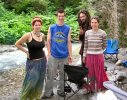 |
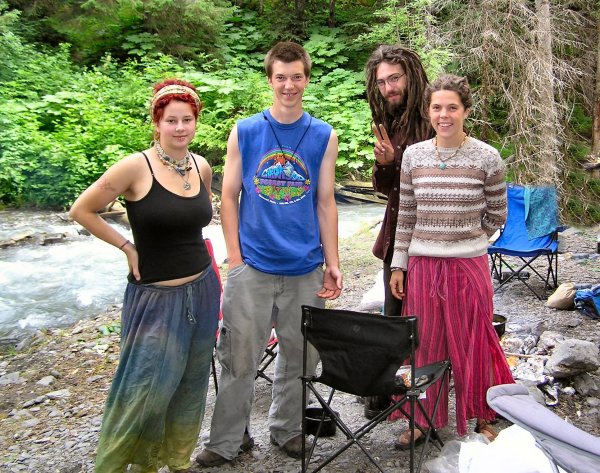
My
newfound friend, Eli (in the blue T-shirt), is in his final year
at the University of Alaska in Fairbanks. A bright, personable
fellow, he hosts his own radio program on the college station
and, like most kids in Alaska, has grown up with a working
knowledge of the great outdoors. Before I left that morning to
return to the festival in town, Eli gave me his contact
information and offered to show me around when I get to
Fairbanks. I had made my first new friend in Alaska.
As a
parting gift, one of the group gave me a homemade brownie, which
turned out to be every bit as good as they promised it would be,
enhancing my Independence Day with a mild, comfortable glow that
lasted well into the late afternoon. Some hippies never grow up.
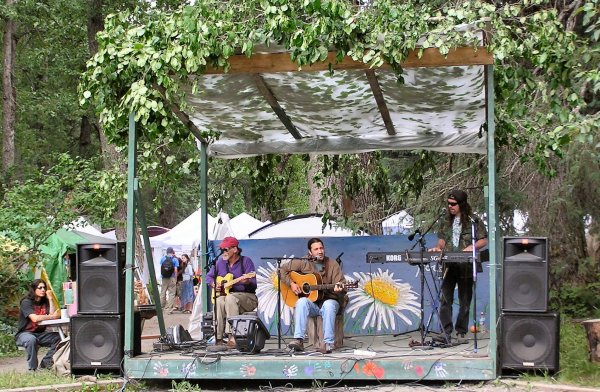
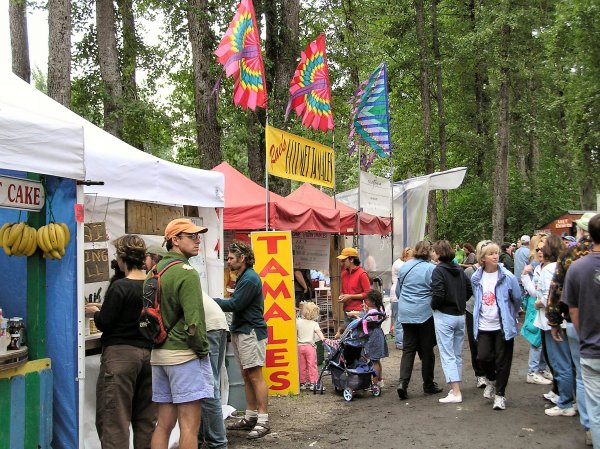
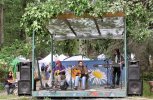
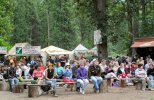
The
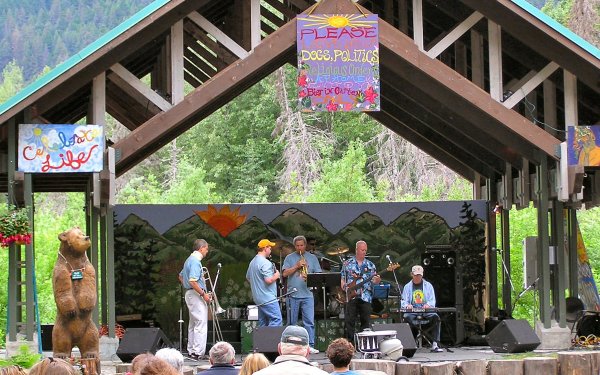
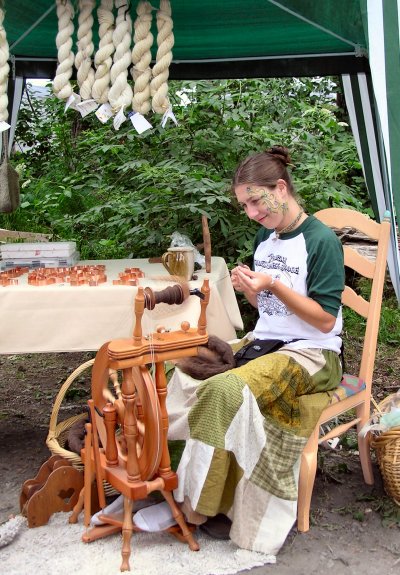
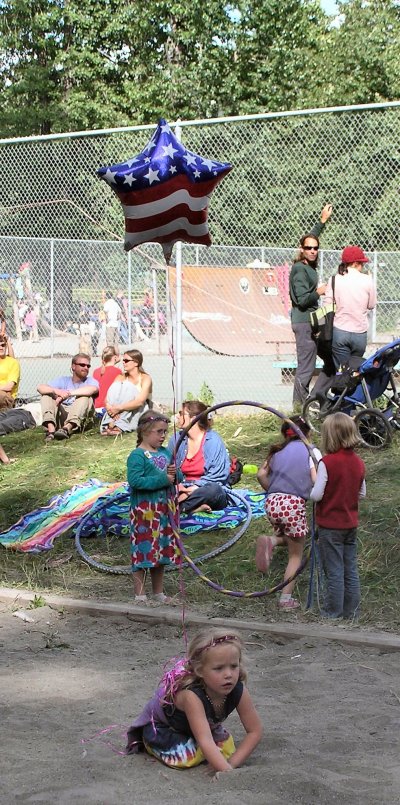
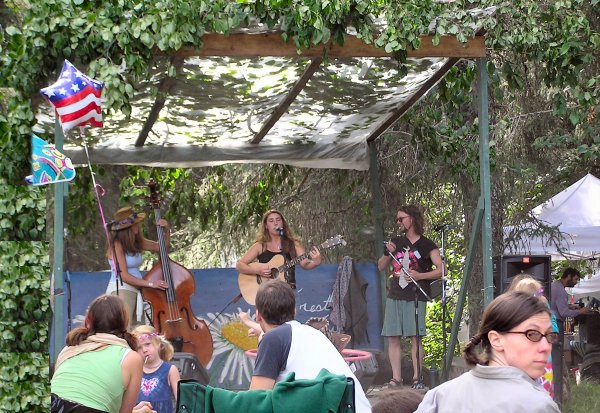
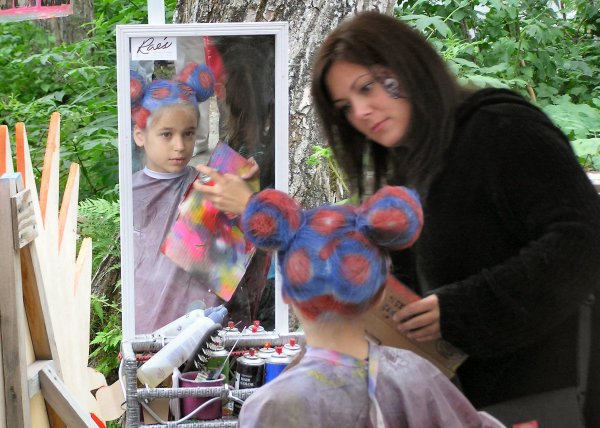
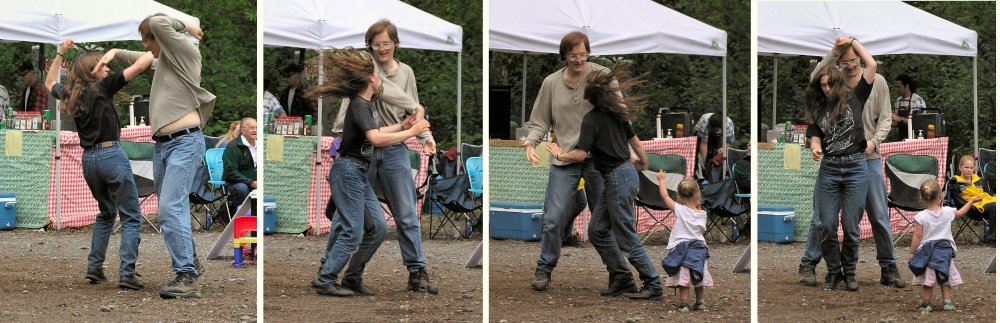
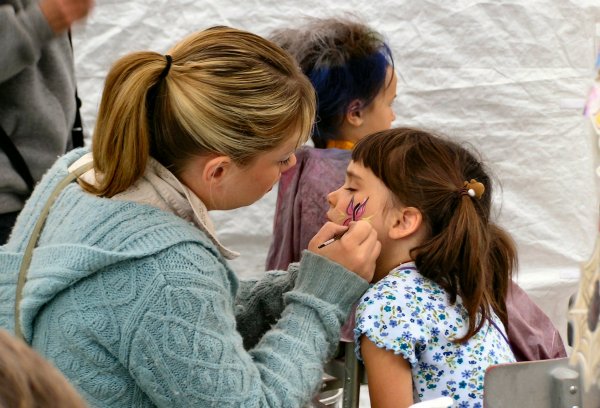
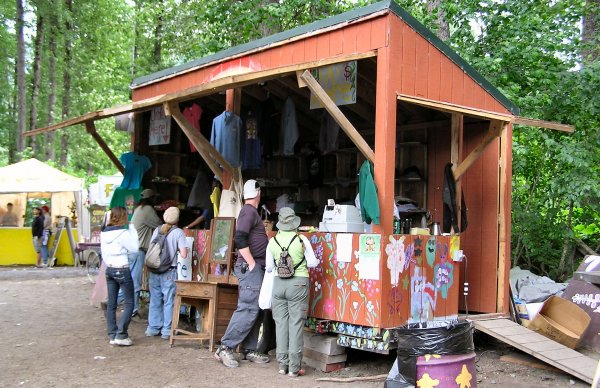
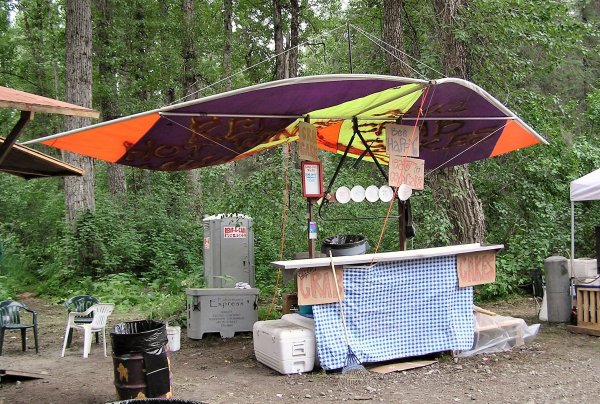
festival was upbeat and fun. Two music stages provided non-stop
entertainment, some of it very good, and there were enough
interesting art, craft, food and vendor booths to keep the crowd
continually flowing along the various paths that meandered
through the fairgrounds, which was spread over five acres or so
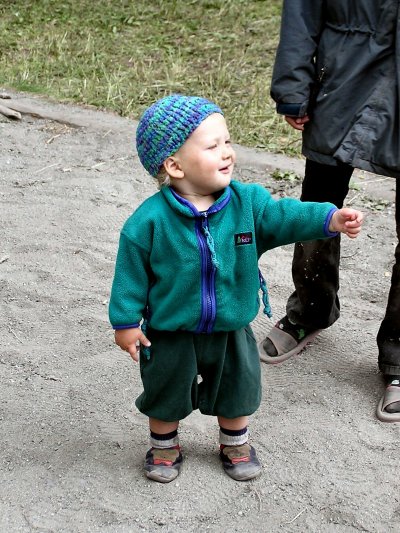
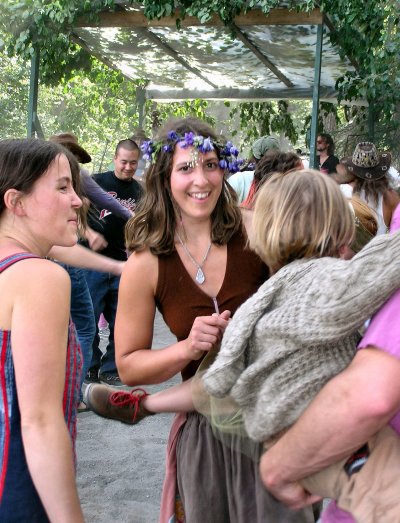
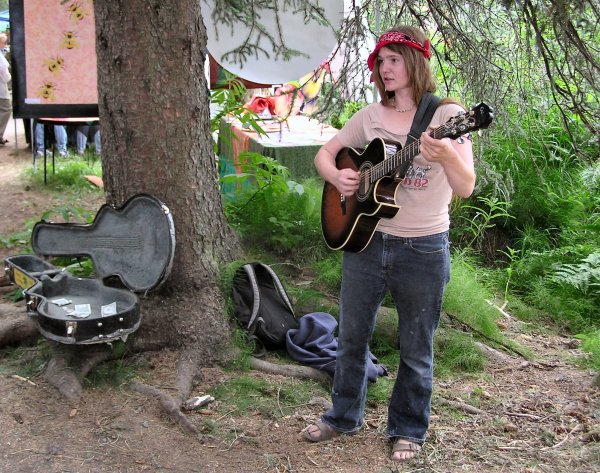
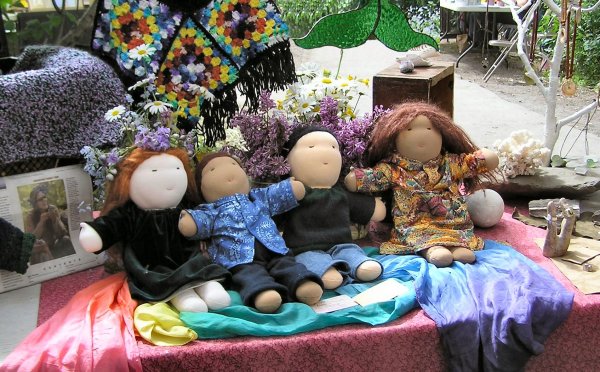
of a wooded park on the edge of town. For a look around, click
on these thumbnail photos to enlarge them:
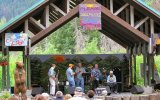

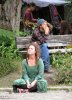


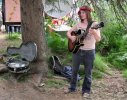
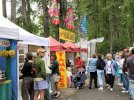
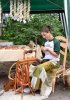

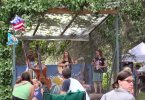
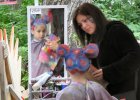
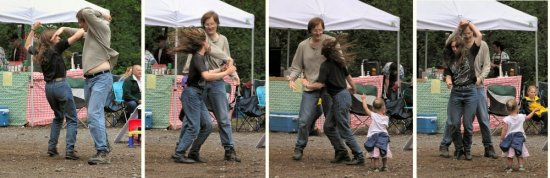

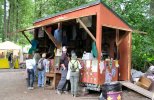
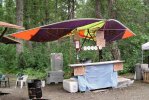
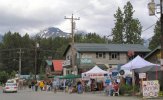
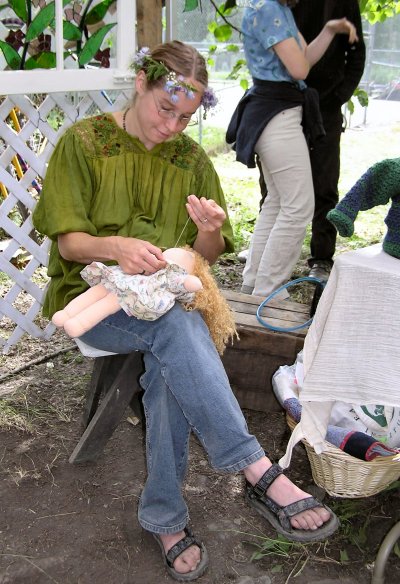
(Sara, this
doll maker reminded me of you when you were her age.)
.
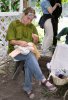

|
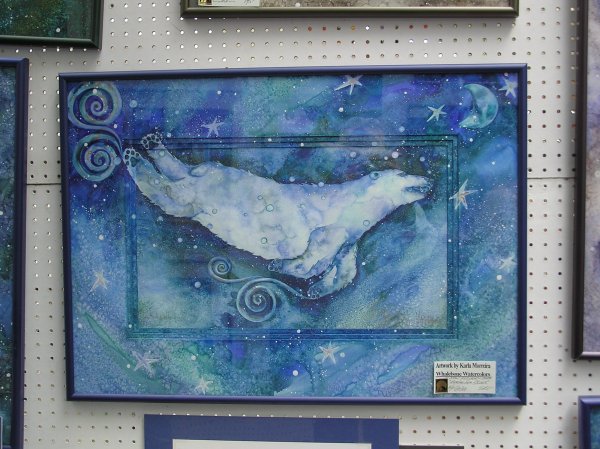
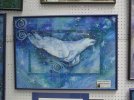
I
don't usually buy things at fairs, but there was an
artist at this one whose work caught my eye. One
painting in particular stuck in my mind all afternoon
and so I finally bought it for my granddaughter
Gabrielle's 1st-birthday present.
|


|
Showdown
at Girdwood School
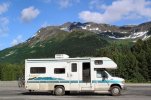
I had left
my camper in a vast open lot adjacent to the Girdwood school. As
I peddled my bike down the road towards it, I passed a scruffy,
long-haired, bearded man walking in the same direction with the
uneven shuffle of a drunk.
 |
I
got to my RV, put the bike up on the stern rack, and
was rustling around in the galley when the same drunk
crossed the lot to a pickup truck parked off in a
corner, up against some bushes. He looked like he had
come in from the bush for the festival. Soon I could
see him through the windshield of the truck's cab,
sitting by himself, probably sleeping off his bender I
thought.
|
Then
something unexpected happened, completely out of character with
the fine, fun day I'd been enjoying. The drunk got out of his
truck and came loping towards my van. I went and stood in the
doorway to greet him and see what he wanted. When he got within
10 or 15 yards he stopped, squared his shoulders, and started
shouting in the slurred garble of someone seriously wasted on
alcohol. "I want you to get the fuck out of my view, goddam
it. Get the fuck out of here! Go!," he cried, flailing with
one arm as if to point the way. I was taken by surprise, to say
the least. I'd seen nothing up 'til then that even hinted of
this great anger he was now venting. Before I even had a chance
to think of a reply, he lurched a few more steps towards me and
yelled, "I said get the fuck out of here. Now! F'you don't
think I'm fuckin' serious, I have a .45 in my truck that'll show
you I'm fuckin' serious. You want to fuck with me? Huh? I'll
show you fuck with my .45. I'm not fuckin' with you." With
that, he turned and began to zigzag back towards his pickup
truck, talking to himself as he went.
Well, I
have a gun, too, but I sure didn't want to get into a gunfight
with this drunk over a parking space. Whatever his issues were,
he was plainly mean, mad at the world and way beyond reasonable
discourse, and I had no reason to doubt he had a gun and that
he'd probably use it. "Hey," I yelled at him and he
spun around, glaring." "Take it easy, man, I'm moving.
No problem. I'm outta' here. You take it easy, now."
I think he
mumbled something like, "Fuckin' right. You think I'm
fuckin' with you? I'm not fuckin' around..."
Feeling
that discretion was the better part of survival, if not valor, I
fired up my engine, drove out of the big lot, and found a pretty
spot a little ways down the road to park and cook my supper. But
my adrenal gland had been triggered by the threat of violence
and I confess there was a part of me that sorely wanted to grab
my shotgun and go back there. Stupid machismo, I know, and I
pushed it aside, but had he caught me in a different mood (I'd
had such a pleasant day until then), I can see how someone could
get shot over nothing at all. Anyway, I kept my 12-gauge close
at hand the rest of that evening, leaning by the door. It's not
everyday someone says their going to shoot me and means it.
The
incident served to remind me that there is a wildness to Alaska,
that some people still live by their own rules here, much like
the "old West," and that bears might not be the only
danger to watch out for.
The Forest
Festival had ended that 4th of July evening. By the end of the
next day, the vendors and most of the visiting hordes had
departed, leaving Girdwood to its habitually sleepy existence. I
decided to stick around for a few days and see the surrounding
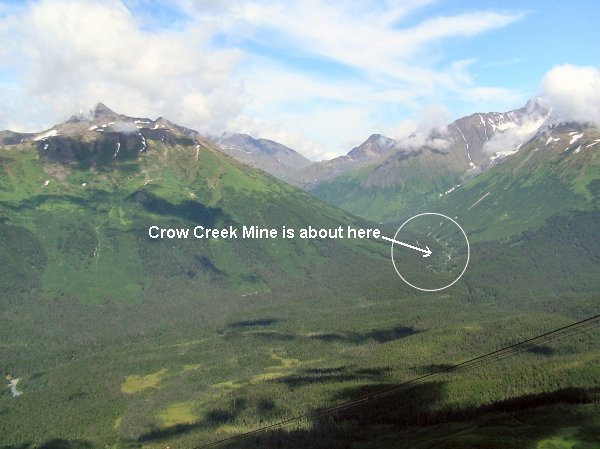
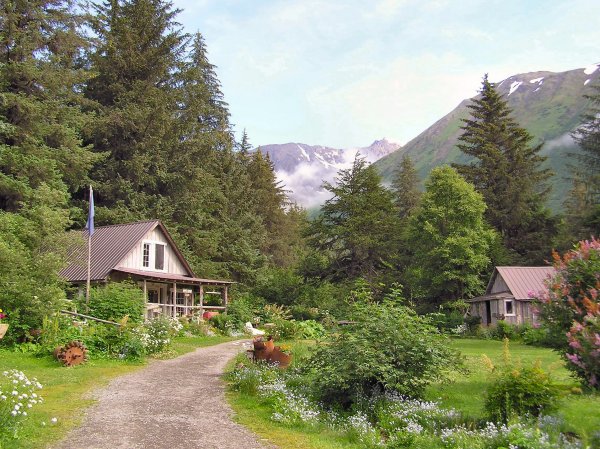
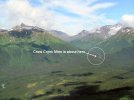
countryside, beginning with a not-quite-abandoned gold mine a
few miles up the mountain valley.
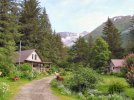 |
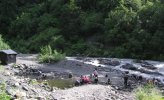
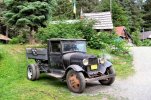
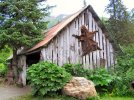
Crow
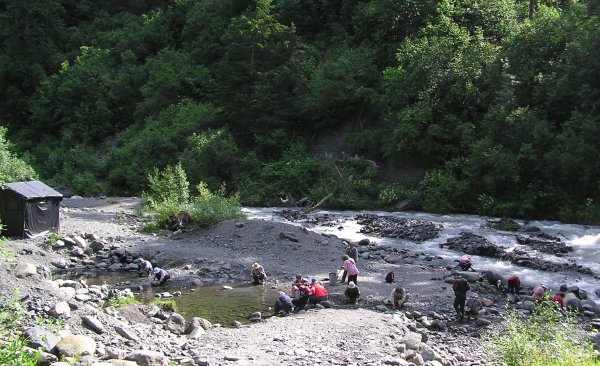
Creek Mine wasn't really a mine at all, but a big
sluicing operation. Today it's a minor tourist
attraction. Still, people regularly pull gold nuggets
out of the river by panning (after paying the current
owner a few dollars a day for the privilege).
A
small group of Japanese tourists were panning for gold
in the river when I arrived, laughing and chattering
excitedly, smoking cigarettes and snapping photos of
each other. Several of them pulled small bits of
gold from their pans.
In
its heyday as a professional operation they say this
place yielded 700 ounces of gold a month. At today's
prices of $400 per, that would amount to $280,000 a
month. And what a beautiful setting in which to work!
I'm beginning to see why someone would want to be a
prospector.
|
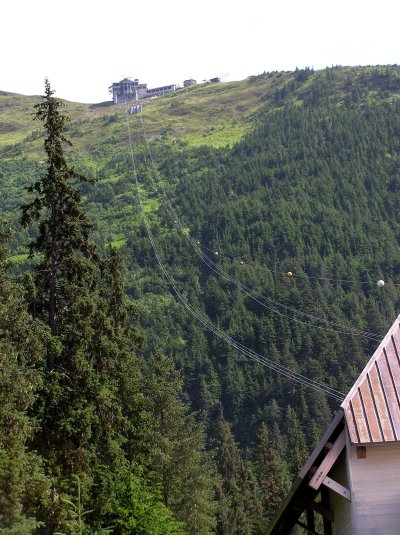
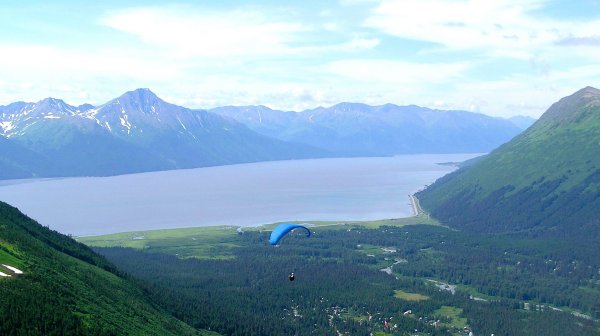
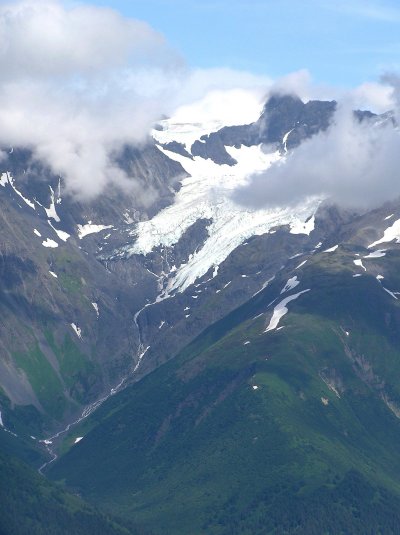
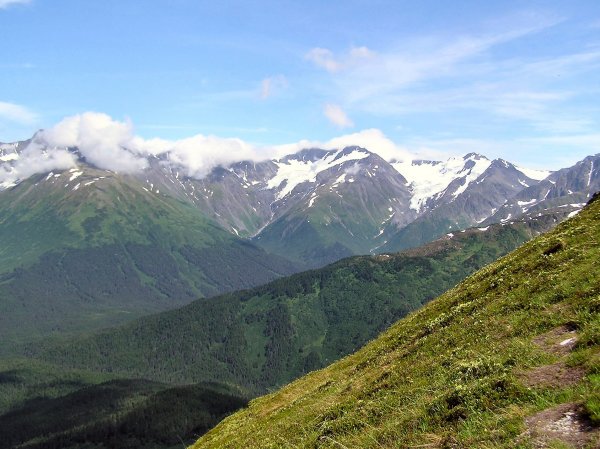
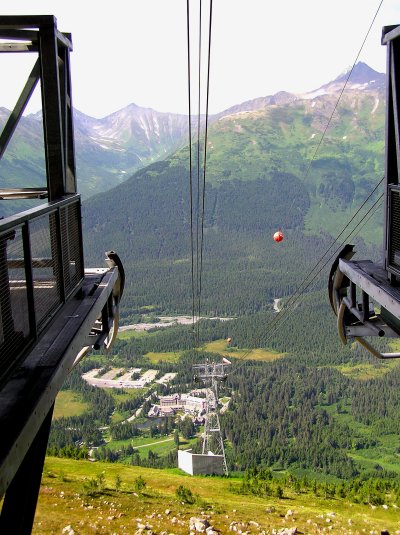
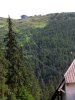
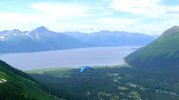
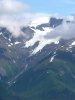
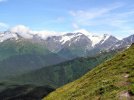
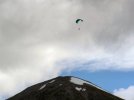
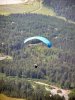
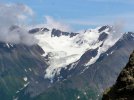
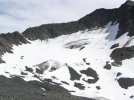
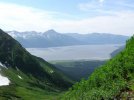
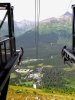
Girdwood's
main tourist draw is a big ski resort. It's closed for the
summer, but they keep a tram operating and I rode it up to catch
the view, hike around a bit and contemplate my next move.

Seward
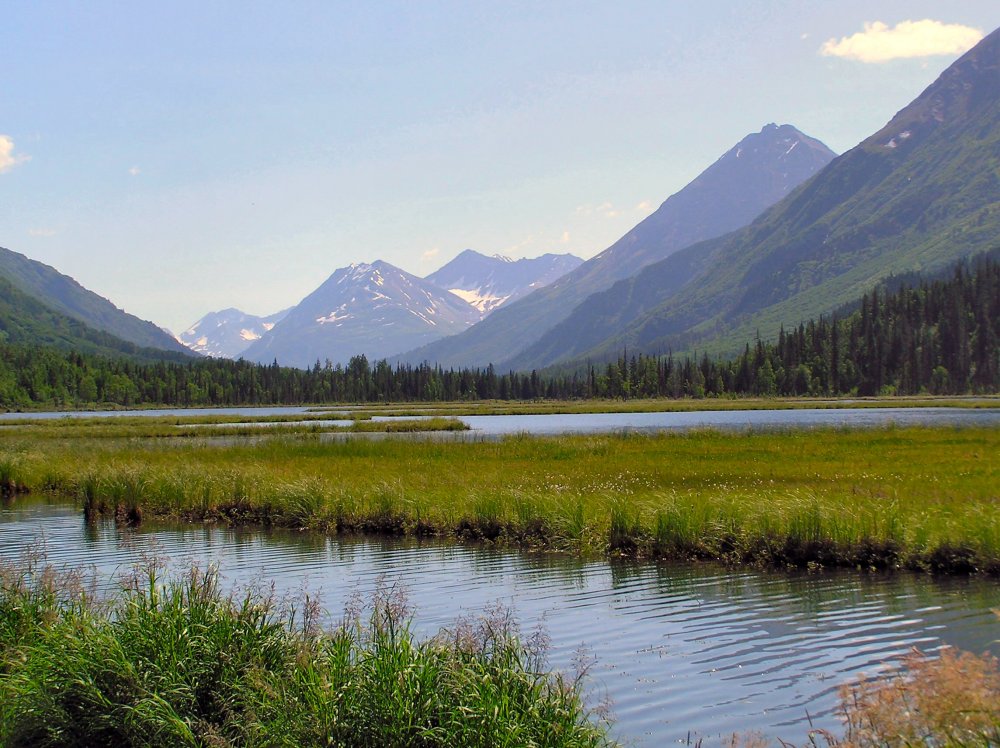
The road
from Girdwood led me south to Seward, and what a road it was!
The Seward Highway weaves gracefully through majestic mountains
and lush valleys. Signs warn of avalanches in the winter. Dirt
roads and hiking trails strike off into the surrounding
countryside, affording rough access.
 |
The
town of Seward is perched at the head of a vast fjord
that was carved out by glaciers in the last ice age
and then filled in by the ocean. The body of water
therein contained is called Resurrection Bay in honor
of its fortuitous discovery by some European mariner
on a stormy Easter Sunday long ago.
|
For me
Seward was a fortuitous discovery of another kind, enticing me
to stick around days longer than I had planed. The town itself
is home to about 3500 residents plus an endless flow of tourists
this time of year. It's pleasant and low-key and I got around
easily by bike, leaving my RV at the edge of town each morning.
Everywhere
you look it's stunningly beautiful. Across the fjord a
procession of lofty, snow-speckled, green-skirted mountains
march proudly out towards the ocean, while the town is flanked
by a bald mountain sporting a powerful waterfall far up it's
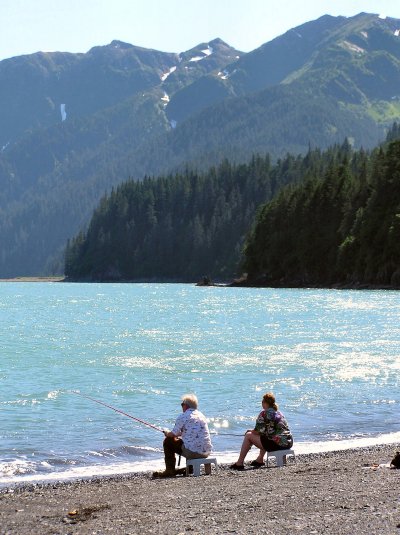
steep slope. South of town a stony beach stretches out to
forested cliffs, while a short drive north and east leads to a
readily accessible glacier. I hardly knew where to start!
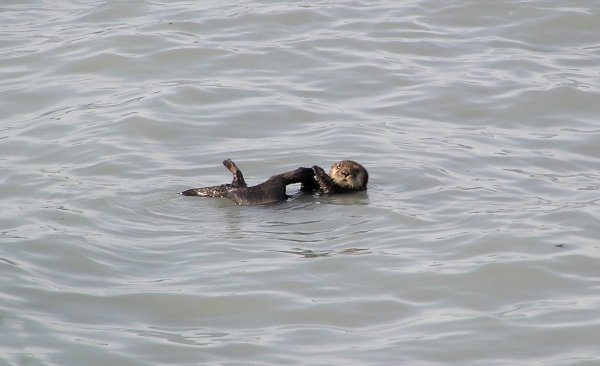
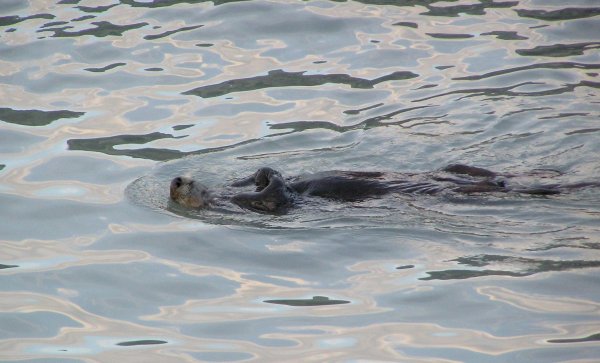
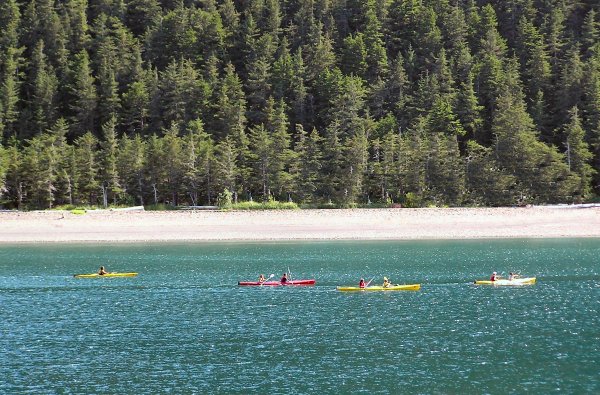
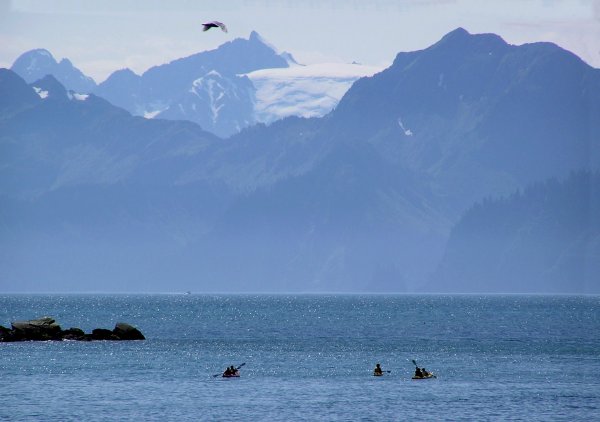
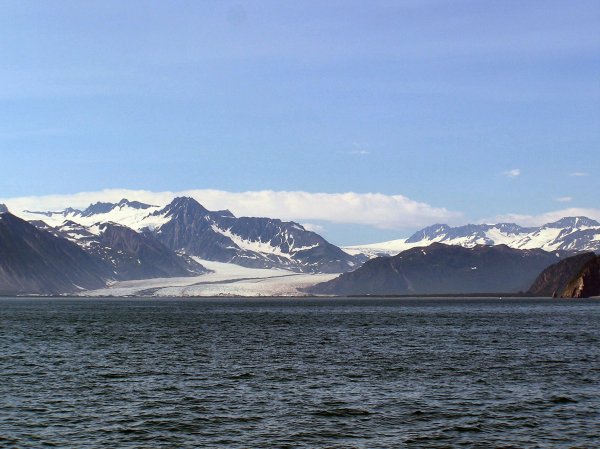
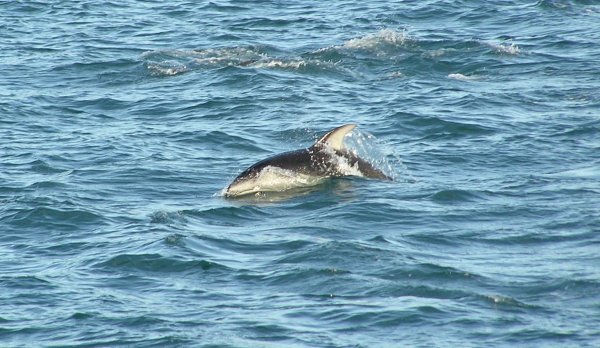
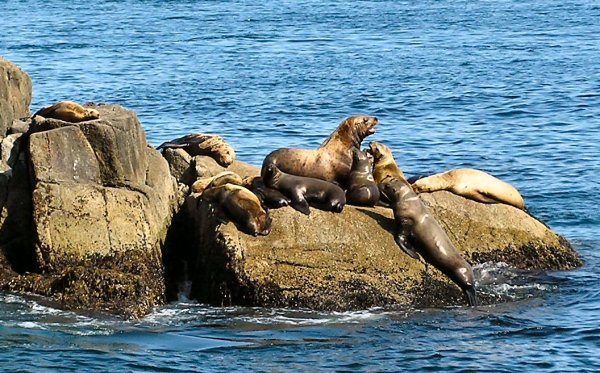
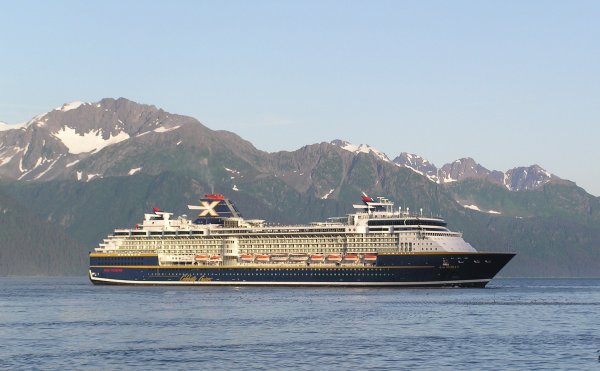
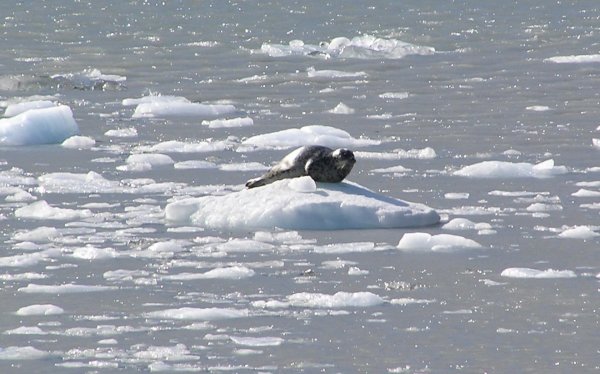
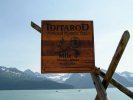
There is a
fleet of eco-tour vessels based in Seward, taking tourists out
to see the abundant marine wildlife and a few of the 35 glaciers
in the Kenai Fjord National Park. I decided to query some of
them about skippering a boat here next summer. I figure by that
time I will have been traveling pretty much non-stop for a year
and it might be fun to spend a few months earning a little money
and getting to know this awesome place as a summer resident
rather than as a tourist. I found most of the big passenger
vessel operations have captains that stick around year after
year, plus a waiting list of hopeful mates. An opening at one of
these outfits is a long shot. However, I was offered a job
running a 24-passenger schooner that'll be arriving in the
spring. I may even get hired to deliver it from Seattle to
Seward in April, which would really be cool. We'll see. I'll be
discussing it some more with the owners.
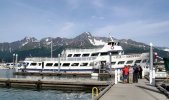 |
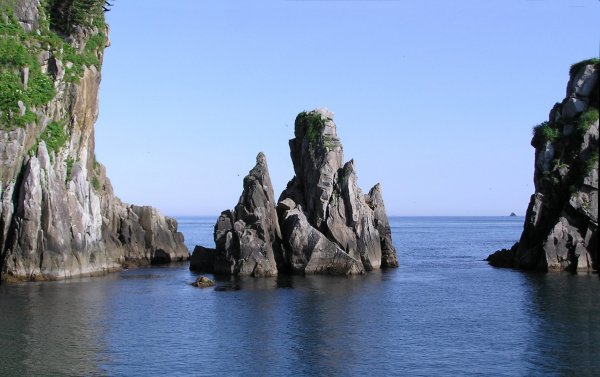
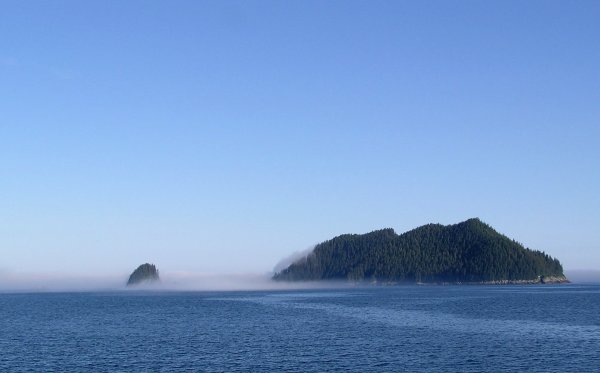
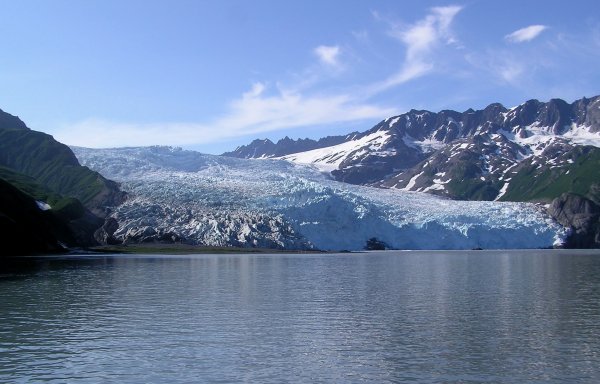
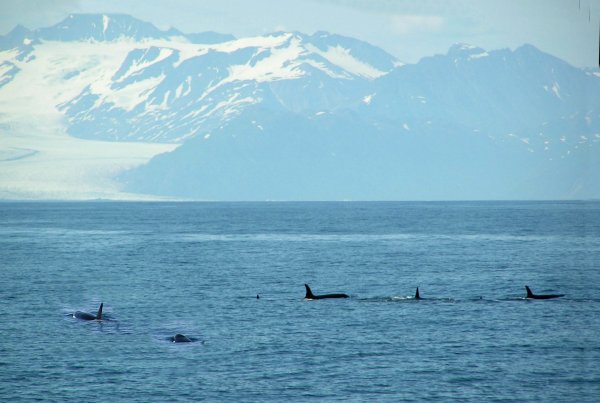
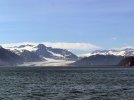
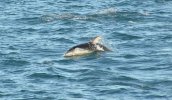
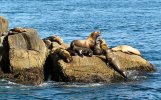
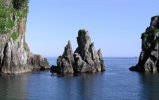
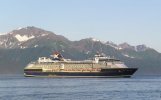
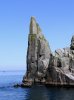
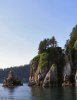
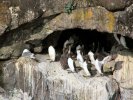
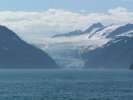
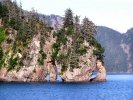
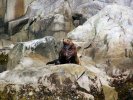
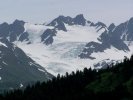
Even
if it accomplished nothing else, talking to the
charter companies in town did get me comped on two of
the big tour boats, saving me a couple of hundred
dollars and allowing me to see the sights for free
from the captain's wheelhouse, where I was a
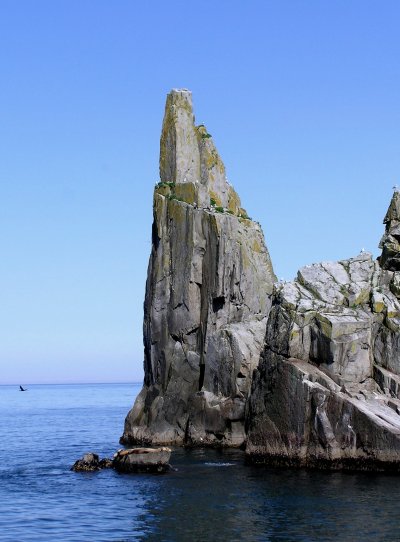
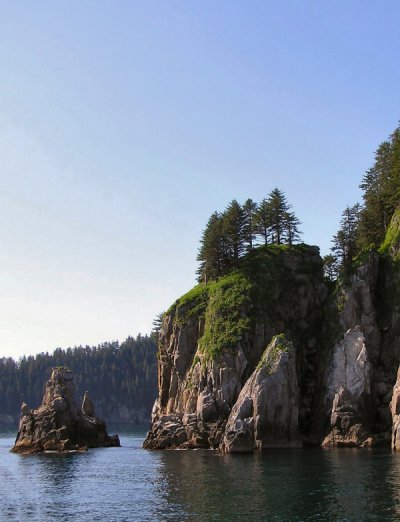
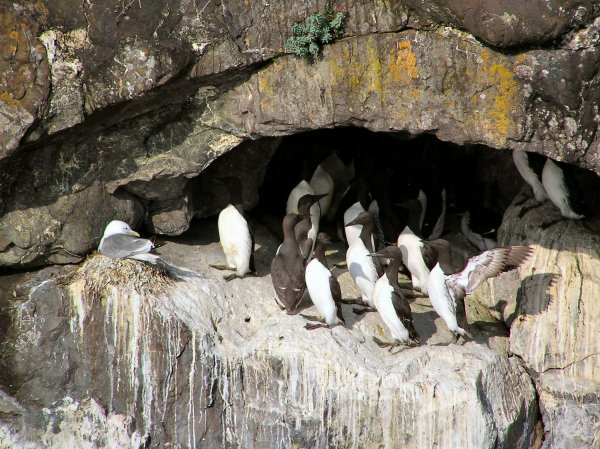
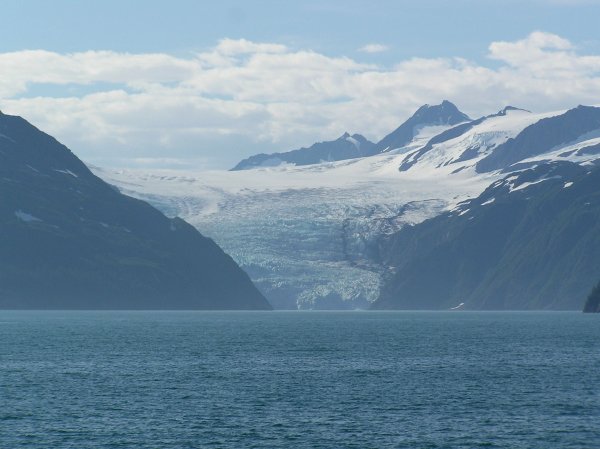
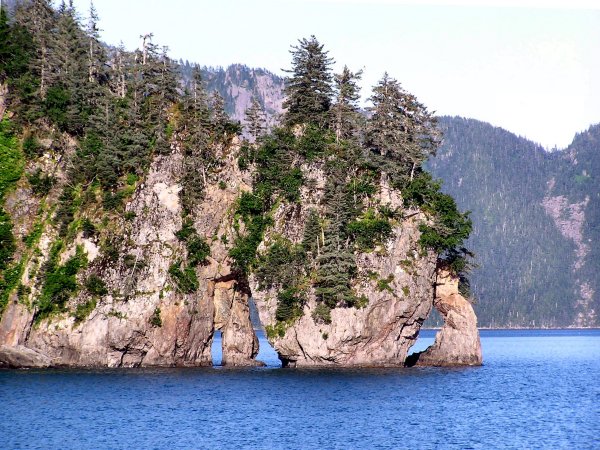
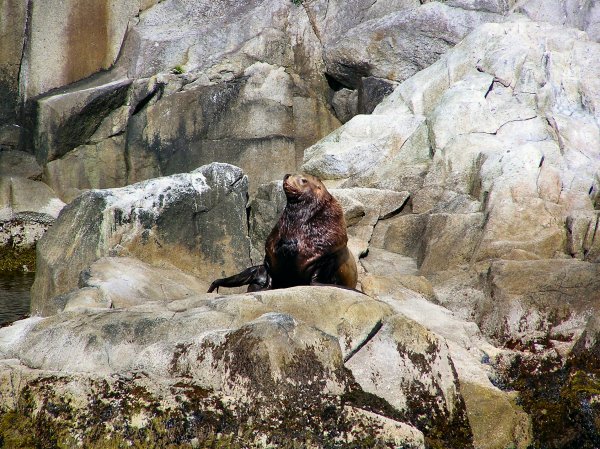
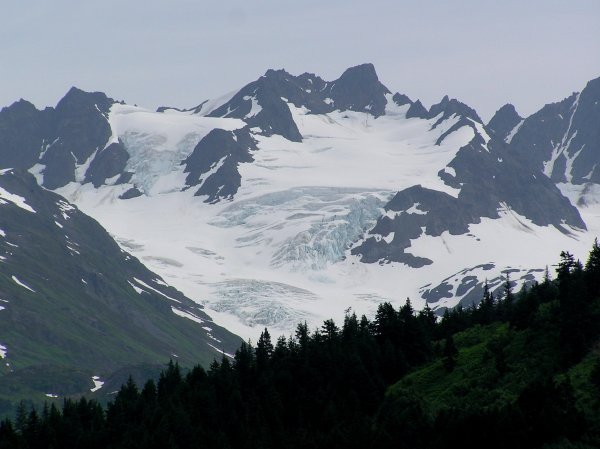
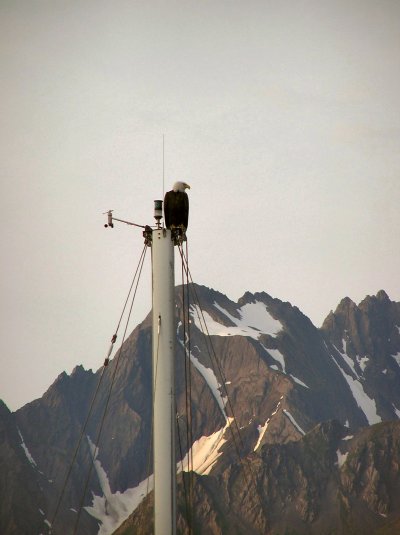
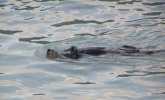
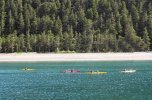
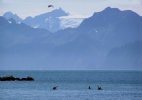
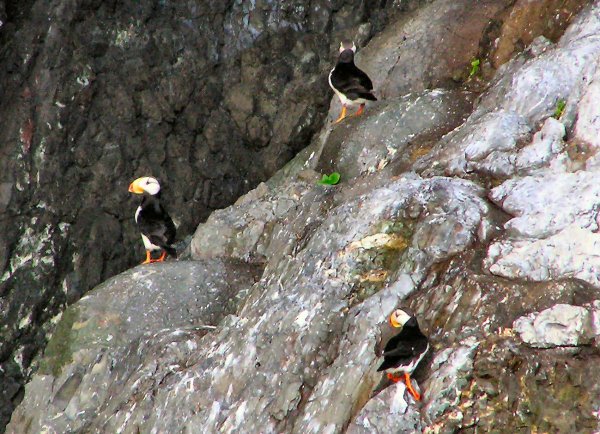
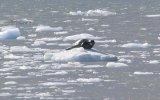
professional guest. And what sights! Check these out:
|
(click on
the thumbnails to enlarge them)


|
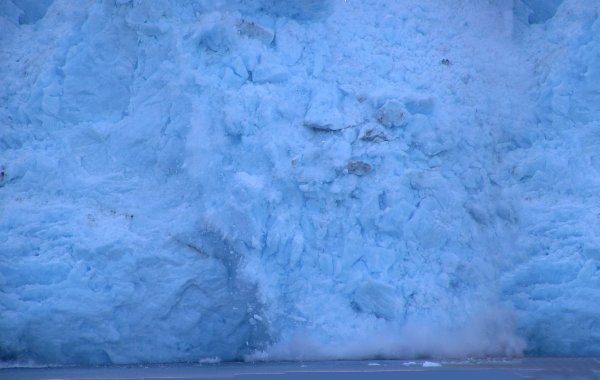
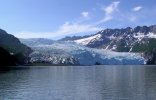
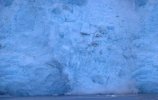
The
grand finale of the second cruise was a visit to a
calving tidewater glacier. The skipper shut off the
engines and we drifted for a while close off the
glacier's face. From inside the ice came thunderous
creaks, cracks and groans - sometimes it boomed like
canon fire! - as the giant mass heaved, buckled and
shifted under its own enormous weight.
|
 |
We waited 20 minutes
before a section of its face finally, suddenly broke away with
an angry rumble and plummeted into the ice-strewn sea. I've seen
films of glaciers calving, but it was much more dramatic seeing
it in person for the first time.
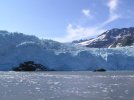
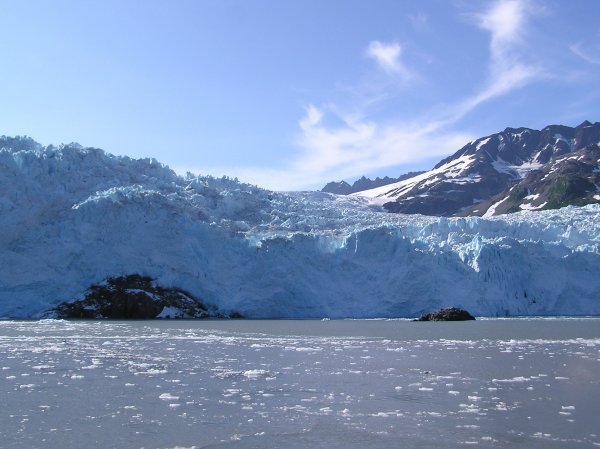
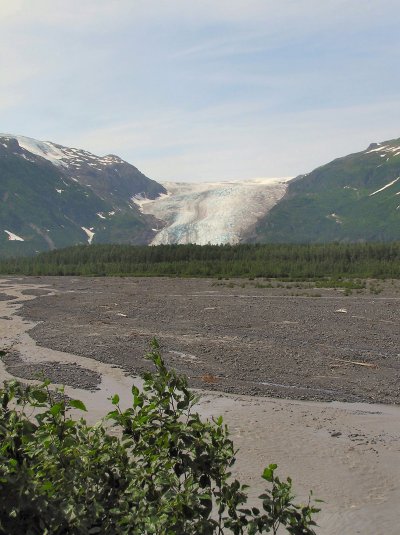
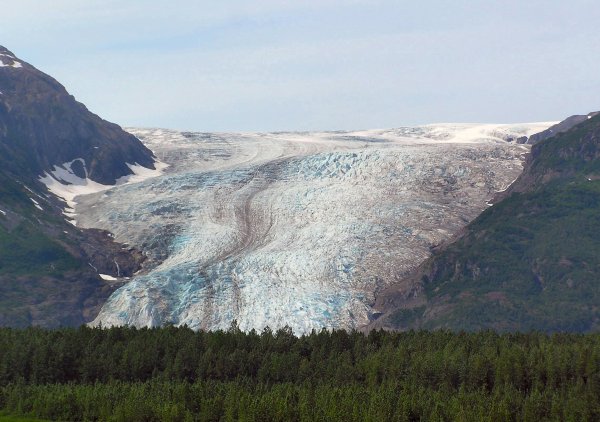
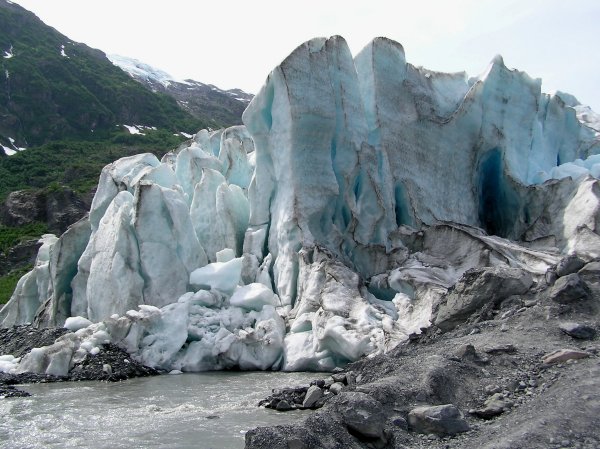
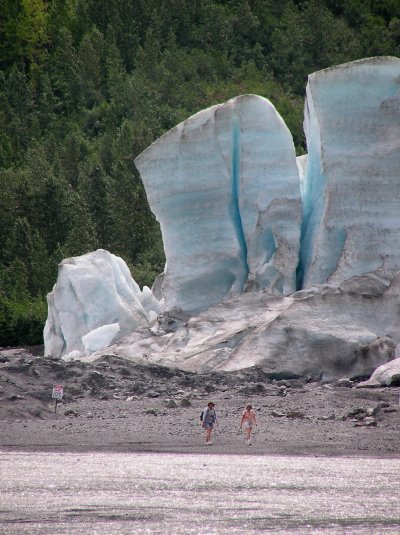
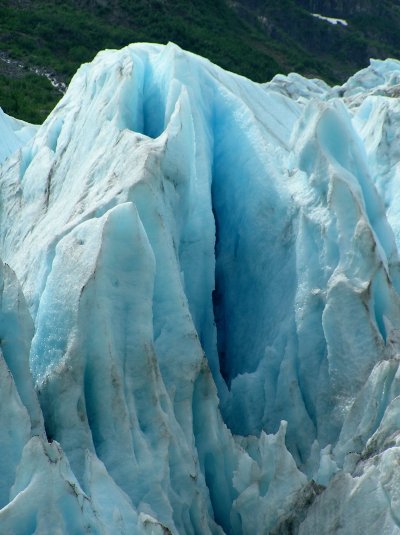
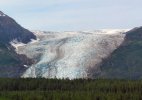
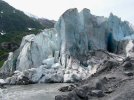
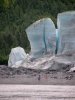
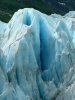
The glacier I mentioned
earlier that's northeast of Seward wasn't too shabby either. I
drove out there the next day and was able to hike right up to
it's base:
|
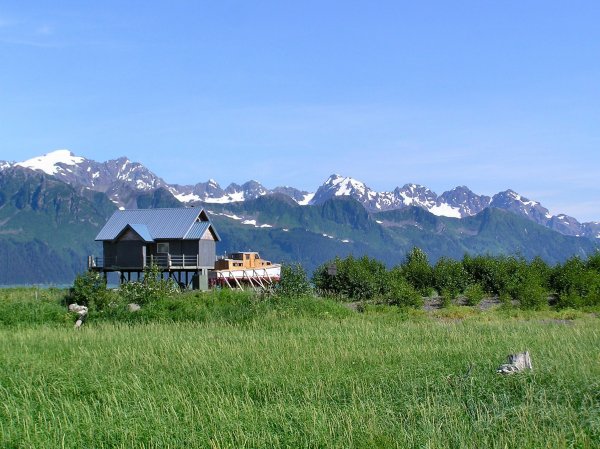
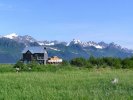
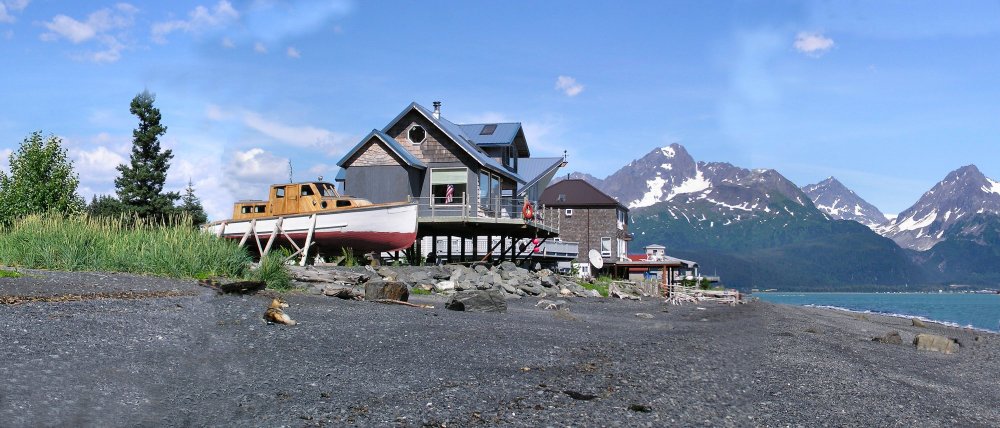
On
the south side of Seward I discovered a quiet little
community in surroundings that are as beautiful as any
I've ever seen, and believe me that's saying
something. There is a small cottage there, the last in
a row along the stone beach, bordering a state park
that borders the national park that stretches all the
way to the ocean at the mouth of Resurrection Bay and
won't ever be developed.
|
 |
When I get back to Seward,
I'm going to find out if the old couple I saw up on the porch
would consider selling that cottage. It just might make a fine
home base for this homeless vagabond, though probably not
year-around.

Not that it's so cold here
in the winter. Seward is America's northernmost ice-free harbor.
The warm Japanese Current sweeping past the mouth of
Resurrection Bay keeps the seawater here at around 48°
Fahrenheit and, as a result, the air temps aren't much different
than in New England. No, it's not the temperatures, but the
darkness that I imagine would bring me down. I've adjusted to
the constant daylight of the summer up here, but I don't think
I'd be happy living through the interminable night of the
Alaskan winter.
|
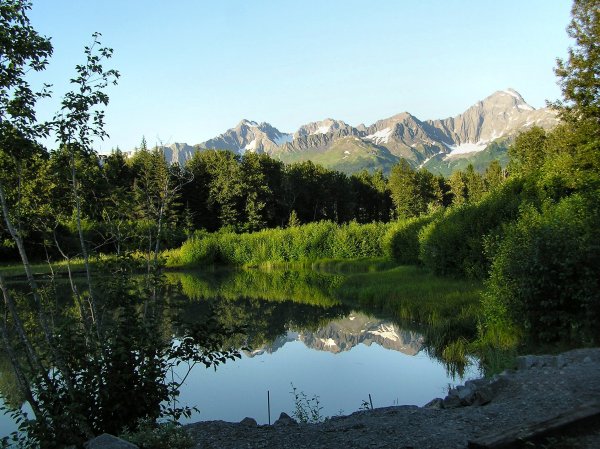
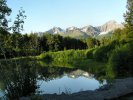
I
lingered in Seward still another day, accessing the
Internet for free via a wi-fi (wireless Internet)
hotspot right in the middle of the town's waterfront.
Each evening I'd drive a couple of miles out of town
to one of two idyllic campsites I'd found - one by a
river and one by a pond - avoiding the crass RV parks
and commercial campgrounds as always. It's what
cruising sailors call anchoring out, my preference by
land or by sea.
|
 |
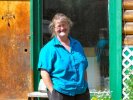
Megan
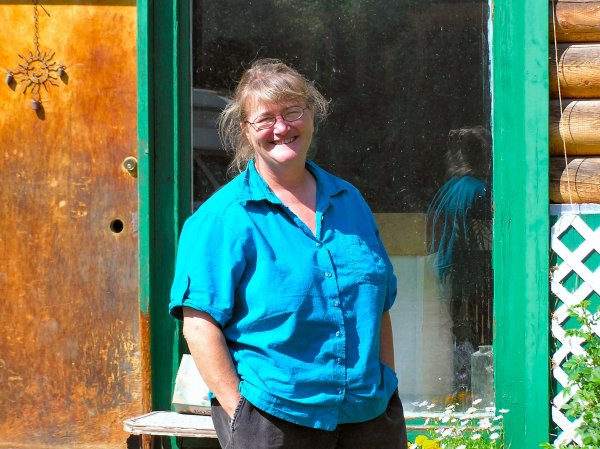
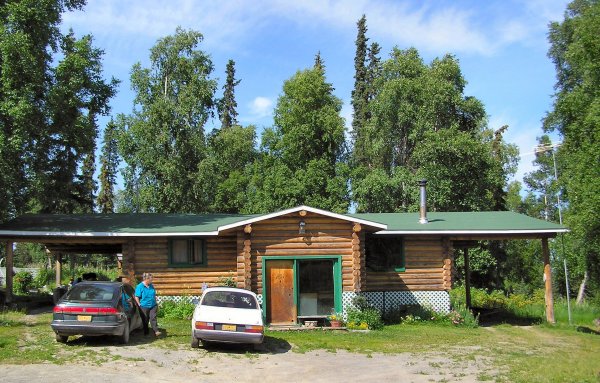
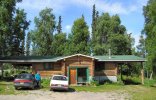
When I
left Seward, it was to visit another of my childhood next door
neighbors, Molly Leary's younger sister Megan. Meg is living
with her husband in a cozy home on 40 or 50 wooded acres outside
of Soldotna, Alaska.
|
Megan
came to Alaska many years ago on her own. She mostly
stayed up around Fairbanks and lived an adventurous
life as a single woman in a rough, wild land. She had
some grand stories to tell during my afternoon visit.
Megan eventually married an Alaskan mining legend,
Jack LaCross, whose biography sounds like it would
make a wild movie. He built their fine log house
himself and they've raised two daughters.
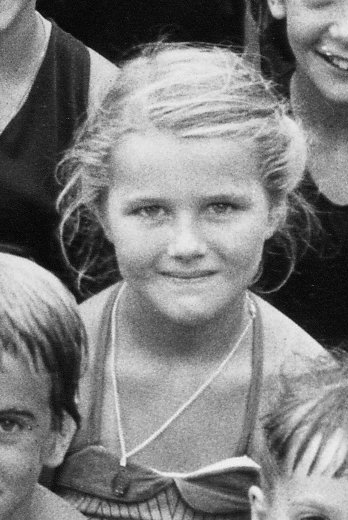
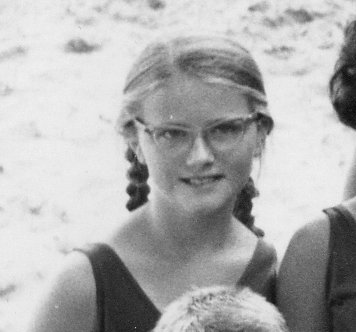
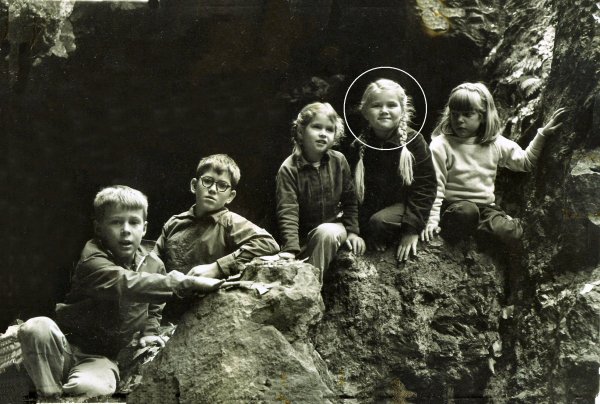
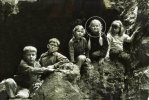
Here
are some photos of Megan as I knew her in Larchmont:


|
I've been
heading for Homer to pick up mail ever since I left Tok a couple
of weeks ago, and I thought I might actually get there the
afternoon I left Megan's house. Alas, sometimes it's the
seemingly insignificant little hamlets along the way that reach
out and grab you. About 45 miles shy of my intended destination,
I pulled into the tiny fishing village of Ninilchik and here I
have remained these past 4 or 5 days. Actually, I've lost count
and don't really care.
Ninilchik
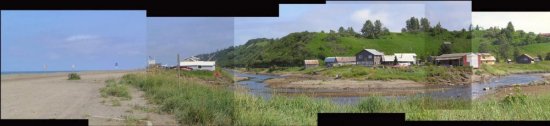
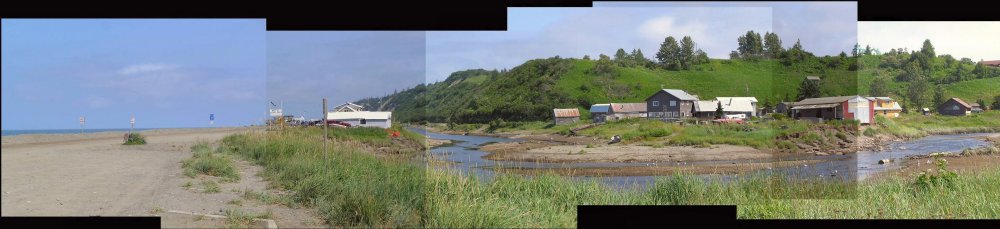
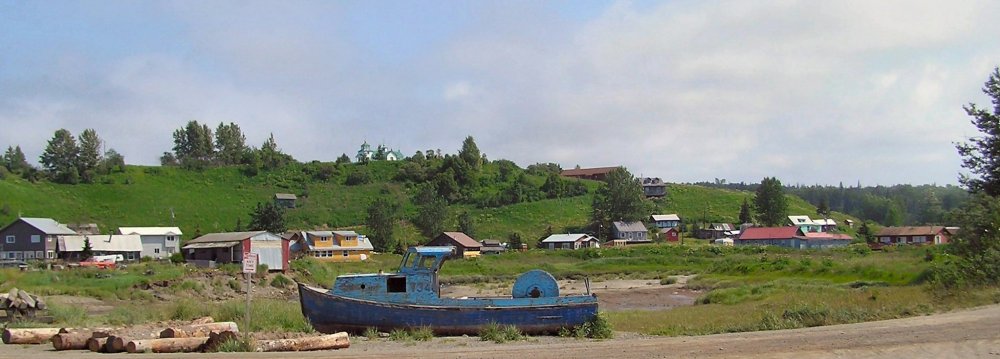
You may
have noticed that I occasionally scarf together several
photographs taken in series in order to give a more panoramic
view of a place I consider special. Unlike the example above, I
usually endeavor to blend the parts together so they make one
continuous scene. It's a time consuming process, however, so I
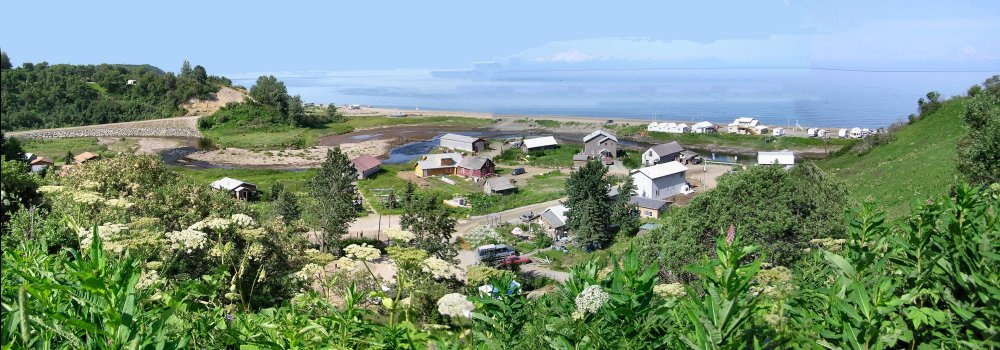
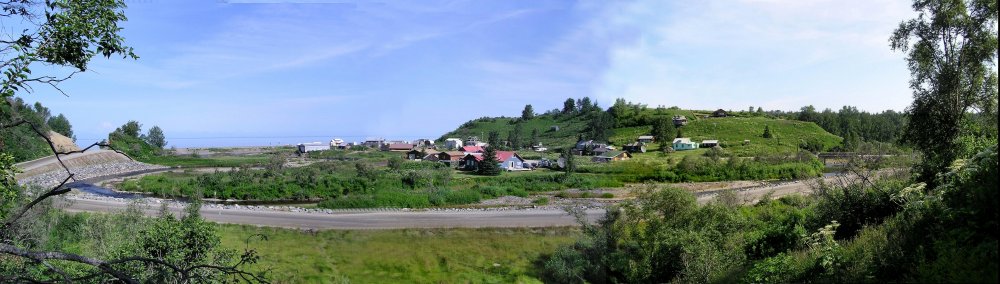
don't do it often, but here I have taken the time. Click to
enlarge these expanded views of Ninilchik.
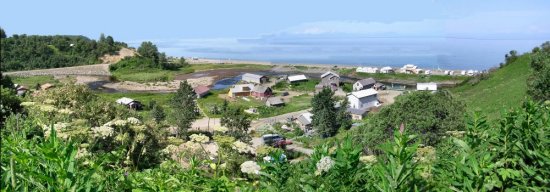
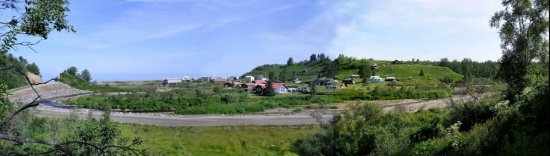
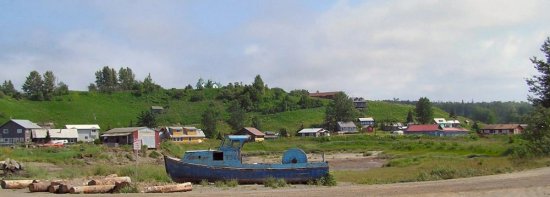
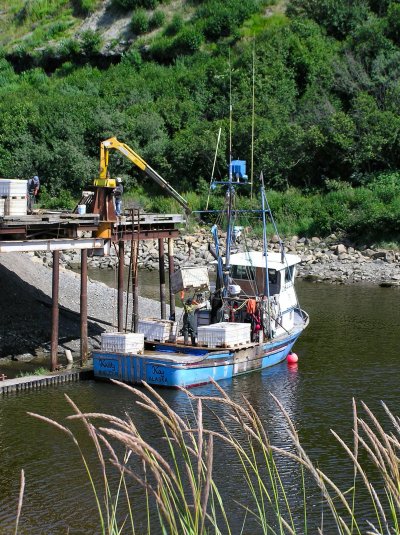
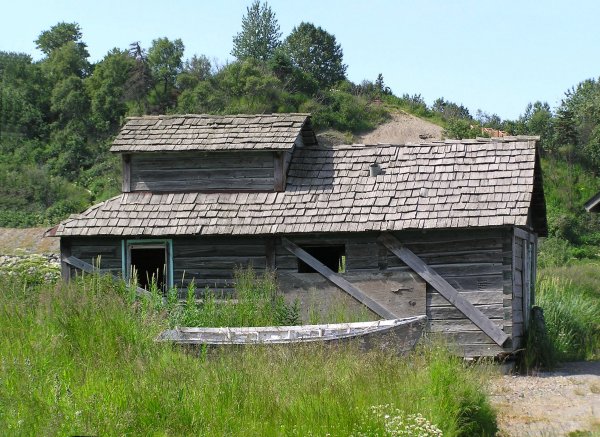
Ninilchik
is reminiscent of what I imagine parts of Cape Cod felt like 50
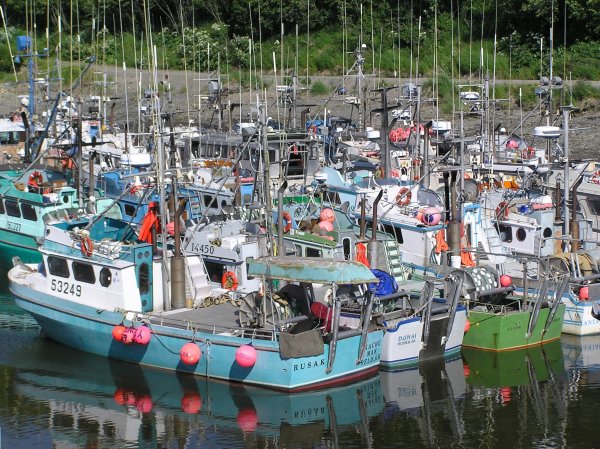
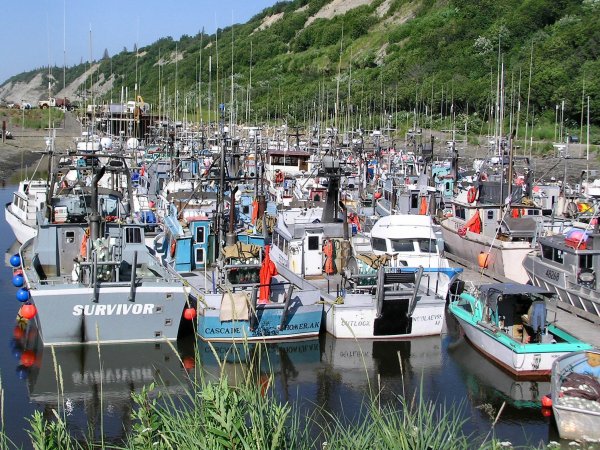
years ago. Nestled in among steep, dune-like hills squared off
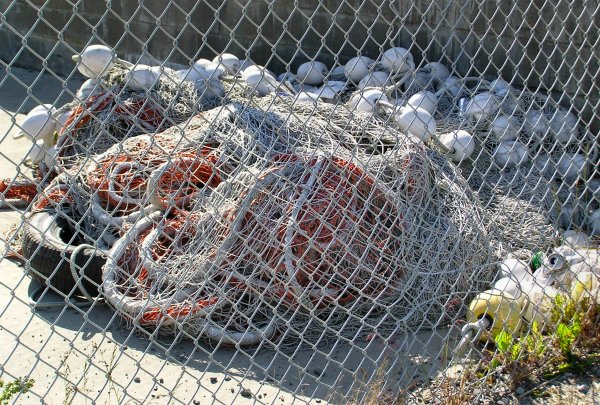
against broad Cook Inlet, this community of fishermen share
their offbeat paradise with a muted flow of tourists, the
village being just off the main highway between Anchorage and
Homer. Yet when you turn off the highway and rattle down the
dirt & gravel road into this hidden place, you pass into
another reality altogether.
I knew at
first sight Ninilchik was special, and when I discovered I could
park my RV out on the point, simultaneously overlooking the
tight little fishermen's harbor and the open water, I gave up
any notion of passing through quickly. Here at last I have
stopped for a while to write a little, catch my breath and,
well, stop.
To give
you some idea of where I'm sitting as I write this, here is a
photo I took a couple of nights ago at half past midnight from
the doorway of my camper. This is where I'm looking right now if
I turn my head to the right.
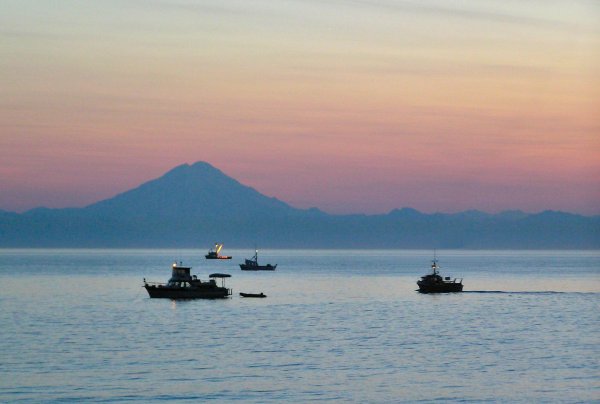
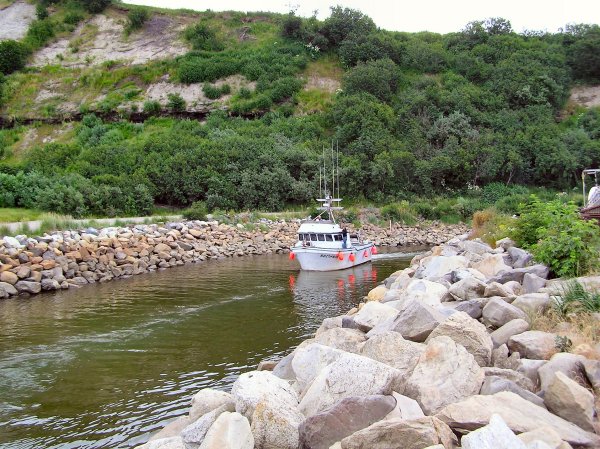
That night
the fishermen were catching an evening tide to move their boats
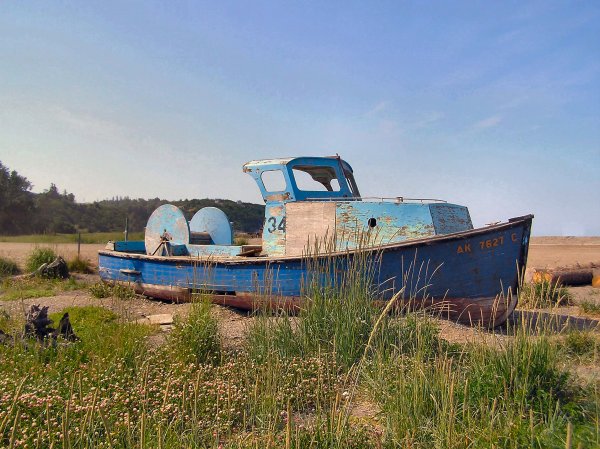
out of the harbor, then anchoring out so they could go fishing
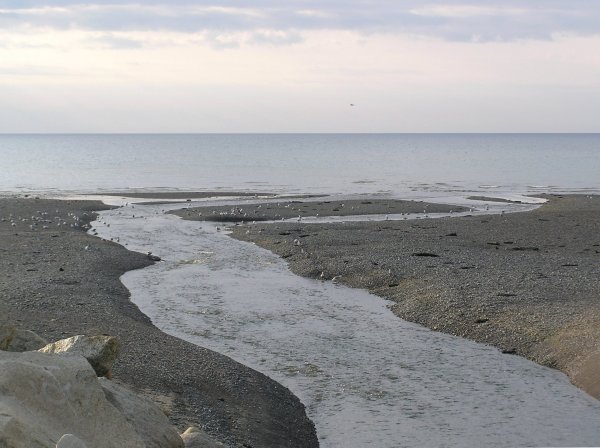
in the morning. The channel, which is the mouth of the lazy
stream that meanders through the village, is barely wide enough
and deep enough for one boat at a time at high tide. At low tide
it's just ankle deep where it crosses the beach. Only on the
full flood can the trawlers escape to the open water, or return
to their berths inside.
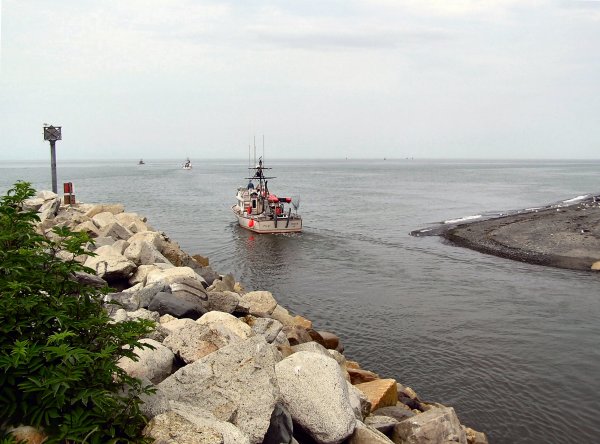
This
strikes me as an unusual adaptation, though perhaps it isn't in
these parts. See for yourself. Here's the channel at high tide:
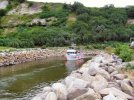
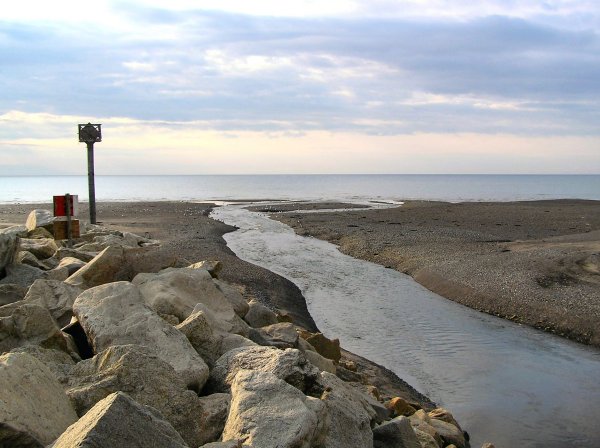
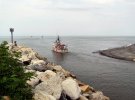 And here it is at low
tide:
And here it is at low
tide: 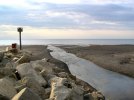
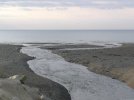
See how it
all but vanishes at the mouth? I wouldn't want to run this inlet
in a strong onshore breeze, not at any tide.
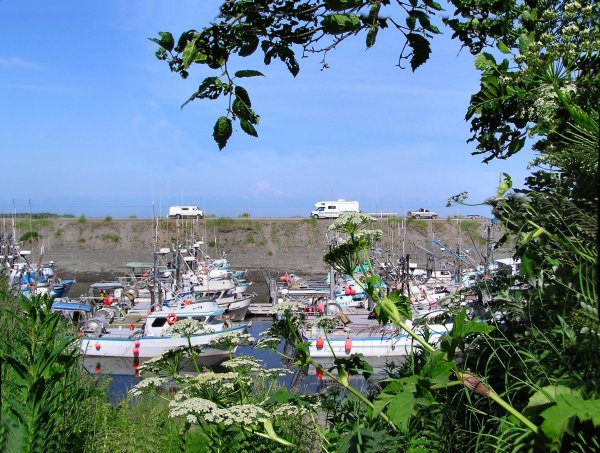
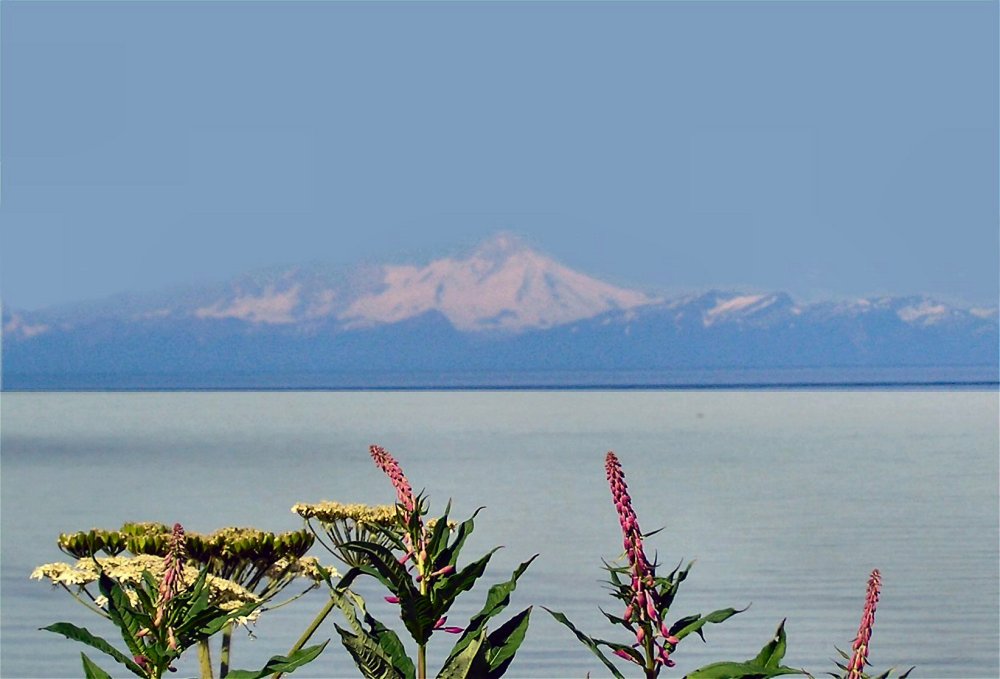
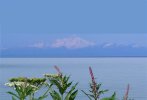
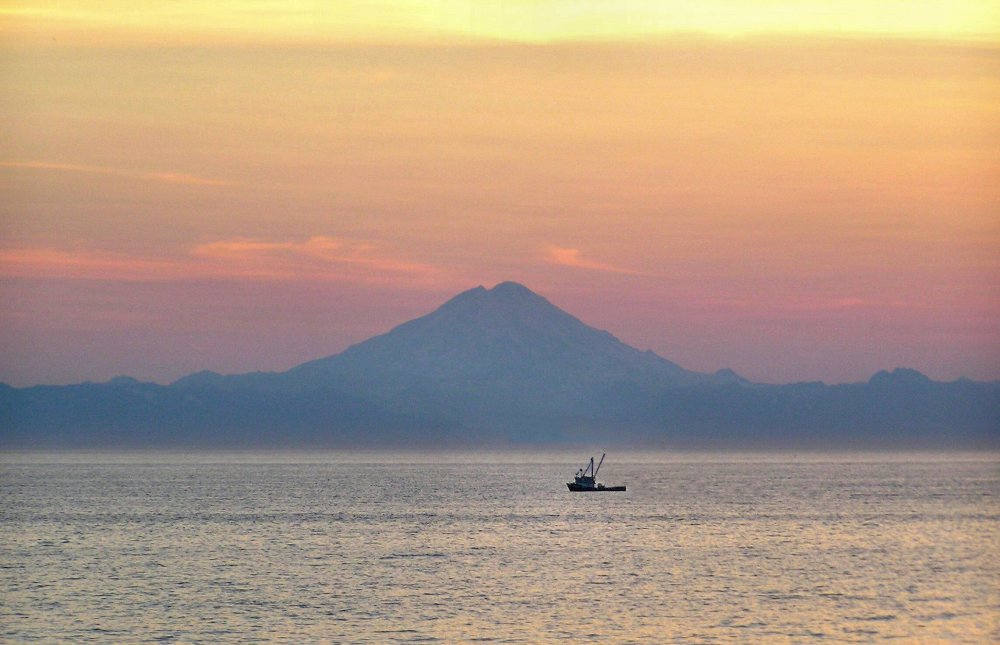
While Cook
Inlet stretches off to my right, the cramped harbor is outside
my port windows. I am parked on the sliver of land in between.
(Can you make out the distant, snow-capped volcano just off my
van's bow?)
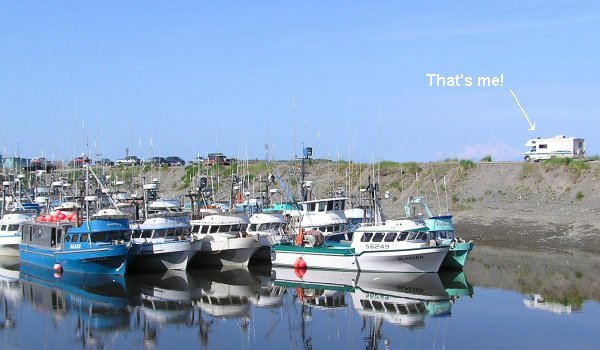
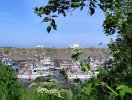
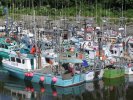
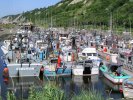
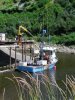
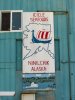
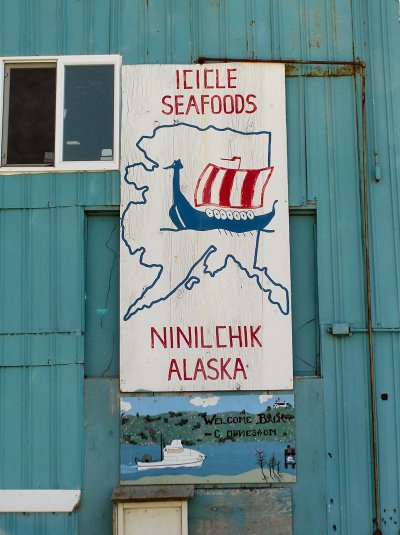
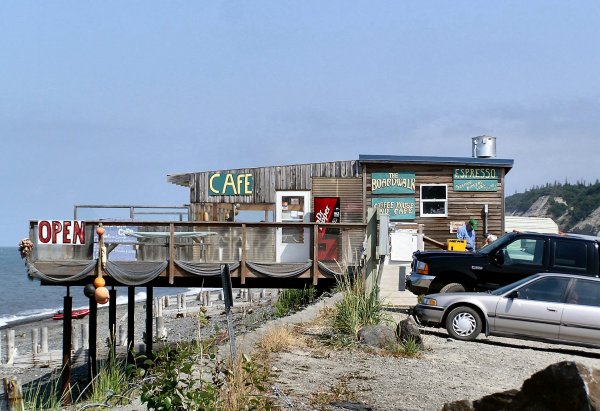
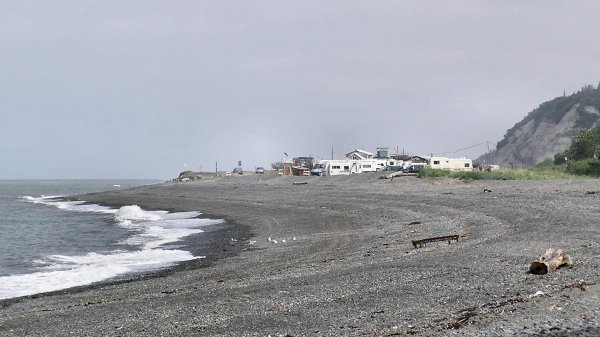
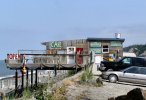
A hundred
yards from me, at the head of the small harbor, there's a small
fisheries packing plant. A little further down the beach a
rustic cafe & chowder house balances on long pilings. Then
there's a small, commercial RV lot (I've got much a better
view than they do, with no-one jammed in alongside me, and mine
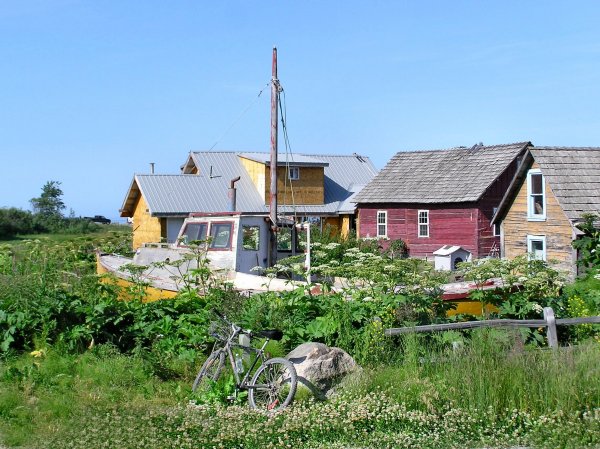
is free!). A state park campground, little more than a gravel
parking lot, is at the far end of this half-mile beachfront
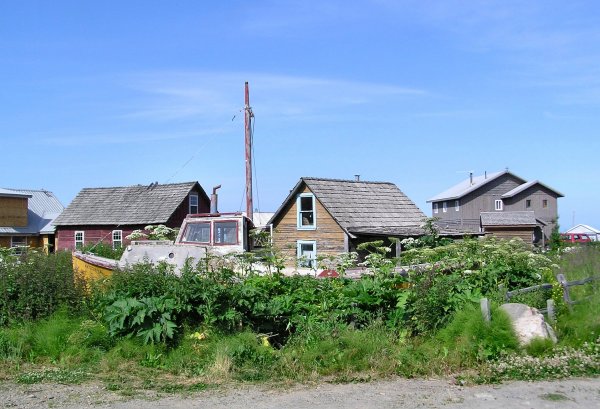
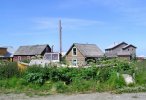
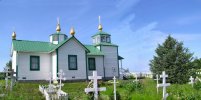
road. From there the road curves in to the village proper, where
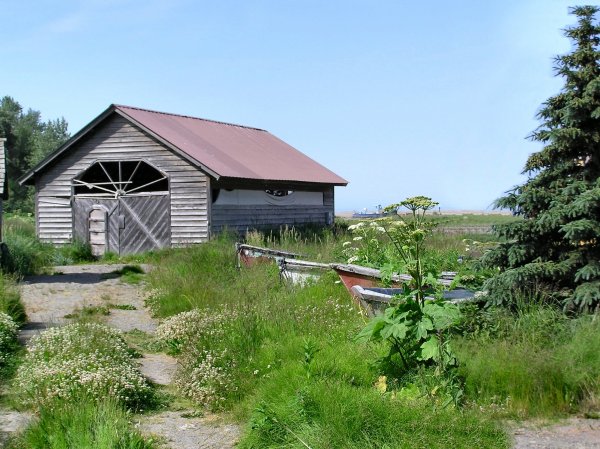
a scattering of dilapidated shacks and vintage cabins mingle
with a few new-built houses, all of it overlooked by the old
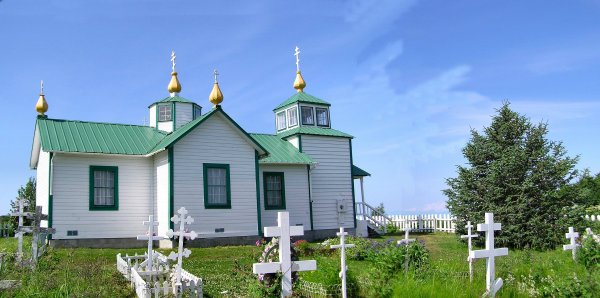
Russian Orthodox church on the hilltop above. The village is
very quiet. I suppose many of the bearded fishermen and their
families live elsewhere, perhaps across the highway.
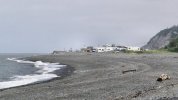
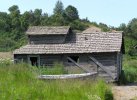
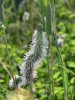
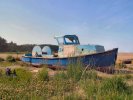
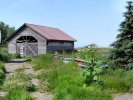
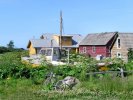
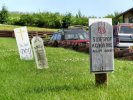
There is
no glitz or glitter here. Nothing much to do besides walk the
miles of empty beach, take a few photographs, read, write, play
a little music. I've cleaned house and changed the engine oil*,
so I even feel productive. The ceaseless whoosh whoosh of the
surf lulls me to sleep at night and laughing seagulls (and
raucous ravens) awaken me in the morning. Here at last, however
briefly, I am finding something I have sought all these long,
dusty miles. I'm finding time.
*(Odometer
= 62,311 mi.)
Next
Entry: 07/29/04