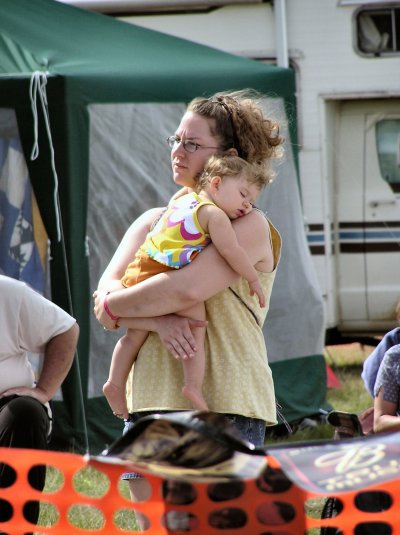
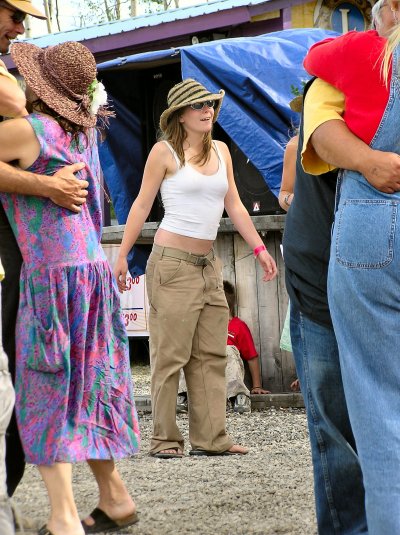
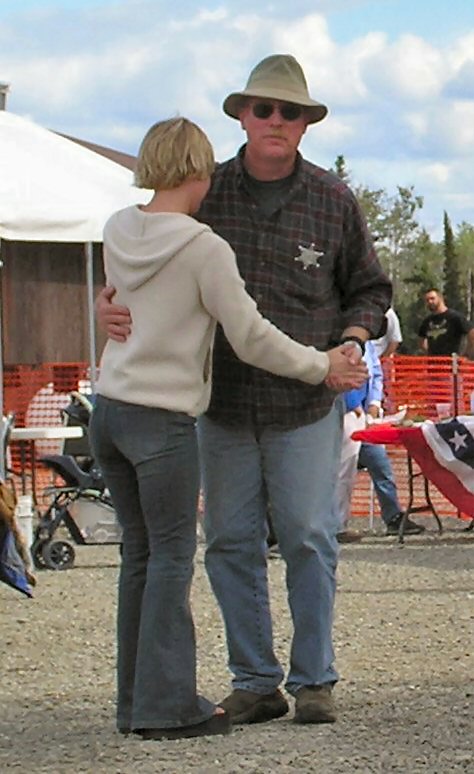
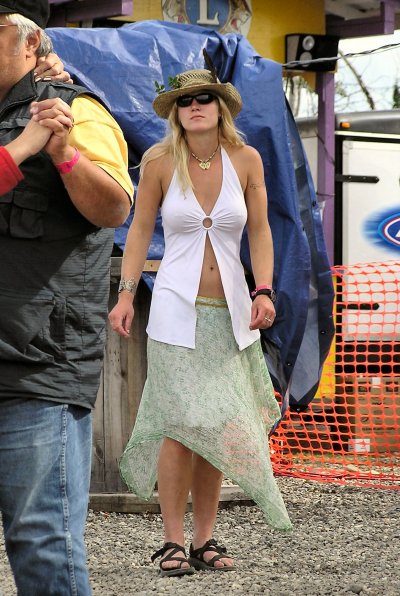
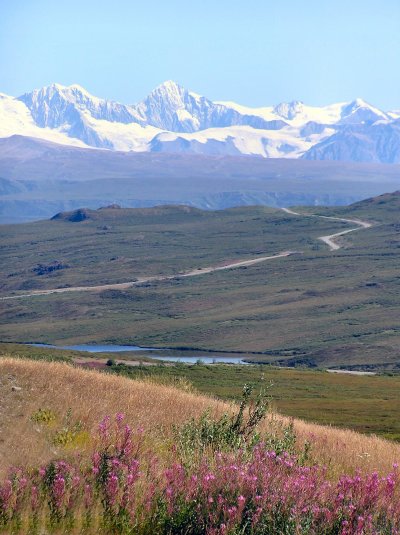
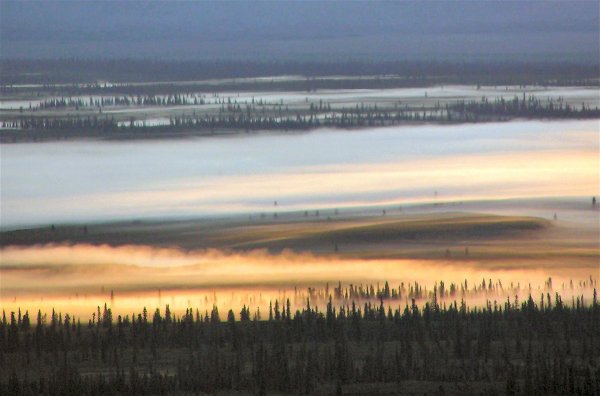
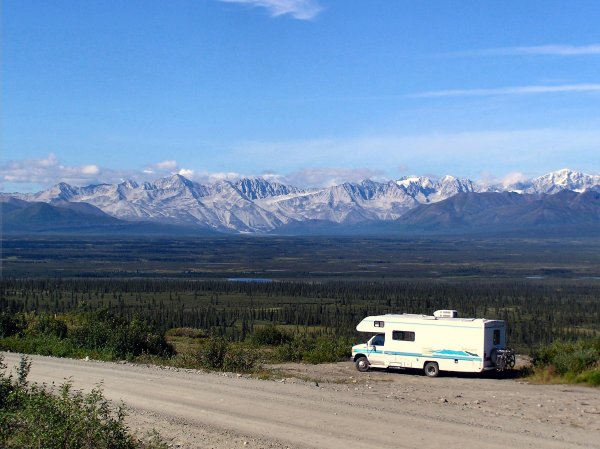
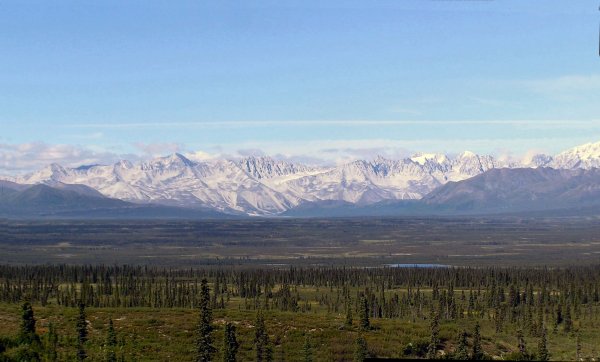
Photo Contest
I
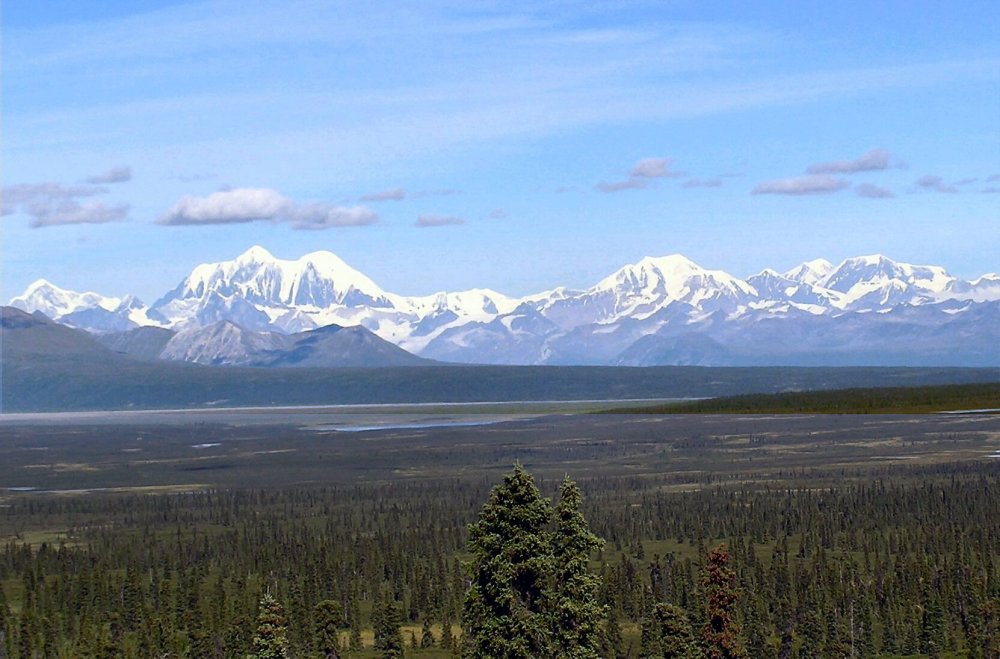
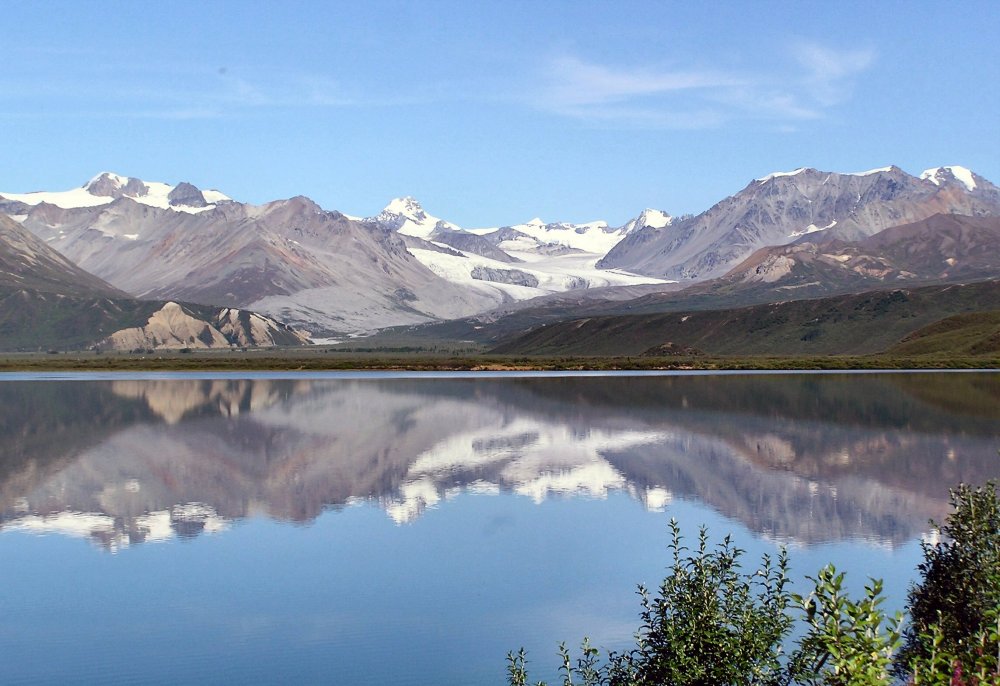
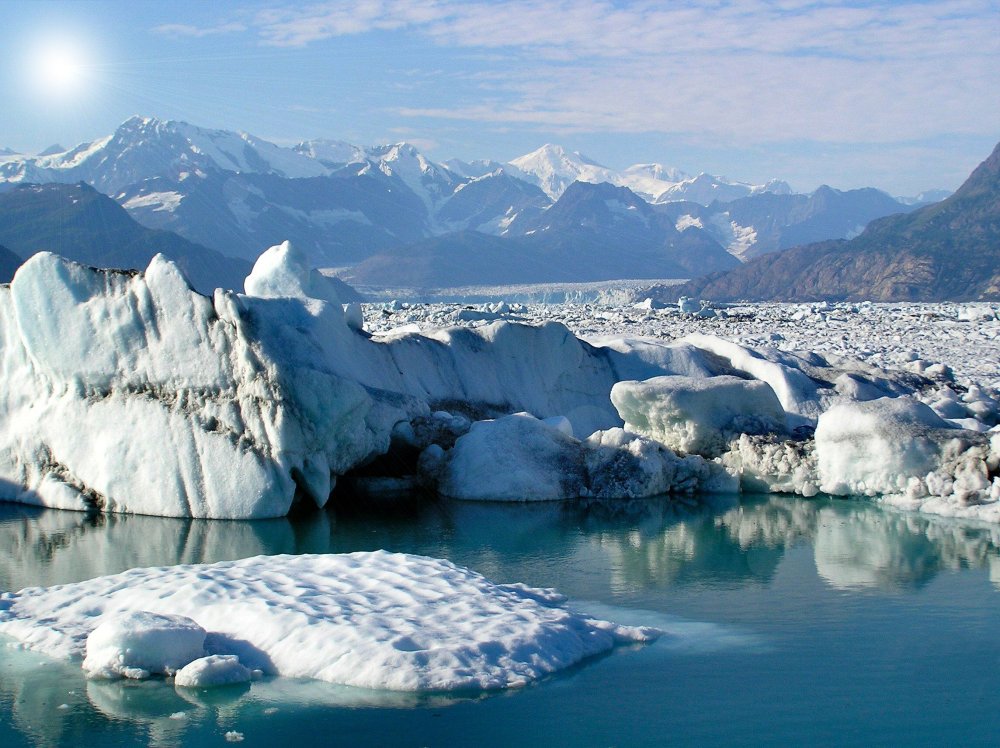
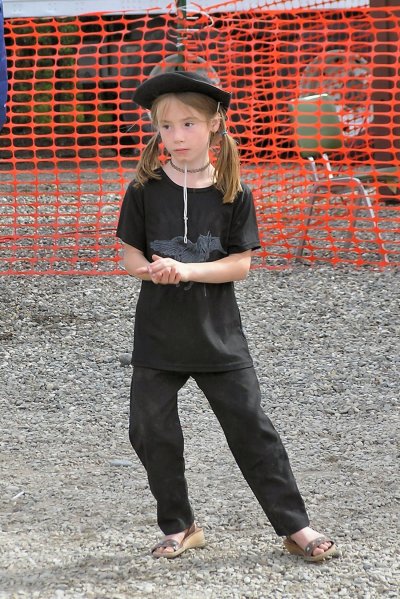
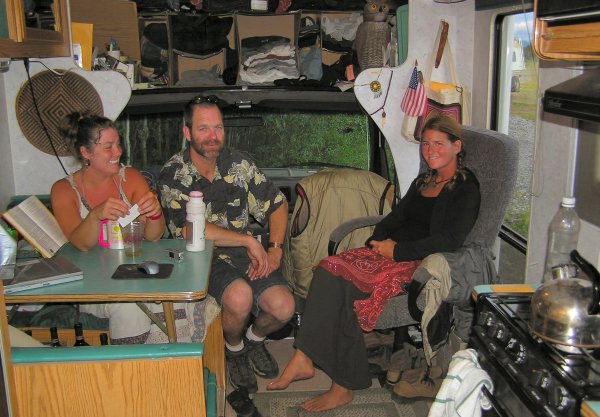
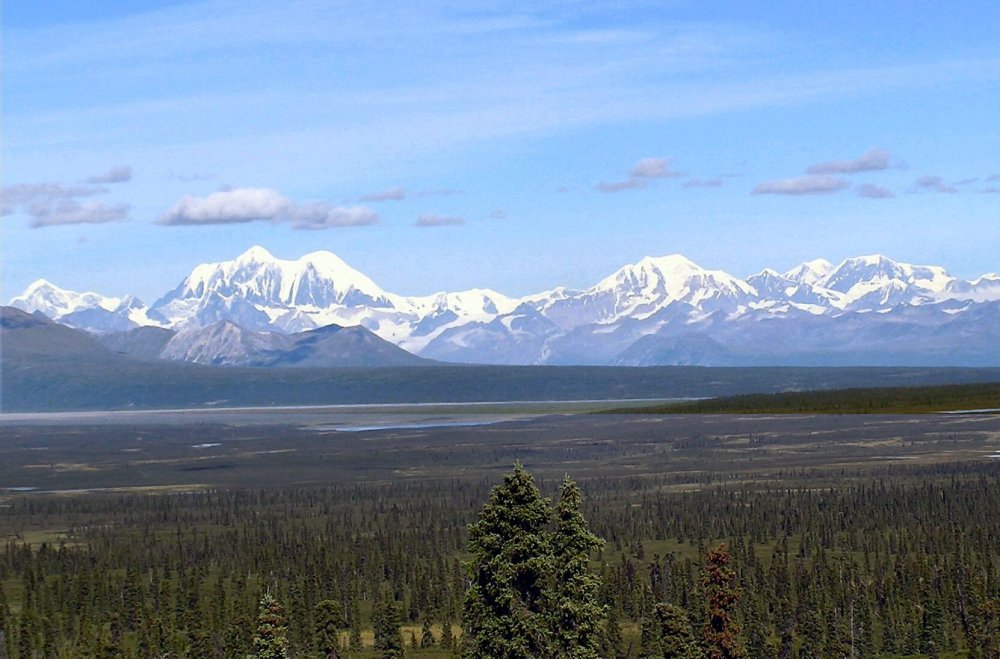
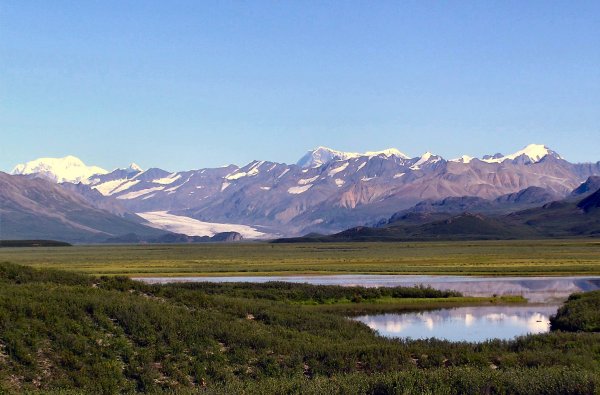
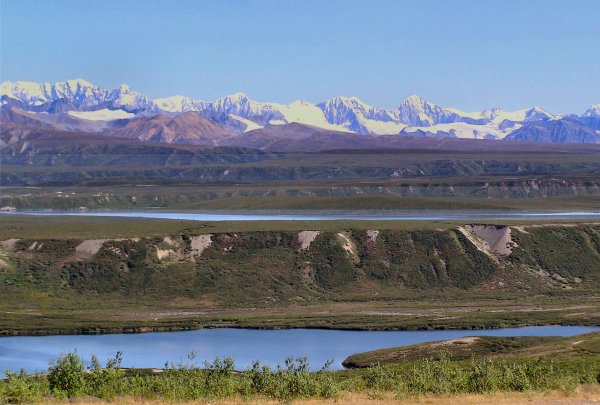
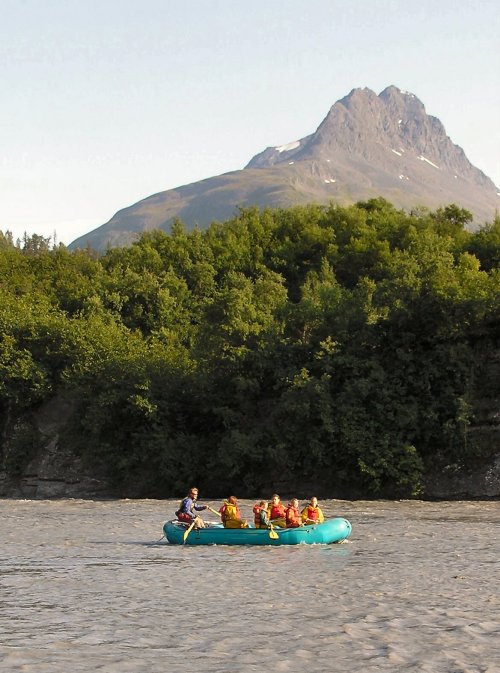
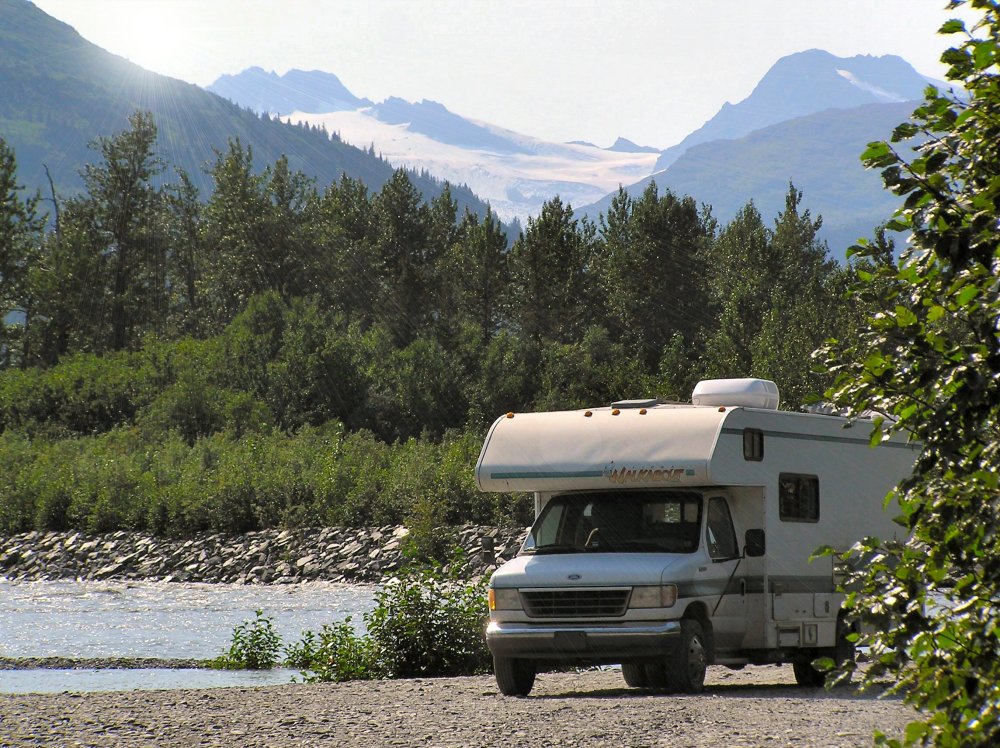
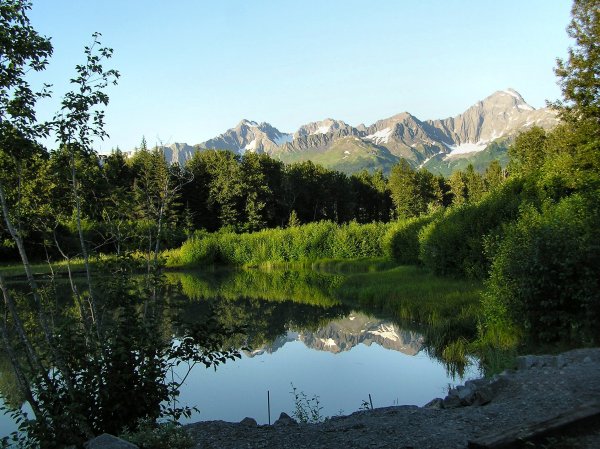
couldn't decide which one of several photographs I should
use as this page's "cover shot." So I'd like you
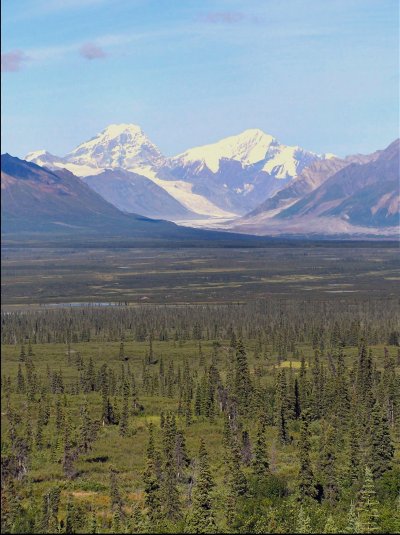
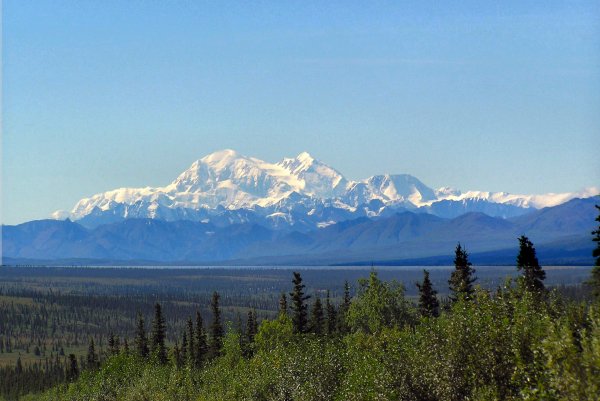
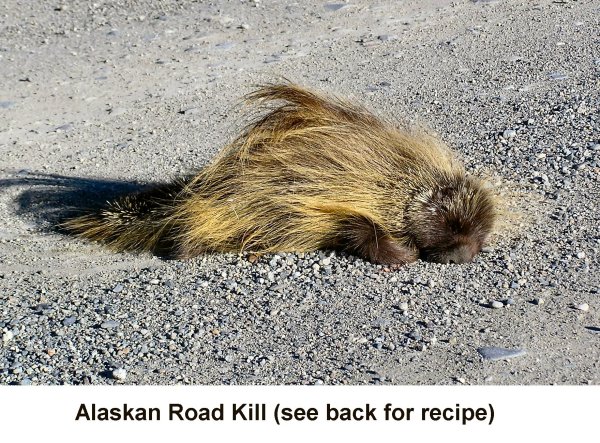
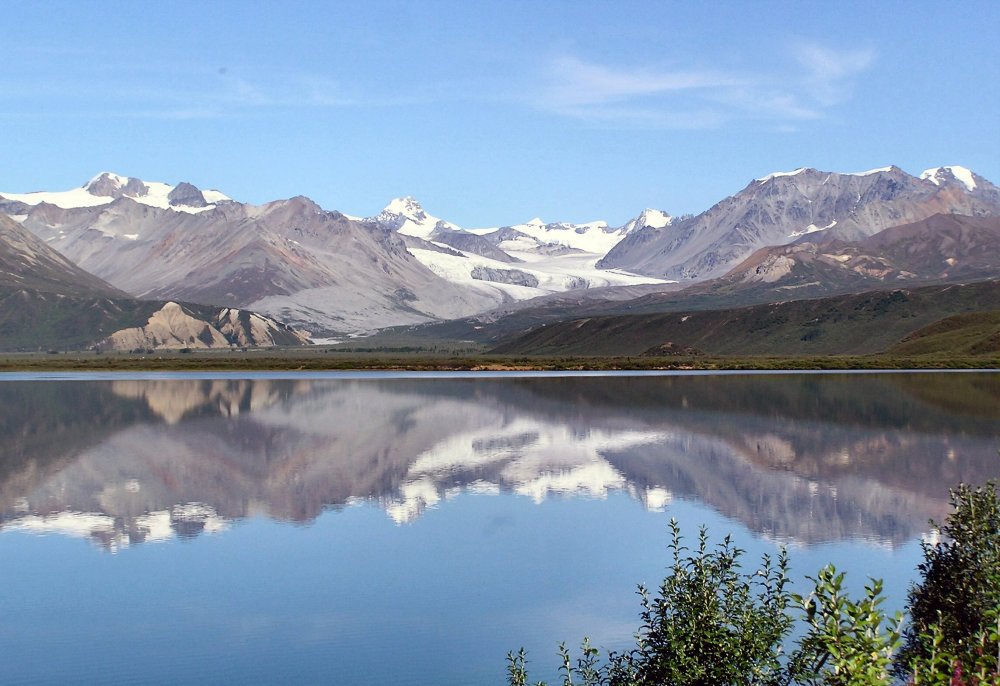
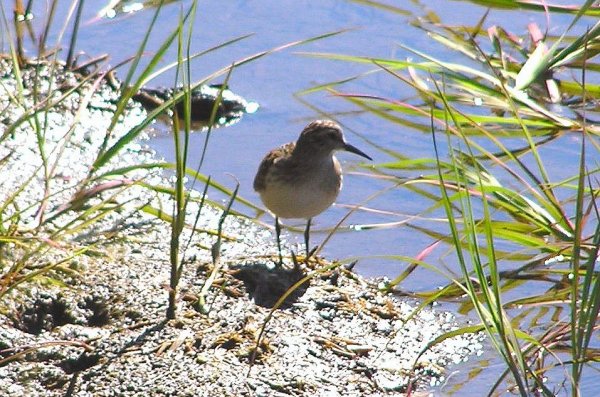
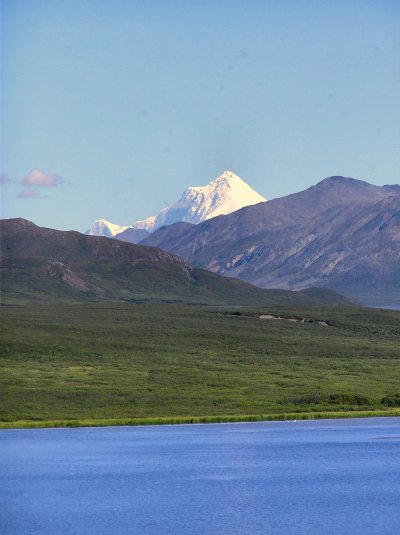
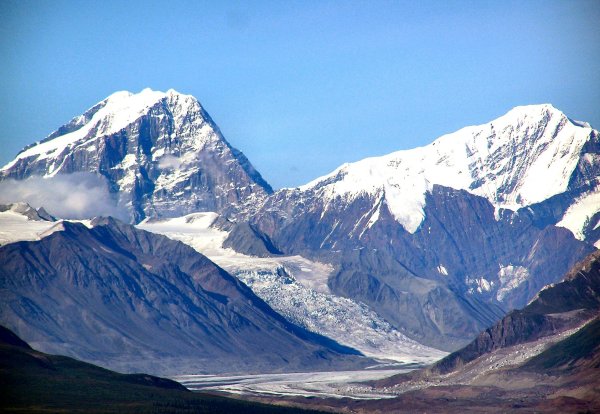
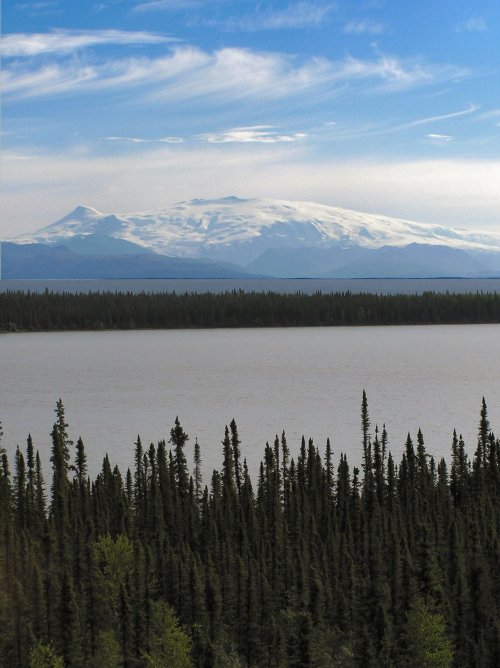
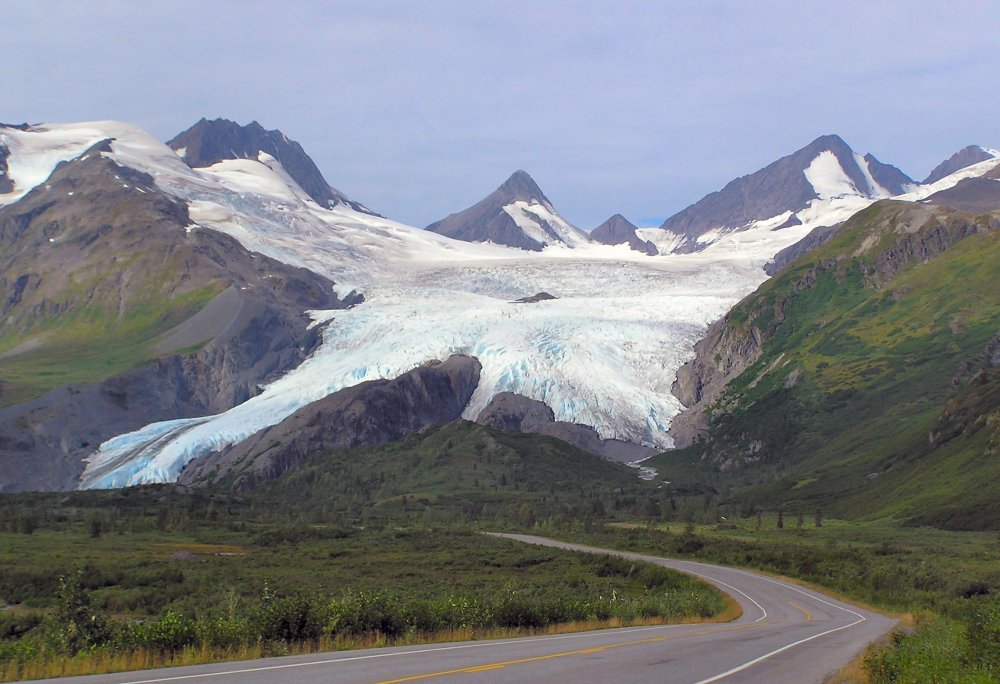
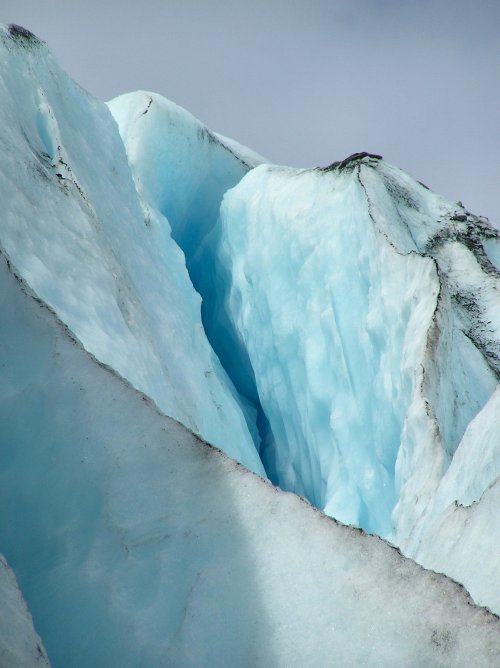
to help me pick one. Look at the three finalists and then send
me an email naming your choice.
Click
on each number to view the choices:



And
now (drum roll)... click
here to email me with your choice. Which one will it
be?
Contestant
Number 1?
Contestant Number
2? Or Contestant Number
3.
It's
UP TO yyyYOU!
The
winner will be announced no later than September 1, 2009.
All entries are final and become the property of tor.cc upon
submission. Employees of large corporations are prohibited
from voting. Any dispute, controversy or claim relating to
the winning contestant, including but not limited to the
interpretation thereof, or its breach or existence, which
cannot be resolved amicably by the voter and tor.cc, shall
be referred to arbitration by Tor Himself, which shall be
the sole and exclusive forum for resolution and settlement
of any dispute, controversy or claim between the parties.
The arbitration shall be conducted in accordance with
the Rules of Tor's Arbitration Association then in force and
shall be held in the city, state and country in which Tor
happens to be, unless the voter and tor.cc mutually agree
upon another place. Any
award of the arbitral authority shall be final and binding
upon the voter and tor.cc with respect to all disputes,
claims or controversies therein and the voter and tor.cc
shall comply without delay. The arbitral authority shall, in
its award, fix and apportion the costs of arbitration. The
award of the arbitral authority may be enforced by any court
having jurisdiction over the party against which the award
has been rendered or where assets of the party against which
the award has been rendered can be located. The voter and
tor.cc further understand and agree that arbitration shall
be the sole and exclusive forum for resolving any dispute,
controversy or claim relating to this contest and that
neither party shall resort to any court except to compel
arbitration, refer questions of law or to confirm, vacate or
modify any such award.
Well,
now that I've sobered up I'll get on with my travel notes.
After Denali National Park I spent a few days in Fairbanks,
an inoffensive city as cities go. Everything is available
and it's relatively easy to drive around once you understand
the layout. I picked up snail mail from General Delivery,
did laundry, re-provisioned, caught up on email and Internet
stuff and took care of a few other city-type errands. I was
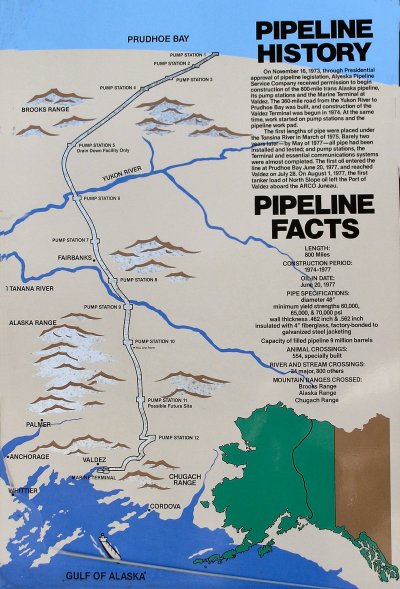
preparing to drive 500 miles north to Deadhorse, literally
the end of the road in Alaska. Deadhorse is on the coast of
the Beaufort Sea in the Arctic Ocean, well above the Arctic
Circle and just 1200 miles from the North Pole. It is the
northernmost road-accessible town in the hemisphere, if not
the world. Having come so far over the roads of America and
Canada these past months, it just seemed like a fitting
destination.
However,
that was before I read the guide books and talked to some
Fairbanks locals about the road and the terrain I would have
to cross to get to Deadhorse. As the Rough Guide to
Alaska put it, "Travelers' folklore has it that the
Dalton (Highway) is always in one of two states, muddy or
dusty; worse still, the forty-odd eighteen-wheelers that ply
the road each day supplying Prudhoe Bay have a nasty habit
of hefting large rocks through windshields." They went
on to say, "Allow for a couple of punctured tires (take
two if you can) and a cracked windshield."
If you
survive all that, you arrive in Deadhorse. "Deadhorse
is a weird place; not really a town at all but an industrial
area where venturing outdoors (and there is little reason to
do this) risks stumbling into restricted territory or
getting bowled over by a fifty-ton truck." In fact,
this industrial complex, which is the beginnings of the
Trans-Alaska Pipeline, entirely blocks access to the Artic
Ocean, which is another 12 miles north. Visitors can only
catch a glimpse of the sea aboard special tour busses
operated by the Pipeline company, for which they charge
around $60. It is generally regarded as a rip-off and a
worthless thing to do. Even lifelong Fairbanks residents I
spoke to said they had never bothered to drive up there. The
most they'd do in that direction is go camping in the Gates
of the Arctic National Park, a remote region of mountains
and tundra through which the highway passes.
In the
end I decided to skip Deadhorse, opting instead to drive 75
miles back the way I'd come and attend a bluegrass music
festival I'd read about. It was just about to begin. Looking
back, I think I chose the more fun option.
One my
way to the festival I camped overnight just off Route 3. As
I was finishing my supper, a couple of pickup trucks pulled
in towing trailers, apparently to spend the night. I moseyed
out to meet my new neighbors. Turned out the guy I talked to
was an old Alaska miner, now moving to Arizona. I asked him
if he knew Jack LaCross, the Alaskan mining legend that
Megan Leary married. Well, did that ever start him going.
Sure he knew Jack! They'd mined together back in the old
days. He knew Megan, too. This fellow had lots of stories to
tell about Jack. Then he got going about all kinds of other
wild & crazy Alaskan characters he had known over the
years and what life was like up here in those days. His
tales flowed like pages from a Jack London novel and we
talked well into the evening.
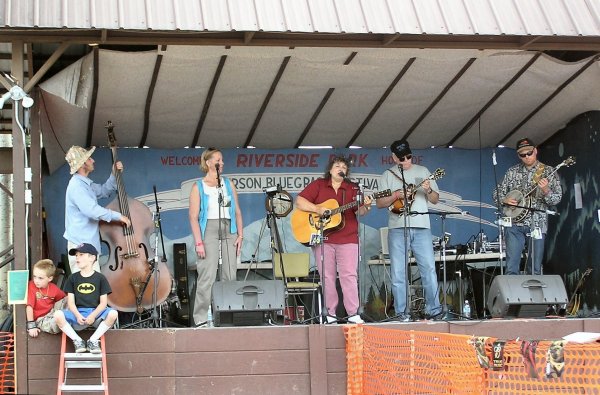
The Anderson
Bluegrass Festival
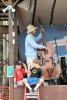 |
Bluegrass
is excruciatingly simple music - rarely more than
3 chords, usually in the key of G, often sung in
tight nasal harmonies - but there's an upbeat
spirit and a kind of nostalgia Americana to
it that bonds people who normally wouldn't party
together.
|
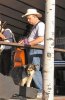 |
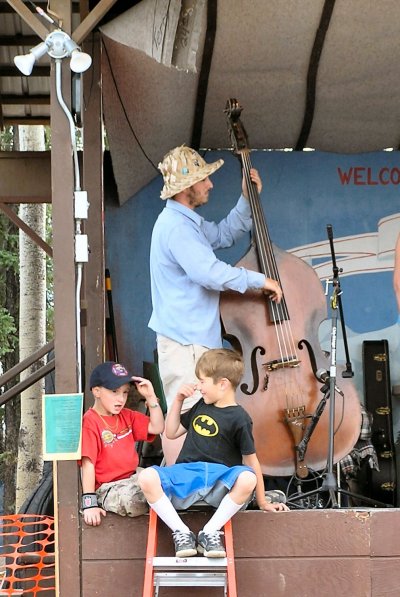
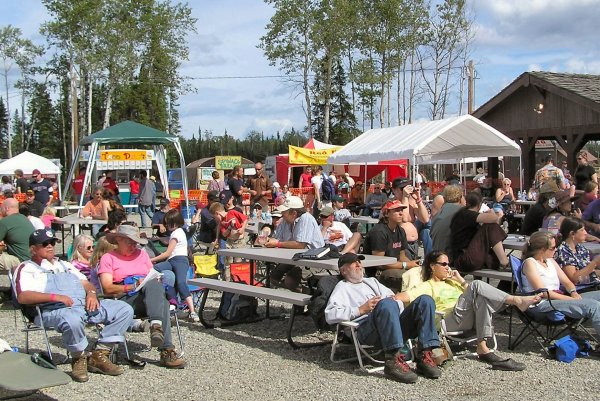
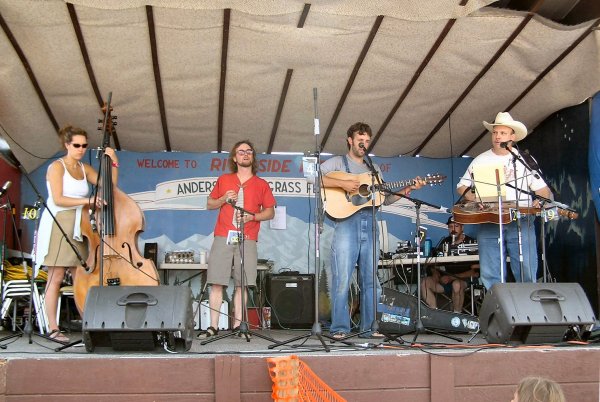
This
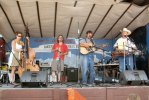
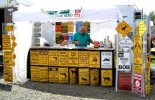
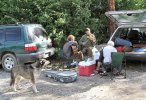
year's annual Anderson Bluegrass Festival attracted a cross
section of celebrants; local families with their kids, old
timers with fiddles and banjos, spry 20-somethings from
Fairbanks, crusty hermits from the Interior, gray-haired
retirees in RV's. Young and old, quiet and rambunctious,
everyone got along for the three-day event and everyone had
a good time in spite of some rain and mud.
Anderson,
Alaska is some miles off the main highway. It has a
part-time post office in the town hall building, a friendly
bar/restaurant, and a small general store. Several dozen
houses, some with a rough, homemade look about them, string
along back streets in a sub-suburban manner. The front yards
are mostly mowed, some cluttered with rusting car parts and
kids toys, some trim as the Jones', but everyone's backyard
melts quickly into the trackless taiga that covers much of
Interior Alaska. I doubt whether Anderson gets many visitors
the rest of the year, but under the auspices of the Anderson
and Clear Lions Club they do a fine job of welcoming
hundreds of revelers to their annual bluegrass festival.





 |
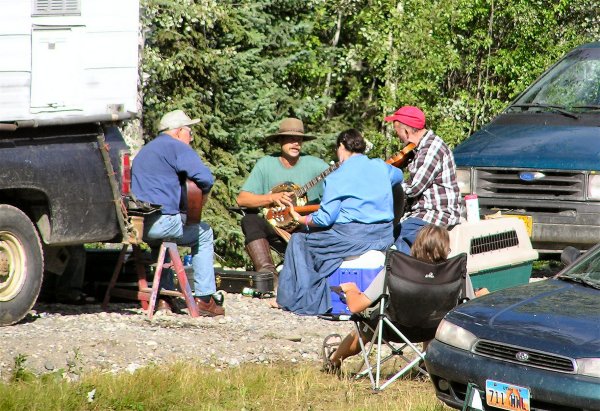
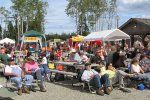
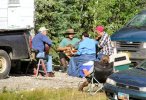
Some
of the best pickin' happens in the mornings and
evenings in small campsites throughout Anderson's
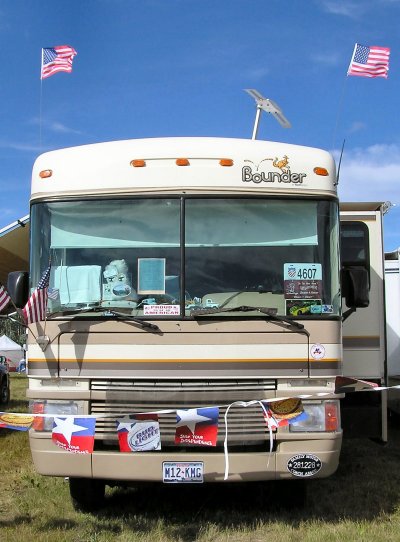
sprawling Riverside Park, a temporary city of
camper vans and tents.
|
|
|
.
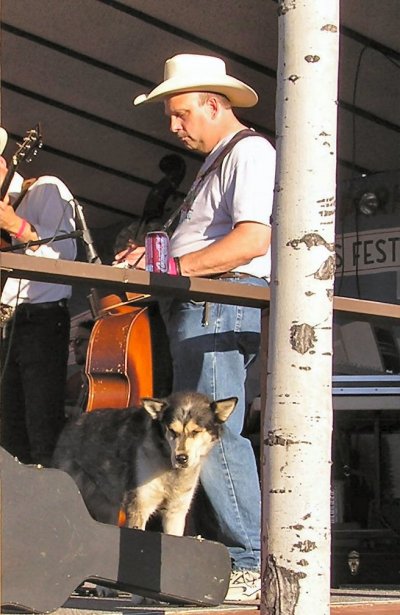
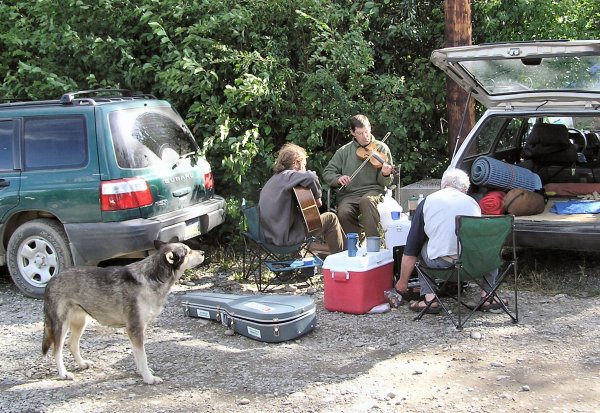
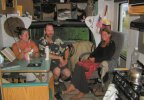
Parties went on late into the night. Even I made
it to midnight once or twice, listening to
musicians jamming, drinking moonshine and making
new friends.
|
.
 |
Onward,
Upward and Downward
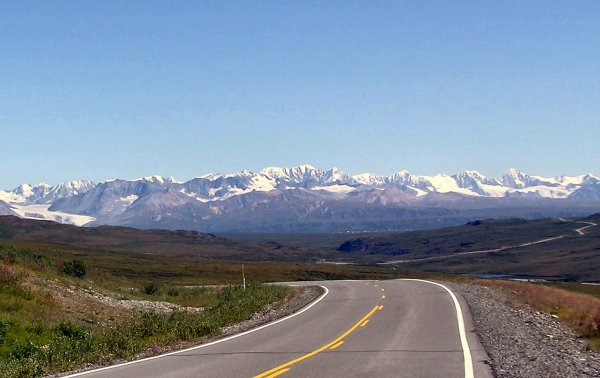
As I
said earlier, I spared my vehicle and myself the ordeal of a
thousand mile roundtrip to Deadhorse on the infamous Dalton
Highway. However, after the Anderson festival I did traverse
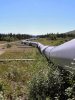
a dirt & gravel road (not to be confused with the smooth
highway pictured in the photo above), which crossed 135
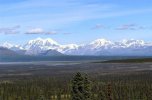
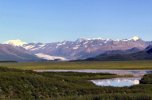
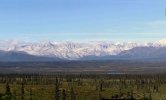
miles of tundra east of Mount McKinley. Until 1972, the
Denali Highway was the only road to Denali National Park.
Today it's just a leftover track through the wilderness that
roughly parallels the Alaskan Range, the same mountains that
form the backbone of Denali National Park before swinging
eastward across the state. This road bears a reputation
similar to the car-eating Dalton Highway up north, minus the
eighteen-wheelers. However, unlike the Dalton, the Denali
Highway rewards those who brave it with Alaskan Interior
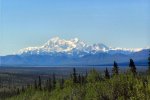
scenery at its most spectacular.
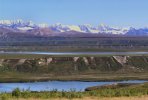
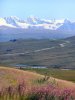
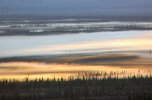
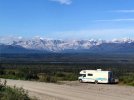
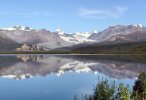
The
dusty, washboard-like Denali Highway was teeth-rattling, but
not bone jarring. I found it was actually a little smoother
to drive forty miles per hour than twenty. Still, I
discovered later that I lost a hub cap somewhere along the
way. I hope I'll be able to replace it in Anchorage.
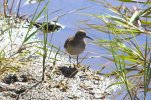
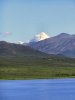
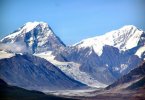
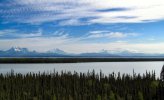
Once
across the Denali, the perfect pavement on Route 4, a.k.a.
the Richardson Highway, felt like a ride on clouds. It
wasn't too shabby in the scenery department, either.
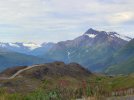
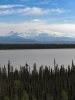
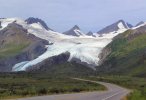
As
beautiful as the scenery was along these routes, it was
merely a warm-up for what lay ahead as I traveled south to
the lovely port of Valdez and Prince William Sound.

Valdez
(pronounced "Val-déez")
|
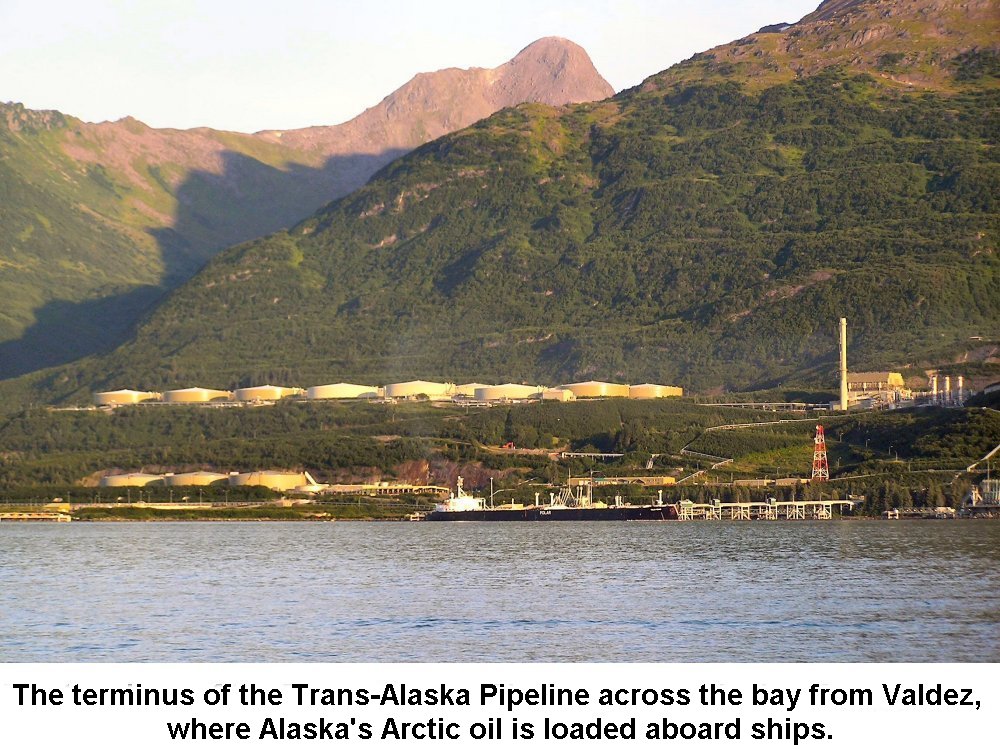
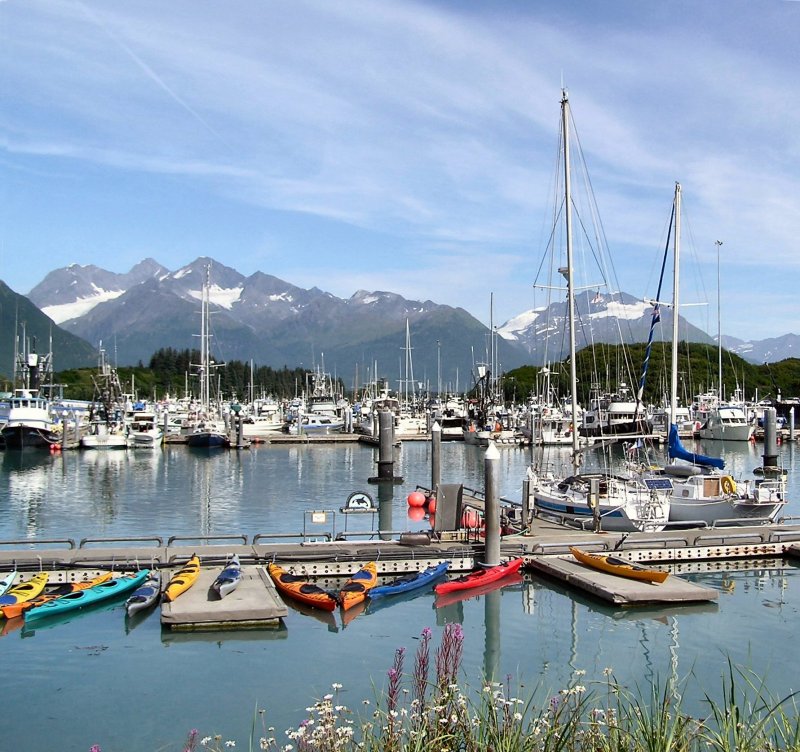
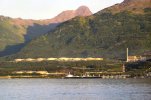
Significant
as the seaport terminus of the Trans-Alaska
Pipeline, Valdez briefly achieved world notoriety
with the grounding of the 987-foot tanker, Exxon
Valdez, in 1989. The subsequent oil spill
desecrated some of the world's most pristine
marine habitats in Prince William Sound. Today
Valdez enjoys a quiet prosperity, largely thanks
to Pipeline employment and tax revenues, bolstered
by a sedate flow of tourists and a small
commercial fishing fleet.
|
 |
|
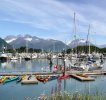
Valdez is sometimes described as the Switzerland
of Alaska, or as one local tour operator put it,
"Many consider Switzerland to be the Valdez
of Europe." The surrounding mountains are
about as imposing as mountains get. By contrast
the village is small and neat, with an
all-American hometown feel to it. A laid back,
3-block tourist district faces the small inner
harbor. There's not a lot going on in Valdez. But
then there's Prince William Sound.
|
 |
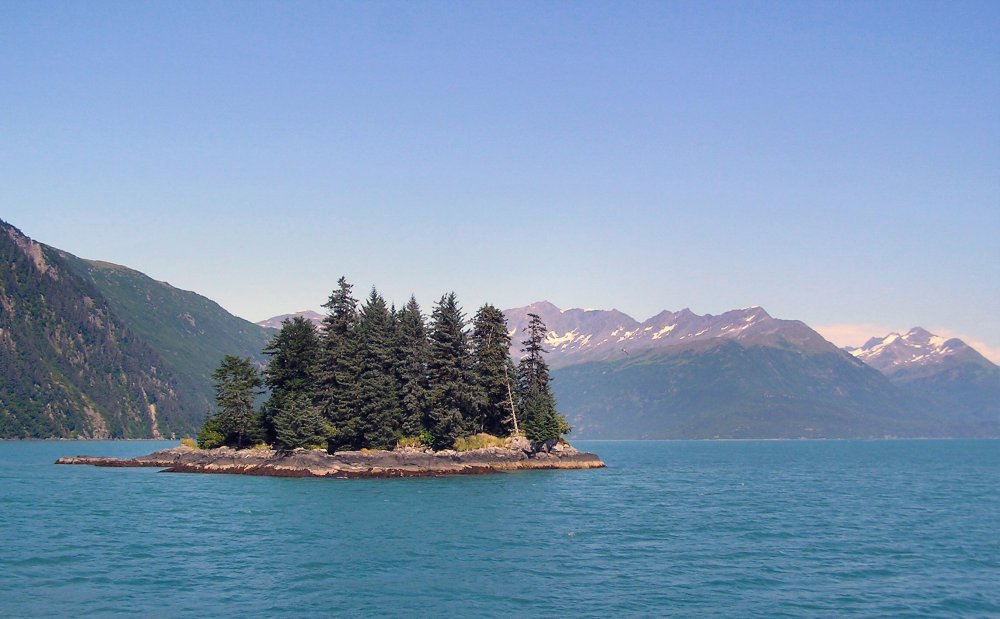
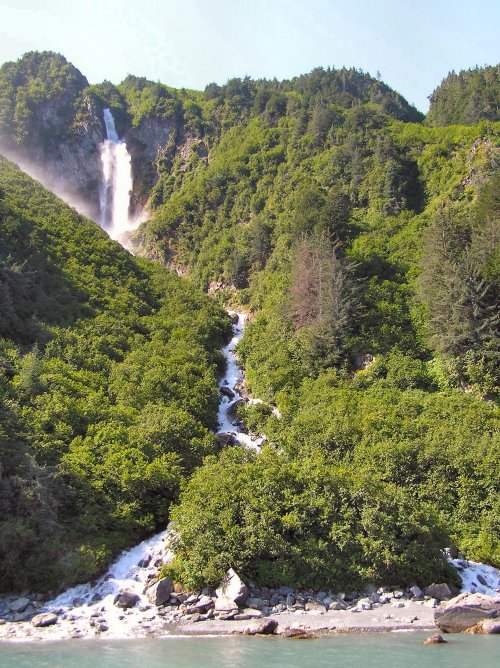
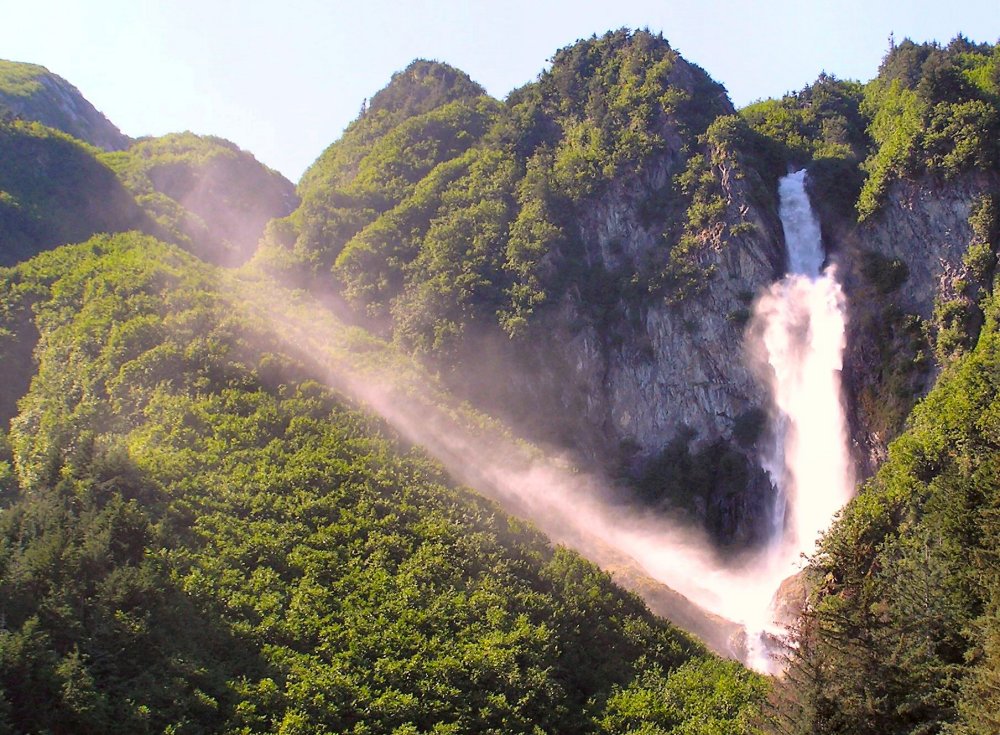
As I
did when I was in Seward, I talked to some of the tour boat
operators in Valdez about possible employment next summer as
a captain. And as before, as a professional courtesy I
was invited to go along on a free cruise, which I happily
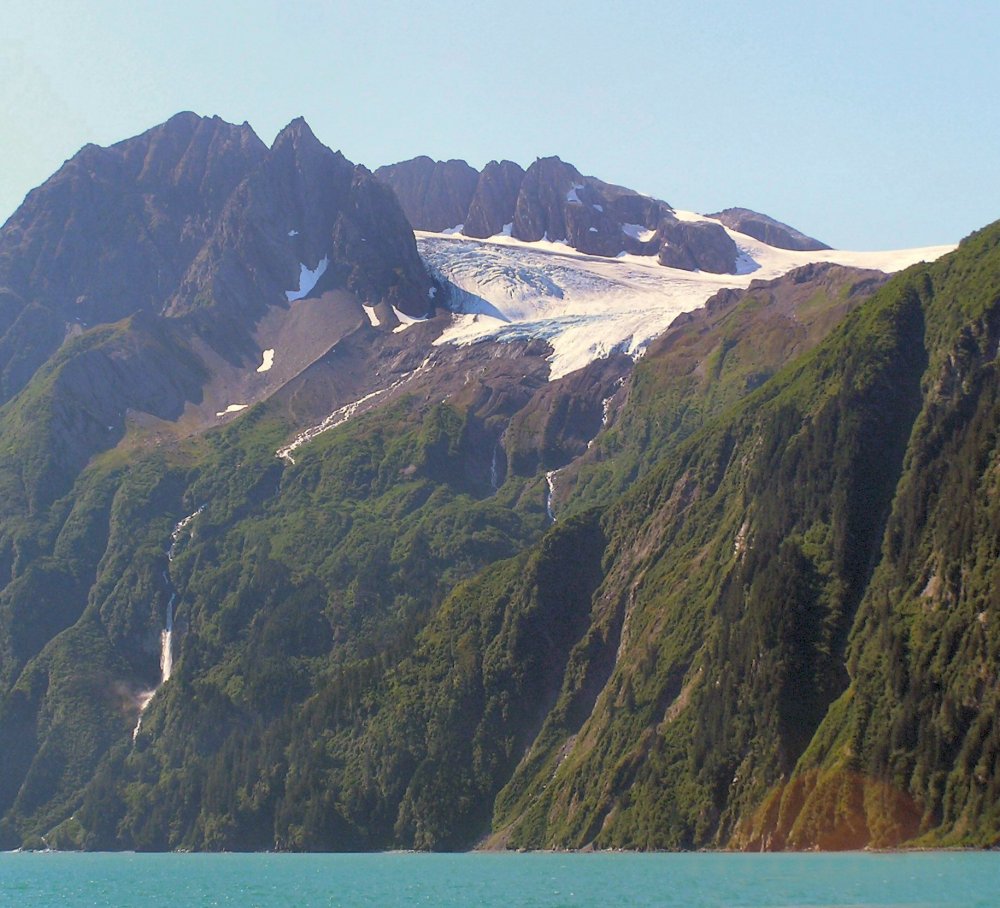
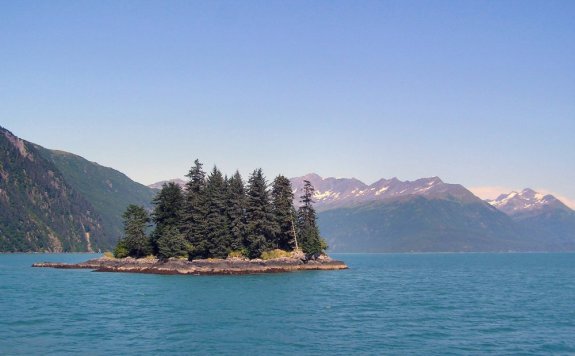
accepted. The tour I accompanied, aboard the motor vessel Lu
Lu Belle, lasted 7 hours and visited just one corner
of Prince William Sound, all of which is famous for its
natural beauty and abundant marine wildlife. It certainly
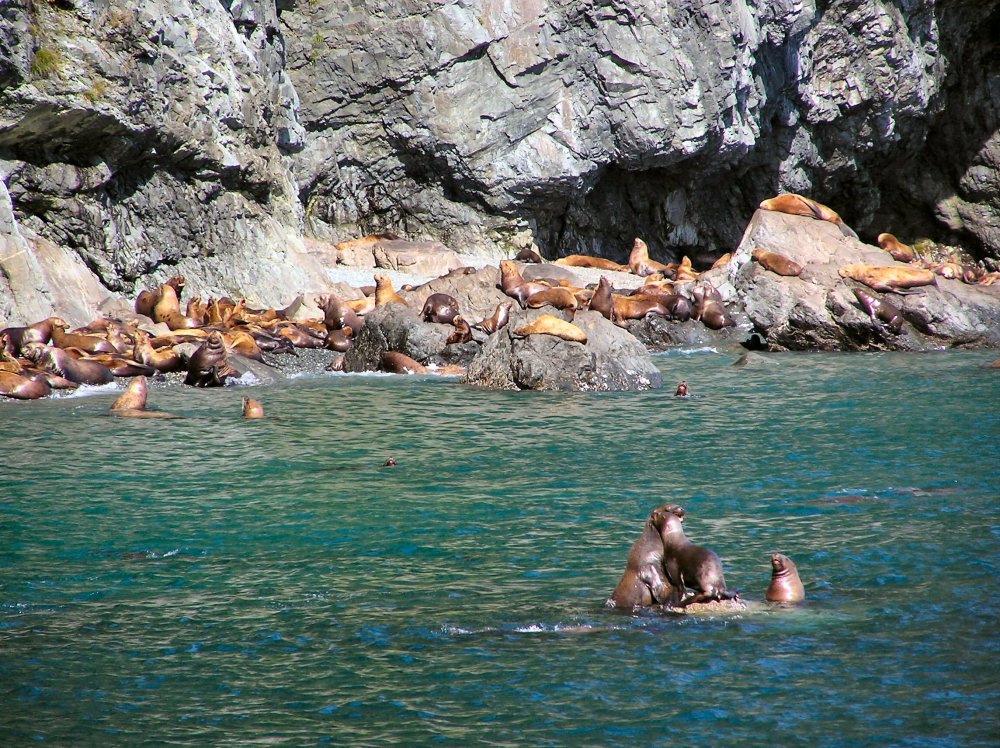
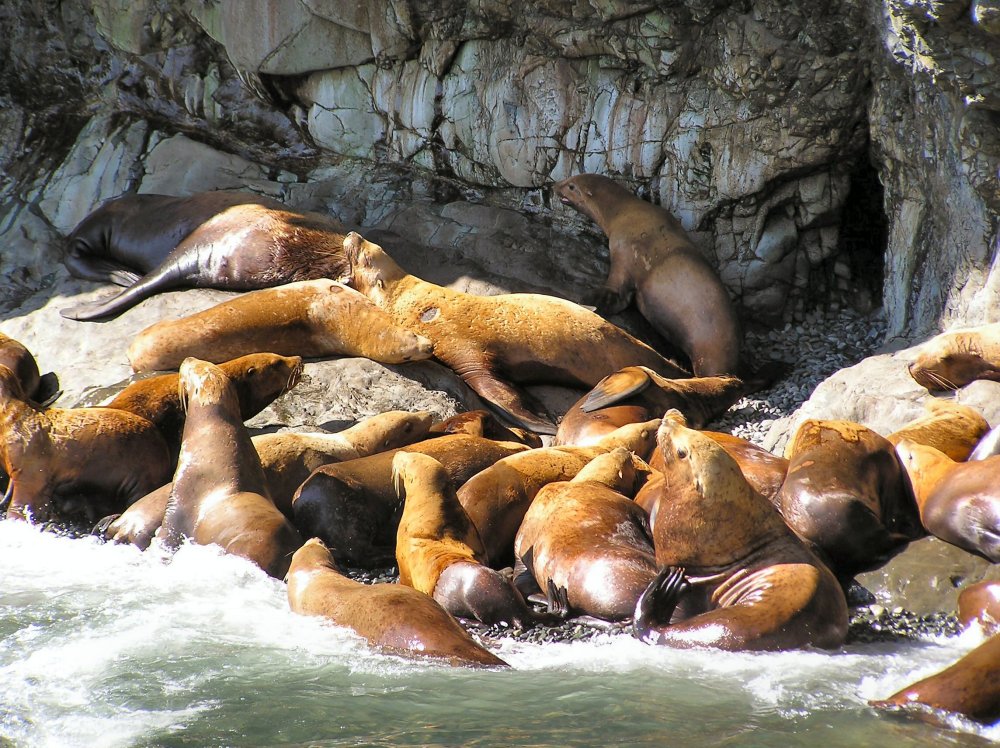
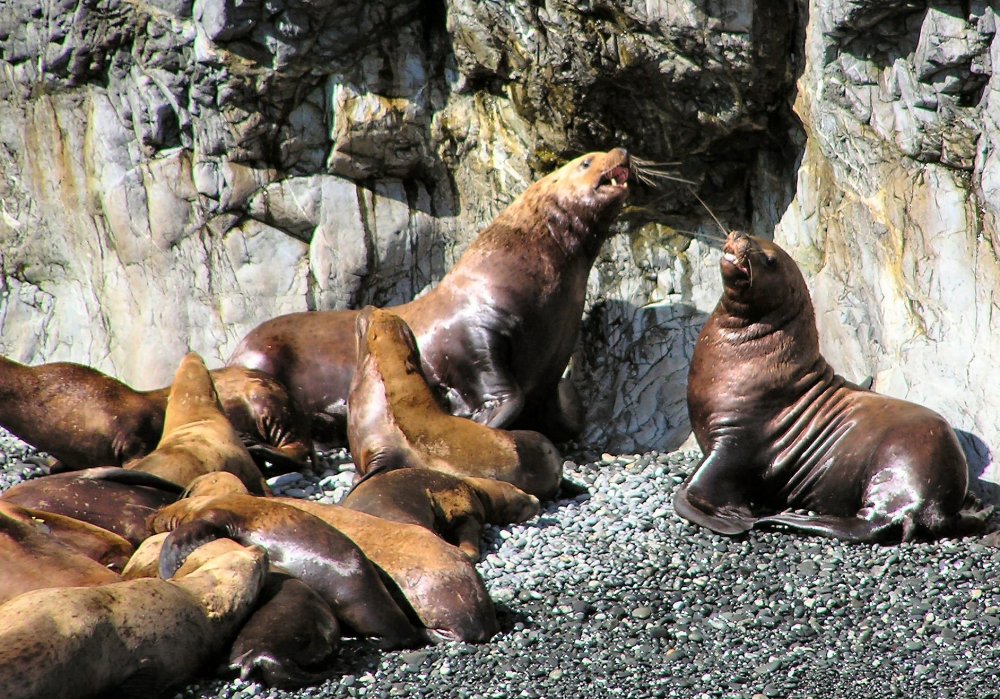
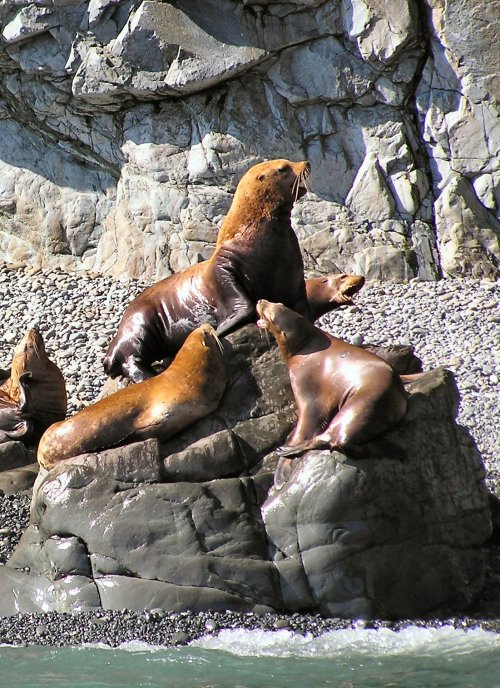
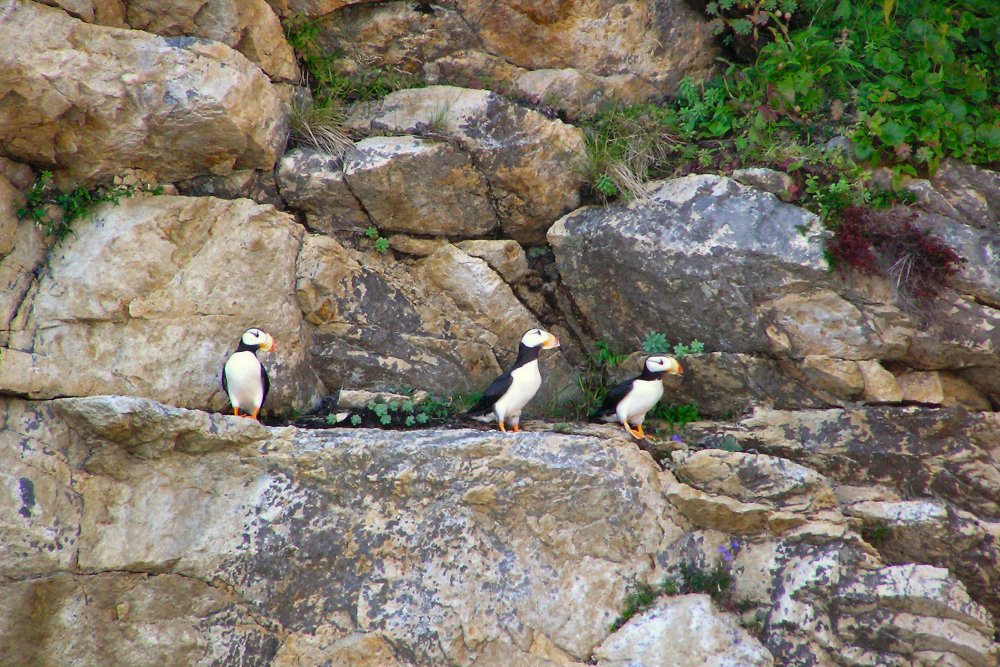
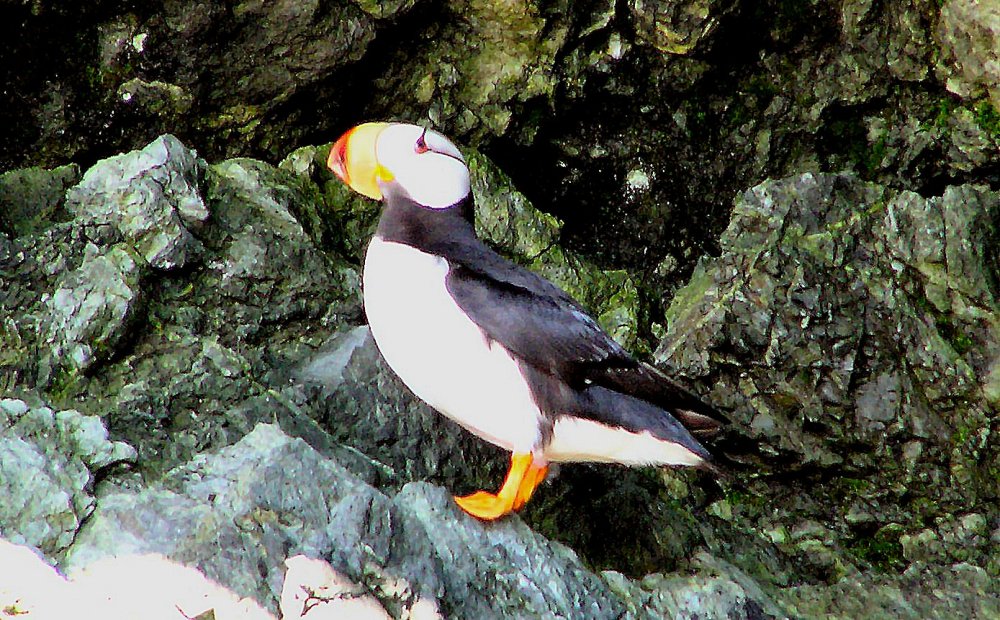
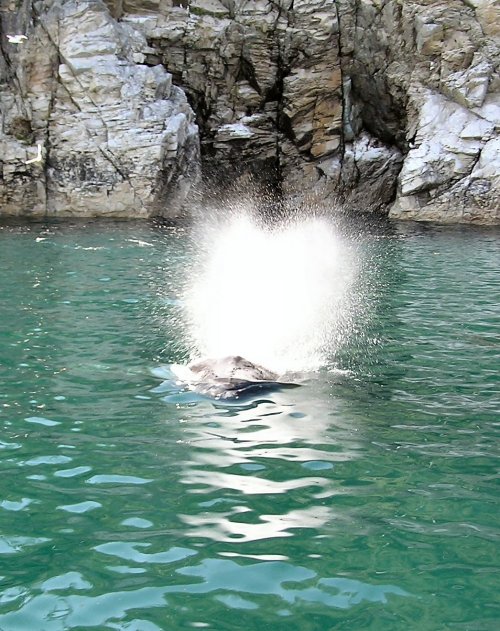
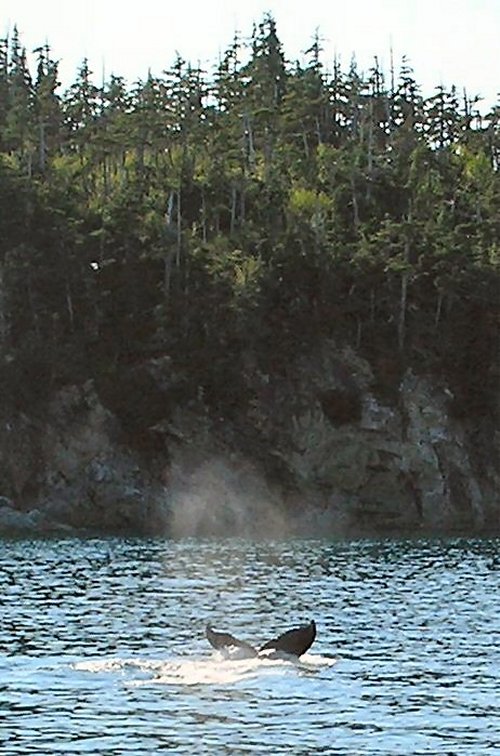
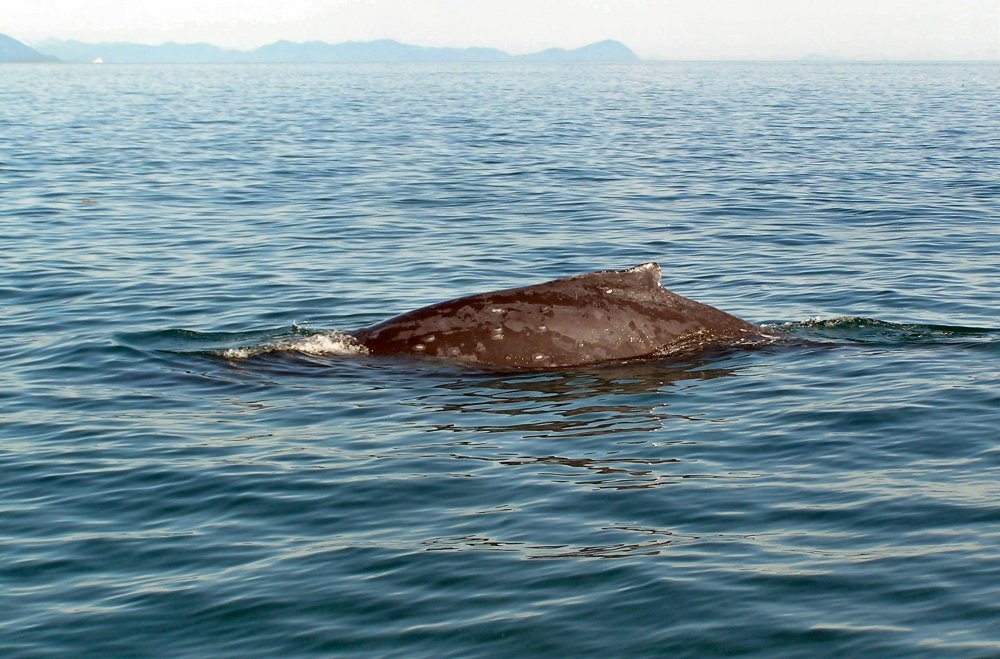
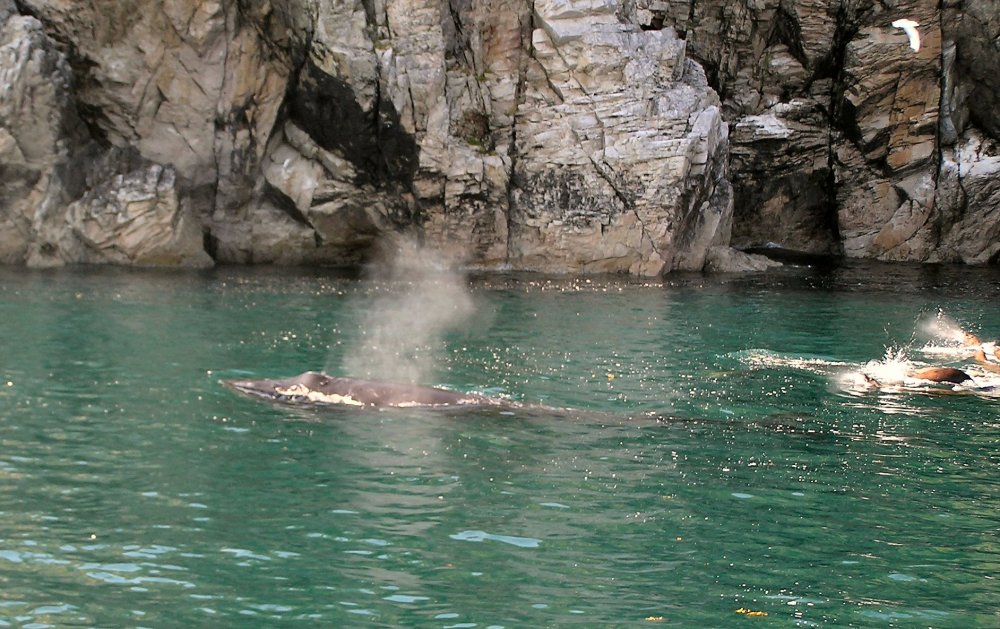
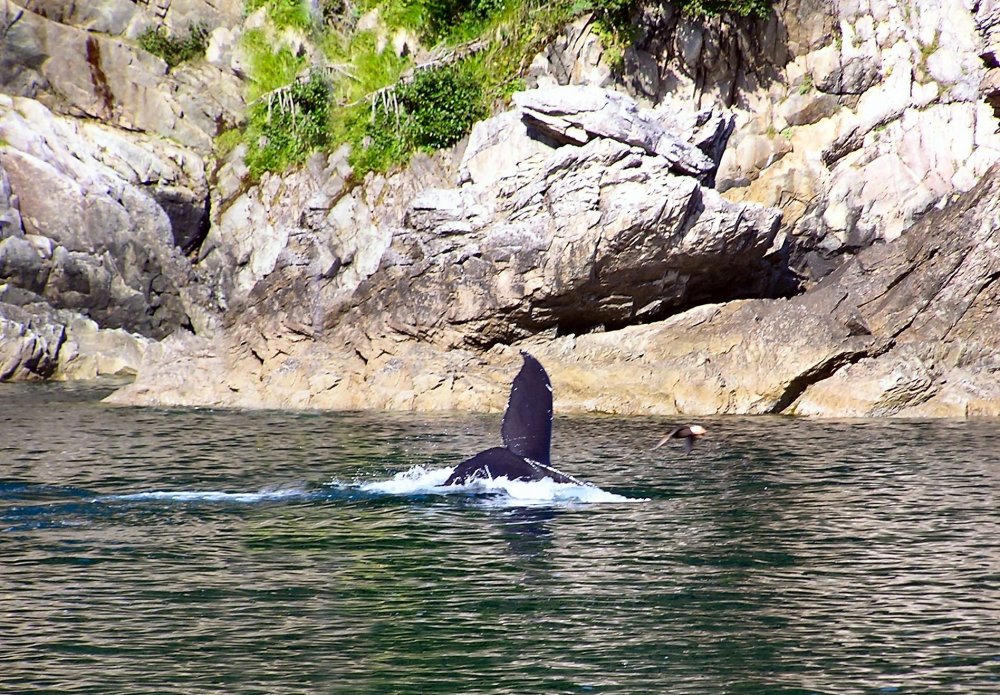
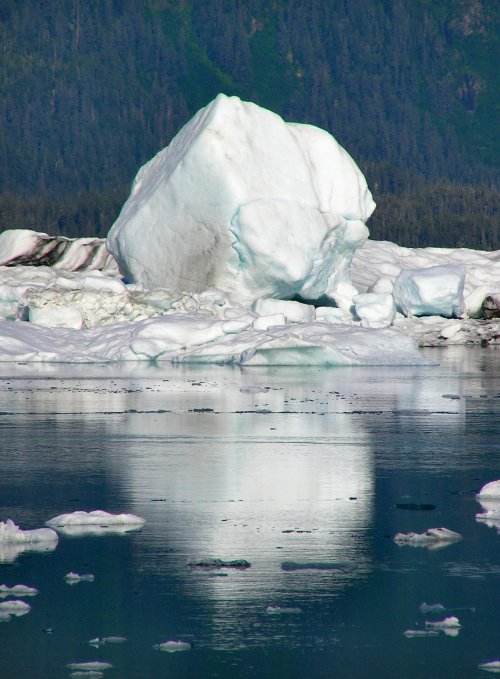
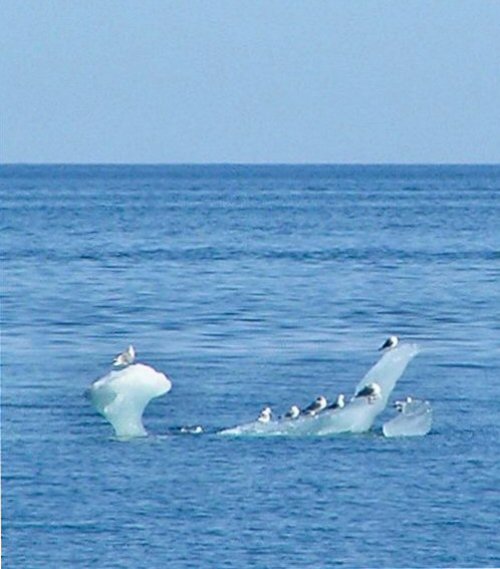
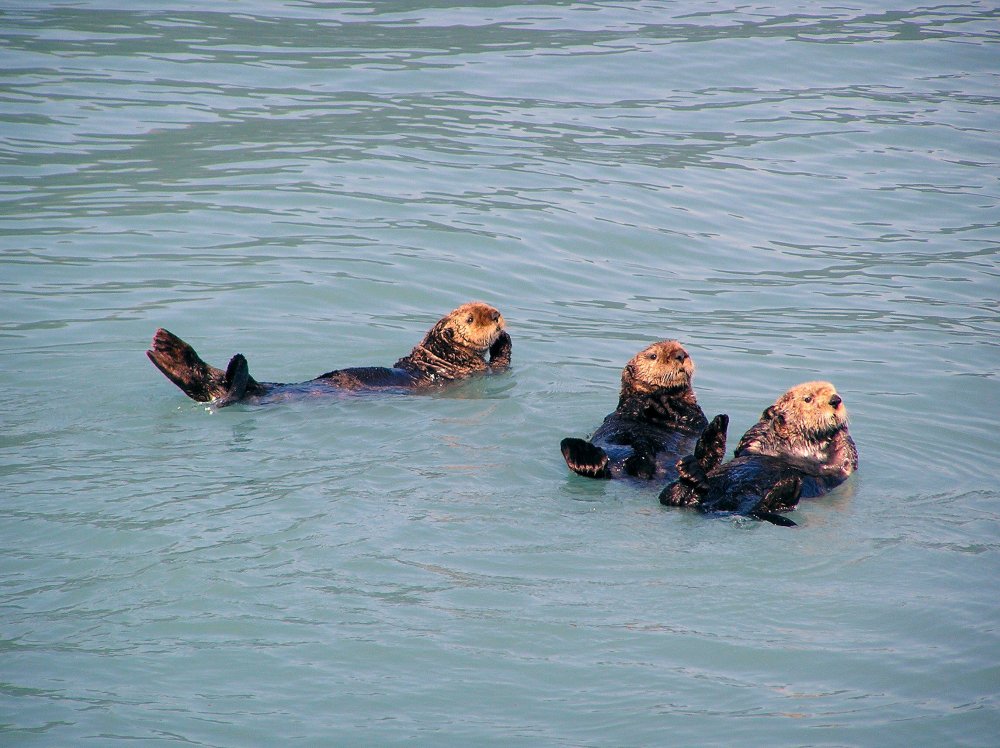
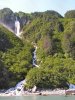
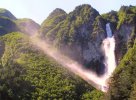
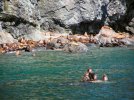
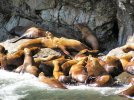
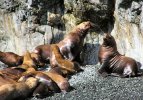
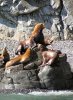
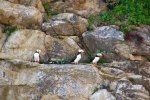
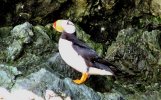
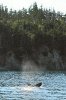
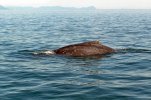
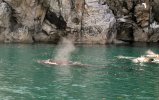
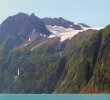
lived up to its reputation on both counts. Here are some
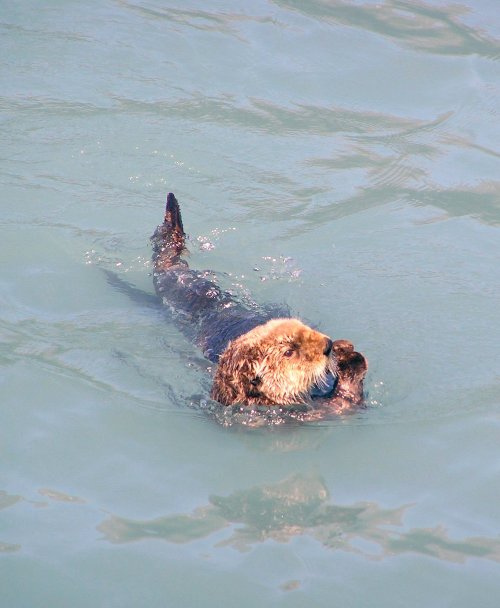
photos I took that day. Click to enlarge them:
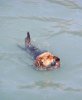
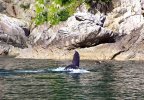
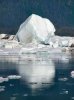
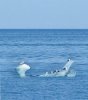
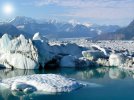
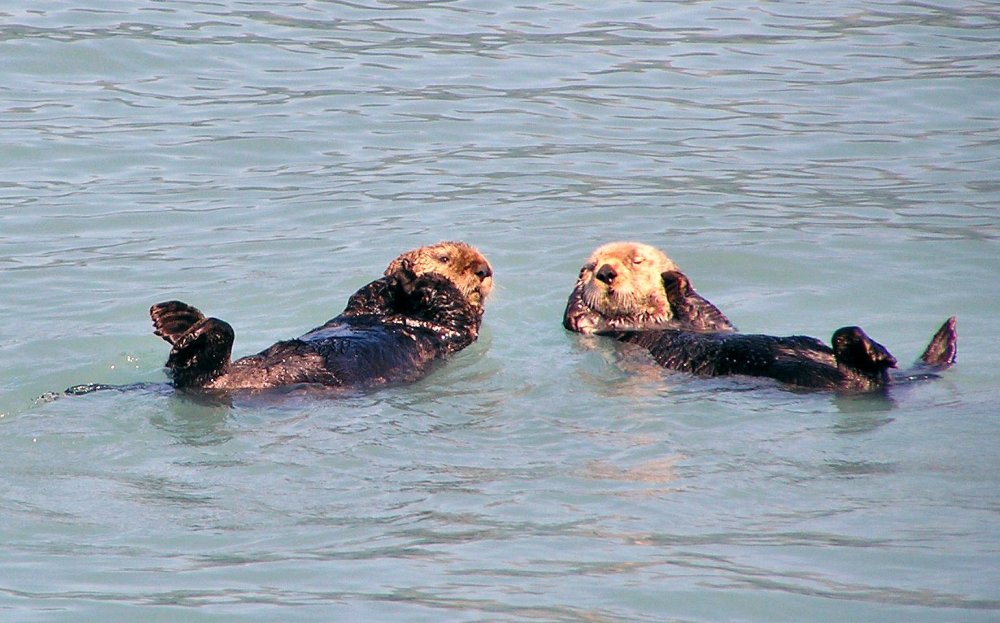
No
doubt the sea otters above are whispering tourist jokes to
each other. "Psst, hey, did you ever hear the one about
the tourist and the sea lion?"
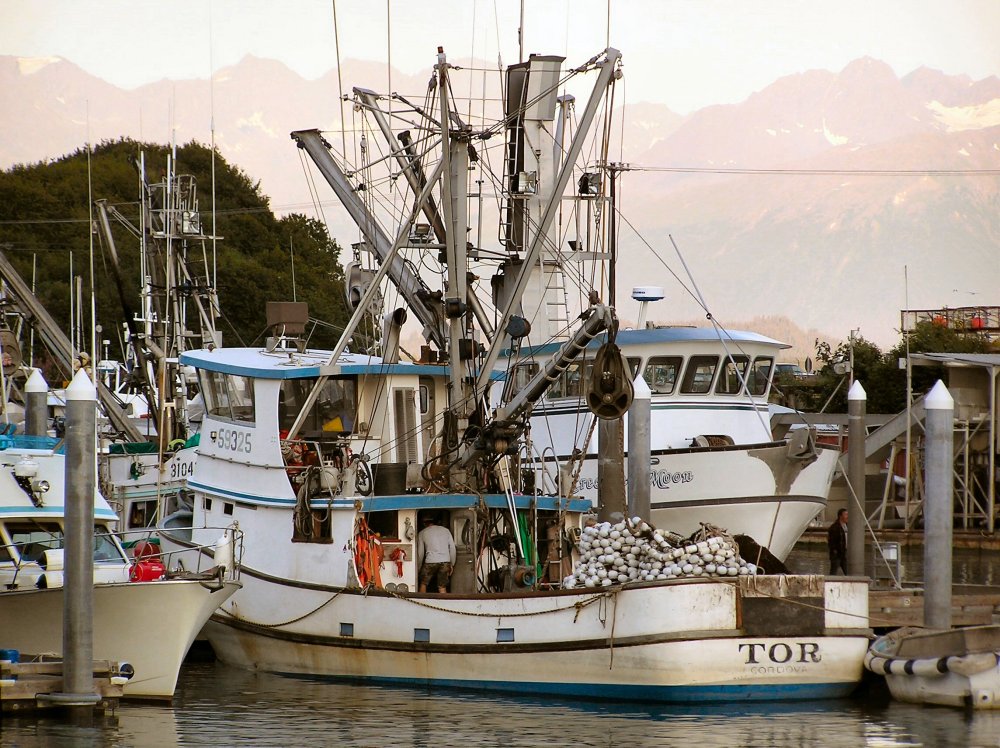
When
we got back to Valdez harbor, I spotted the fishing trawler
below. It bears the most perfect, most excellent name
imaginable (click on photo to enlarge):
 |
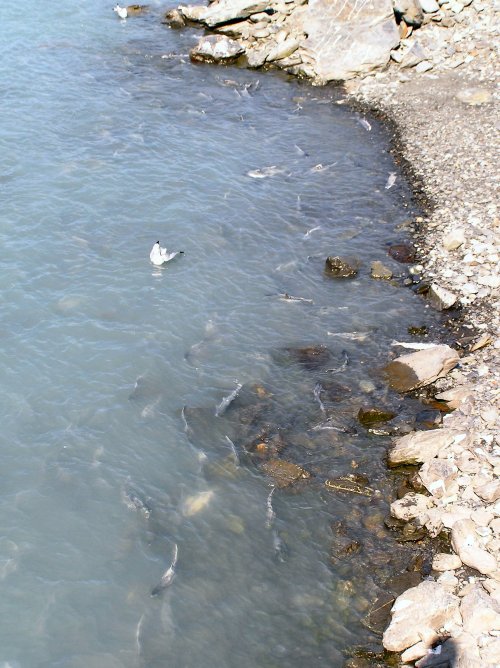
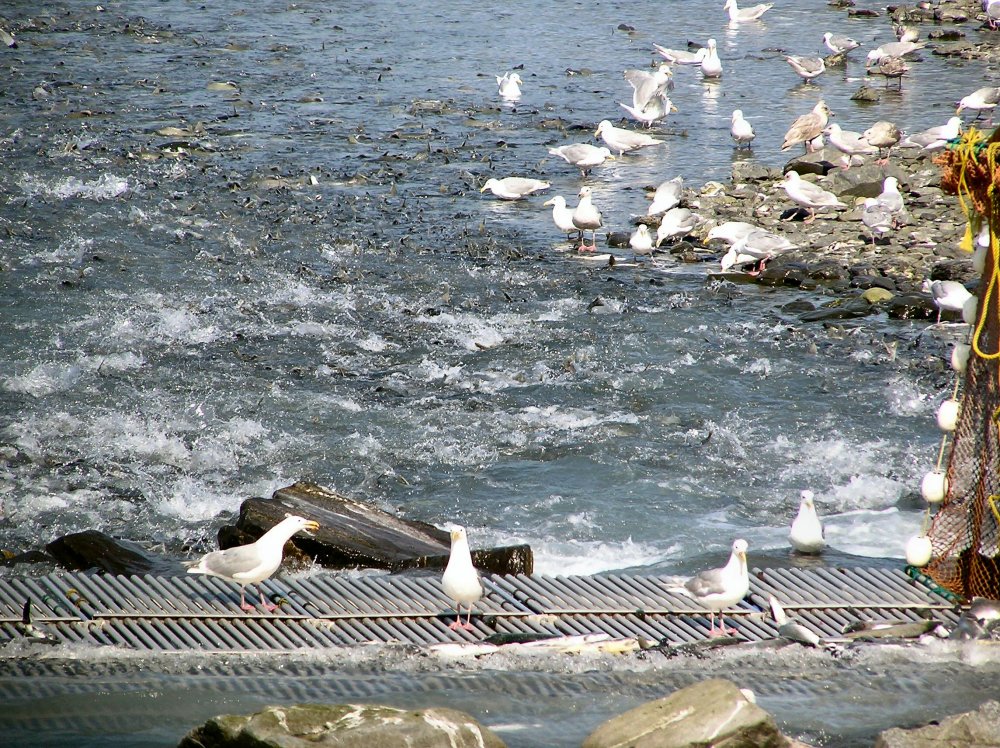
Later,
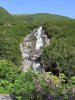
along the shores near Valdez, I watched salmon by
the hundreds fighting their way up streams to
spawn and die. Flocks of seagulls feasted on the
fresh carcasses, as do the local bears (although I
didn't spot any that day).
|
 |
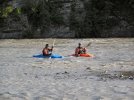
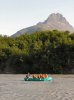
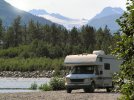
While
dozens of recreational vehicles crowded the typically
tasteless RV parks in Valdez (and paid for the privilege!),
I found (as always) a succession of excellent, free
campsites just outside of town that I had all to myself.
These alternately provided me with private waterfront
camping on the shores of Prince William Sound, access to
some awesome back country biking in the deep canyon flanking
the village, and tranquil riverside views at the base of
Thompson Pass. No other campers ever pulled in. I am
constantly amazed at the herd instinct that drives most RV
travelers into those tacky, barren, expensive RV parks where
they are stacked like cattle in a boxcar, and I'm very
grateful for it. By corralling them in there, it leaves all
of these beautiful, empty campsites available for me out
here.
I left
Valdez reluctantly, but had some business to take care of in
the big city. I'm renewing my Coast Guard captains license,
something I've had to do every five years since I first got
it in 1978. This entails getting a stack of forms from the
USCG Exam Center in Anchorage, filling some out myself,
getting a physical exam and a drug test so that a doctor and
a lab can fill out others, listing and verifying my
accumulated sea time during the past five years, assembling
copies of my former boat's title and my current captain's
license, plus any other paperwork they want, and turning it
all in to them for approval.
I also
wanted to pre-arrange winter storage for my RV somewhere
around Anchorage. I plan to leave it here this winter and
fly to warmer climates.
I do
not care for cities in general. Anchorage isn't all that big
by Lower 48 standards and I'd been there previously, but
after the beautiful places I've been lately it jolted me
with its concrete, noise and traffic congestion. I could
hardly wait to get out of there, so I took care of my
business quickly. Twenty eight hours after arriving I headed
south, back to the verdant Kenai Peninsula.
A
company in Seward, at the edge of the Kenai Fjord National
Park, is interested in having me skipper a schooner for them
next summer, taking groups out on day sails on Resurrection
Bay. I'm not certain that's something I really want to do,
and they're not quite certain of their plans, itinerary, pay
scale, etc, but I returned here yesterday to talk to them
some more about it, with the result that we agreed to wait
and see, to sort of go with the flow. That seems to suit us
both for the moment. In fact, it summarizes my approach
these days to most details when mapping out my future.
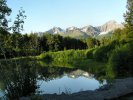 |
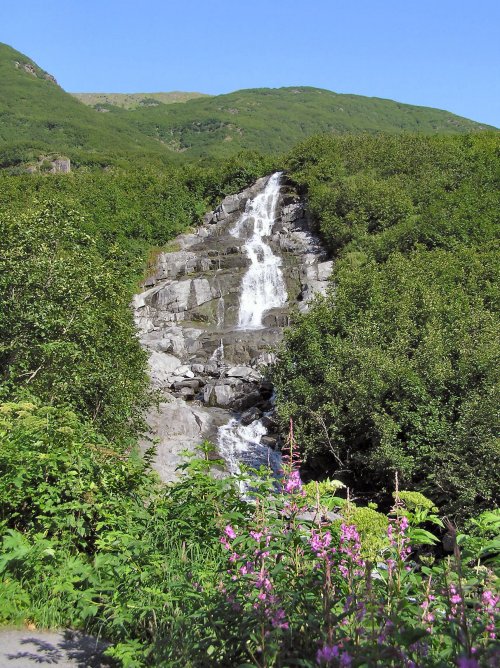
So,
here I sit in one of my private campsites, just
outside Seward, Alaska. The sun is shining.
Snow-spackled mountains are reflected in the pond
a few feet from my door. Today seems like a fine
day to hike up to the high waterfall on Mount
Marathon, which flanks the village.
|
I
intend to pass what's left of this summer exploring the
mountains and forests of the upper Kenai Peninsula, which is
more lush and diverse than the Alaskan Interior up north.
I'll keep you posted.
Next Entry: 08/16/04