Vancouver Island
Vancouver
Island straddles the 50th parallel close off the coast of
British Columbia, just north of Washington's San Juan Islands
and to the south of Southeast Alaska. It measures about 250
miles long by maybe 75 miles across in the middle and has some
respectable mountains. The largest of these, Mount Arrowsmith,
towers nearly 6,000 feet above the Pacific Ocean.
Vancouver
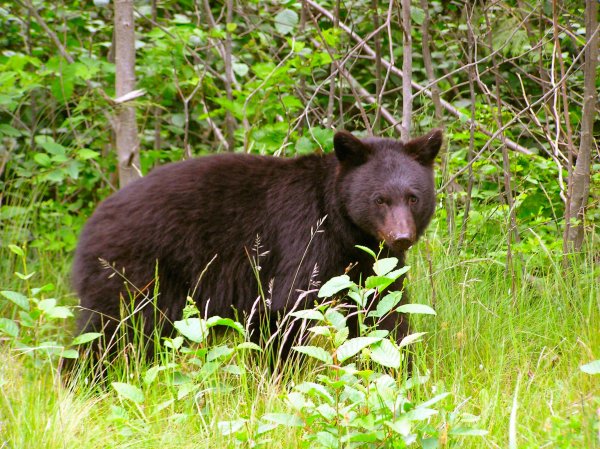
Island's forests are home to an abundance of wildlife, including
bears - mostly black, a few brown or grizzly, I'm told - and
mountain lions (a.k.a. cougars). Gray Whales and Orcas migrate
along the west coast and bald eagles patrol the skies.
Unfortunately, lying so close to the huge city of Vancouver
across the channel, the island also supports a substantial human
population, much more than I had expected. In fact, the
southeast coast is entirely and utterly given over to urban and
suburban sprawl of the most tedious kind, and development is
only likely to increase as Vancouver Island prepares to host the
2010 Winter Olympics.
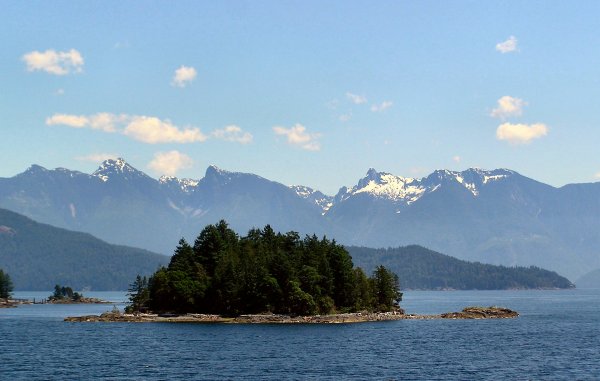
This place
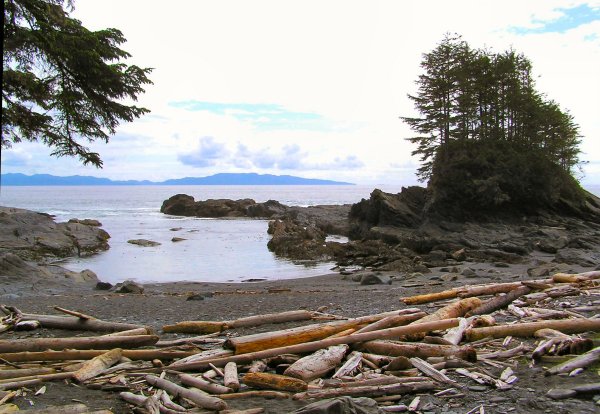
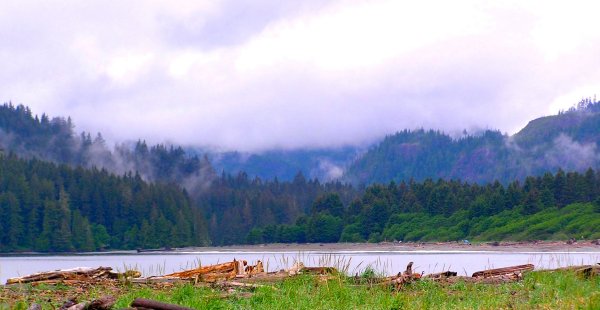
is a paradox. On the one hand, it boasts some stunning natural
beauty - forest-clad and snow-capped mountains, wild streams and
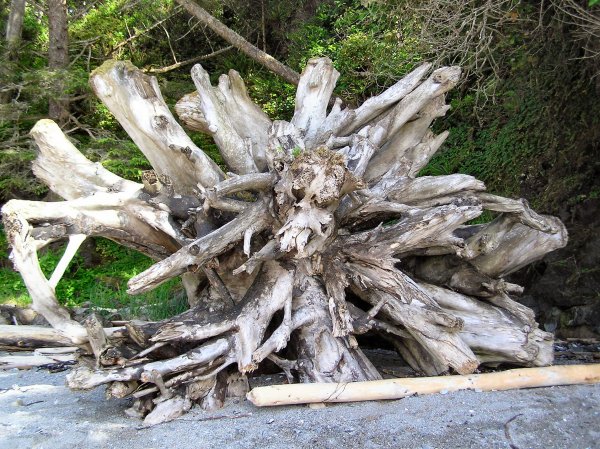
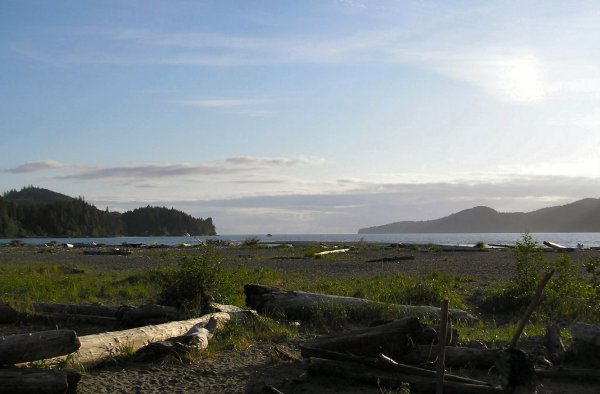
waterfalls, crystalline lakes and miles of virgin,
driftwood-strewn beaches - all stuff I love. On the other hand,
lumber companies have raped, pillaged and plundered the forests
here for a century and a half and, incredibly, they're still
getting away with it. The magnificent old-growth forests that
once covered this island, and indeed all of northwestern North
America, have long since been razed. A few tiny pockets survive
in provincial parks, but the cursed lumbermen, whose selfishness
and greed apparently know no limit, are doing their best to
eradicate even those negligible remnants. Judging by the way the
people and government here have let these criminals run rampant
for so long I don't hold out much hope for those last few big
trees.
What a
travesty! All over Vancouver Island the scars of this holocaust
glare. Clear-cut slopes appear everywhere as gaping wounds in
the landscape. Entire mountain ranges are just now sprouting
third-growth saplings that rise hopefully from where once
thrived seemingly endless forests of a biodiversity, majesty and
mystery that you and I will never get to experience.
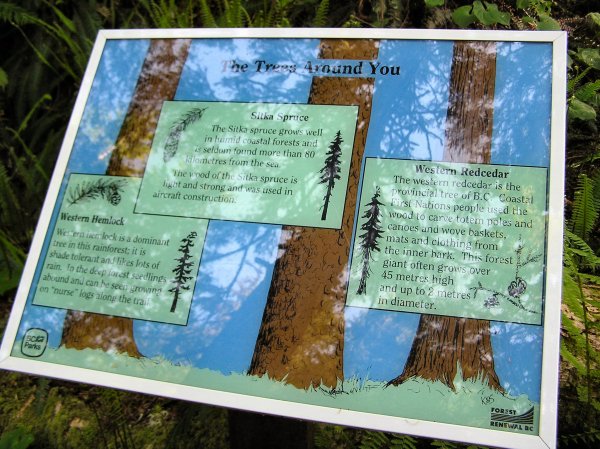
"Oh,"
the lumber companies assure us, "the forest regenerates
itself. It's a Renewable Resource. It'll grow back."
Sure it will - in about 800 years. Or it would, except
those sons of bitches won't leave it alone for even 50 before
they're in there cutting it all down again, selling the lumber
to the Japanese and stuffing their pockets while we, the
rightful heirs to those forests, are left with nothing but paper
towels and toilet tissue on sale at Wal-Mart.
I am not
one to rally to causes or wave banners in protest, but in my
opinion the most desperate and violent tree-spiking activists
are way too soft on those damned lumber barons. I would very
much like to see every lumber company's board of directors hung
from the tallest remaining trees, by the neck until dead, and
half of their vast, stolen wealth used to re-train their
employees and teach them how to grow, nurture and protect our
forests instead of destroying them. Turn them all into forest
rangers! The other half of the loot could go towards reforesting
some of the land they have wasted.
But we're
still going to have to wait 800 years for the Northwest forests
to fully recover, and that's only if we get started right away.
So c'mon, everybody, grab a noose and a lumber baron!
What is it
that moves some men to have such total disregard for our planet
and the life on it? What makes them think it's OK to do what
they do - to cut down all the millennium-old forests in the
world just for the money they can get for the wood? What sort of
parents would raise children like that? And what mindless
minions would go to work for lumber companies, day after day,
and pretend it's a decent way to earn a living? I mean, I
understand a person has to earn a living and maybe support a
family, but for heaven's sake there are other ways to do it that
are productive rather than destructive, or at least neutral.
It's not just the lumber CEO's that are guilty of these
horrendous crimes against the planet, but every single person
that helps them do what they do.
The worst
offenders, the ones I hold most responsible for this disaster by
their consistent acts of omission, are the governments, both
American and Canadian. Our elected leaders are guilty of a
breech of public trust so gross, so long-lasting and of such an
enormous magnitude that it staggers the imagination. Not one of
them in 200 years stopped the slaughter of our old growth
forests, or even slowed it to any appreciable extent as far as I
know. Not one friggin', baby-kissing politician!
Maybe when
all is said and done, it's all of us who let this happen. Our
parents generation and theirs before them did little or nothing
about it, and we're not doing much better. A few long-haired
protesters are bucking a system so wealthy, so powerful and so
politically and economically entrenched that it makes David vs.
Goliath seem like even odds. I had no idea of the scope of the
destruction out here until I saw it for myself. Not just
Vancouver Island. Everyplace trees grow, or once grew. How
pathetic. Shame on all of us for doing it, for letting it
happen, and for allowing it to continue. But most of all, God damn
the lumber barons.
OK, I had
to get that off my chest. I'll get back to the travelogue now.
(I can just hear my wisecracking brother in law, Ron Owens,
saying, "So, Tor, what do you really think of the
logging industry?")
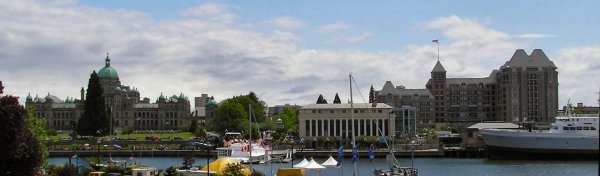
I began my
exploration of Vancouver Island in Victoria, the island's main
city and the provincial capital of British Columbia. Rising
early Sunday morning, I drove into that fair city before most
people were out and about (that's pronounced "ewt 'n abewt,
ehy?" if you're Canadian). I found Victoria to be an
exceptionally beautiful little metropolis and I spent most of a
whole day looking around it.
I'm glad I
chose a Sunday to do that. The parking restrictions were less
stringent downtown and, of course, the weekday commuter and
commercial traffic was absent. Sunday's strike me as the best
day to meet any city for the first time.
After
driving around Victoria for a while sightseeing from the RV, I
found a double parking space right in the heart of things with a
view of the harbor. Had I not been there so early in the day I
never could have done that; by mid-morning all of the downtown
street parking was filled. I had my "townhouse" in the
center of the city's tourist district for the day, which turned
out to be handy.
I launched
my mountain bike to go exploring and almost immediately broke
the chain peddling hard up a steep hillside by the waterfront. I
had broken this chain in Mount Baker National Forest, too, and
had repaired it myself. Obviously, the whole chain needed to be
replaced, not just patched. I found a bike shop not far away
that was open Sundays and talked to them about giving the bike a
complete tune-up. It had been on my To Do list for some weeks,
to have a pro go over this old bike of mine stem to stern, and
this seemed like the right time. I already knew it was overdue
for new cables, brake pads and more. I expect I'll soon be
peddling into some remote forests up towards Alaska and even
though I ride with an emergency repair kit, I really don't want
the bike breaking out there.
The guy in
this Victoria bike shop seemed competent and he was willing to
get it all done by that afternoon. So I left the bike, walked
back to the RV, and launched my second bicycle, a thin-tired
roadster I brought along for no real reason except that I like
it and nobody bought it at my yard sale back in Barrington. When
I first got this 10-speed, four or five years ago, I bought
special handlebars and brake handles for it that allow me to sit
upright when I ride rather than hunching over the original
racing-style handlebars it came with. I ride to look around, not
to go fast. It's a nice bike, perfect for paved city streets,
and I was glad to have it that day in Victoria.
|
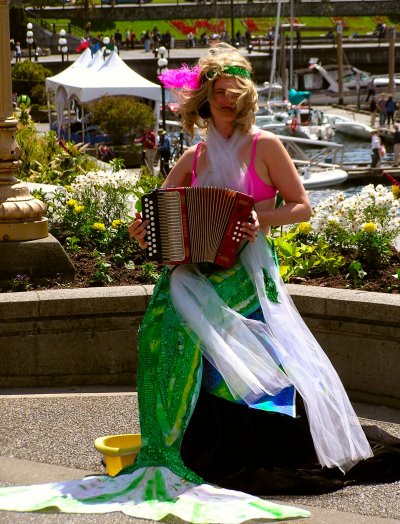
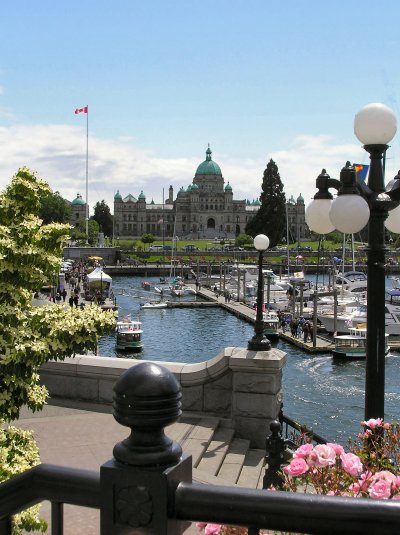
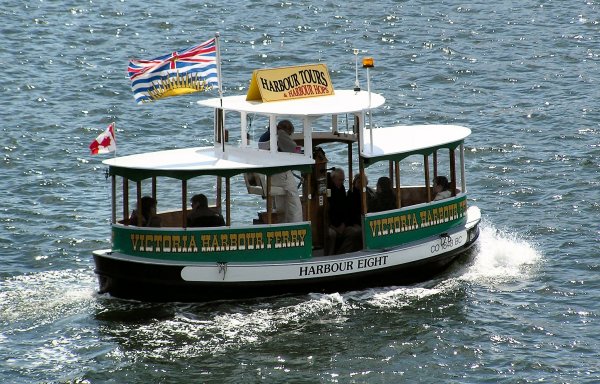
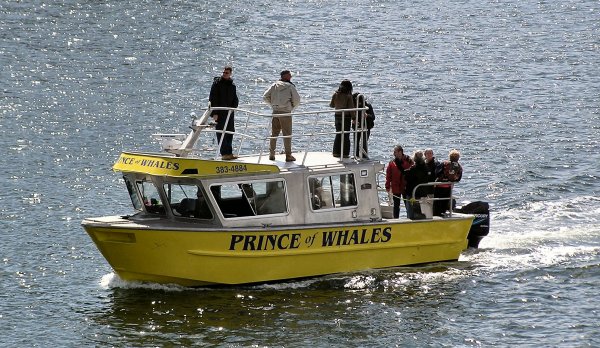
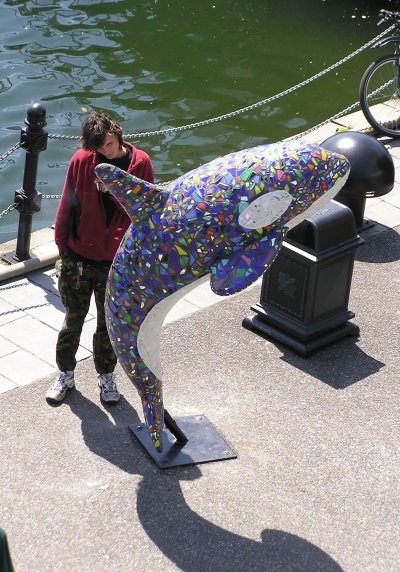
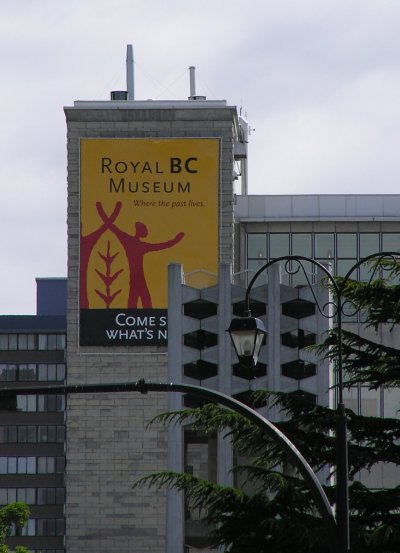
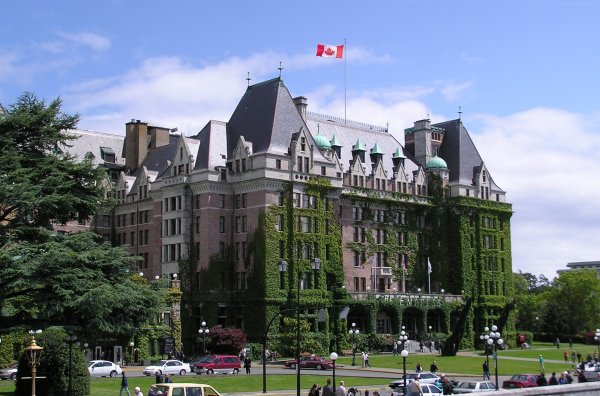
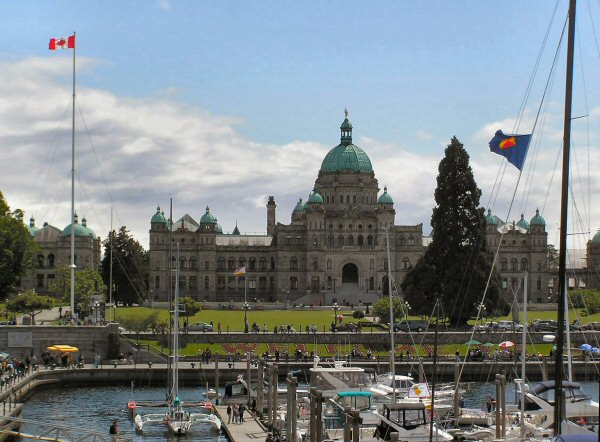
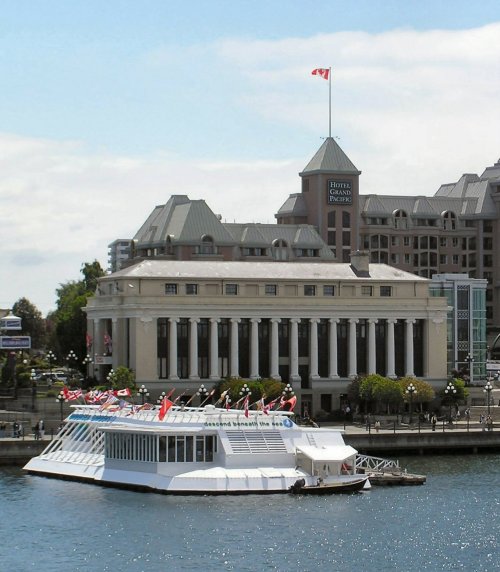
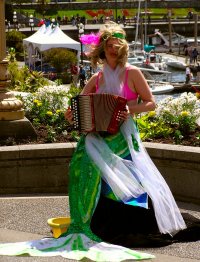
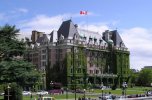
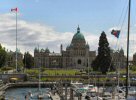
I
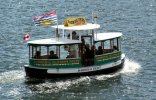
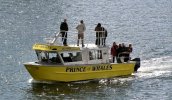
cruised the waterfront, admired the boats in the
harbor, the imposing government buildings, the modern
museum, the street performers. I rode out into some
residential areas. They were pleasant, clean, serene
on a Sunday morning. The weather was not so great at
first, overcast and drizzling on & off, but later
the sky cleared and by afternoon it was a brilliant,
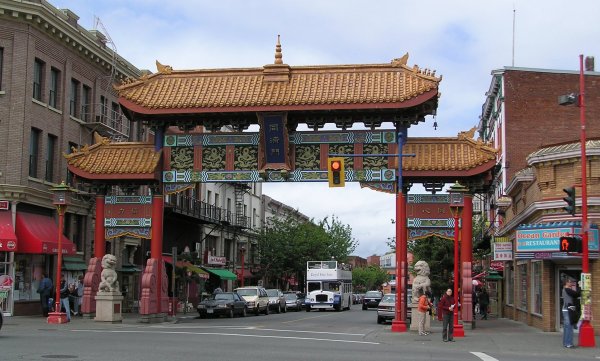
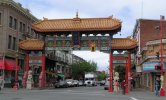
sunny day. I pedaled through the small Chinatown
district, the first one in North America and once the
center for opium manufacturing for the entire
continent. I found a lively street market in progress,
with booths selling local crafts (but, alas, no
opium). There I chatted with the locals and learned
more about where to go and what to see on Vancouver
Island, and I generally passed a fine day in Victoria,
VI, BC.
|
 |
Remember,
you can enlarge most thumbnail (small) photos by clicking on
them.
Then click your browser's Back button to return to this page
At 3:00 pm
I returned for my beautifully reconditioned mountain bike, tried
it around the block, loaded it onto the van's stern rack and
drove out of the city. Soon I was rolling up the southwest coast
of the island. I finished the day in a Provincial Park
campground simply because I did not see one single un-gated dirt
road that looked like it might lead to a nice spot in the woods
or along the shore. This was the first hint that the island's
roads are, in fact, very carefully regulated, limiting people's
access to the most beautiful areas. In fact, most of Vancouver
Island's land is inaccessible except on foot. Or by logging
truck, I suppose.
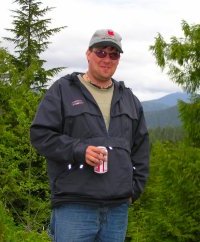 |
As
I drove out towards the end of the southwest coastal
road the next morning, I picked up a hitchhiker. Jim
had grown up on Vancouver Island's east coast, had
lived "off island" and even abroad for many
years, and was just now returning to the island for a
visit. He had never seen the end-of-the-road hamlet
that was our mutual destination and, as he and I hit
it off, we decided to explore it together. We soon
reached Port Renfrew and checked out the main docks,
which were just now being rebuilt after having been
wrecked by winter storms. We cruised through the
nearby Indian reservation, and finally took the last
bit of gravel road out to a Provincial Park and went
hiking.
|
|
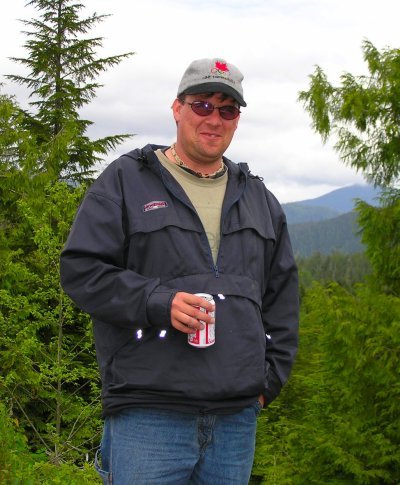
Jim is what I would describe as a genuine character.
Brazen but friendly, curious by nature, big &
strong but easy going as long as you don't pick a
fight with him. He had traveled and lived in more
places than I could count, had held a score of job
titles, and was one pretty smart man, if a bit
rough-cut. He was also on a self-proclaimed bender and
drank beer almost non-stop the first couple of days I
knew him, and yet he never seemed the least bit
intoxicated. After that he abruptly stopped drinking,
having completed the spree to his satisfaction.
|
 |
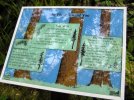
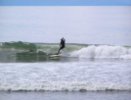
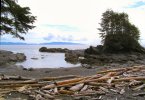
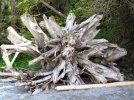
We hiked
until late in the afternoon. Jim ended up staying aboard the RV
that night, sleeping on the convertible dinette, which worked
out well enough and kept him out of the rain.
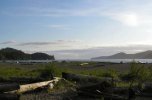 |
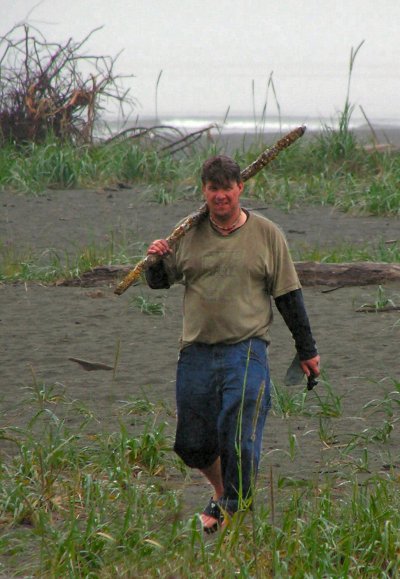
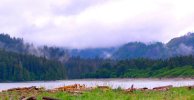
We
camped on a beach in the Indian reservation, facing
the Pacific Ocean through the bay's inlet and flanked
by the ubiquitous new-growth forest.
|
 |
I
eventually met a bunch of Jim's boyhood buddies when I dropped
him off in his hometown, Parkville, on the central east coast of
Vancouver Island. They were a friendly gang, clearly pleased at
the return of their prodigal pal.
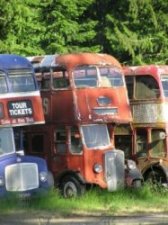 |
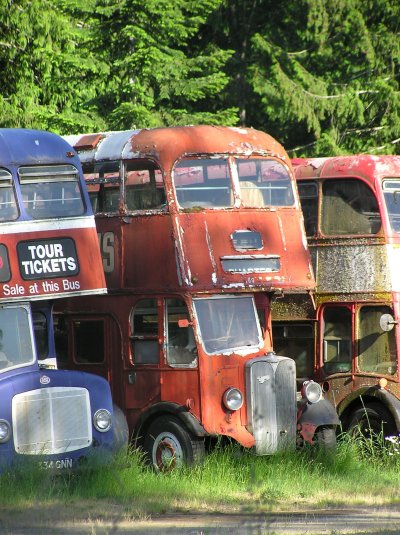
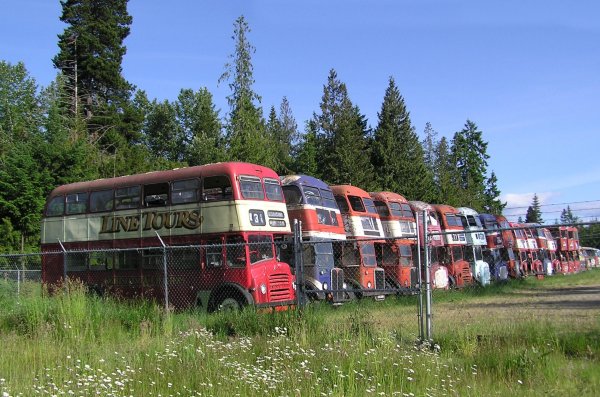
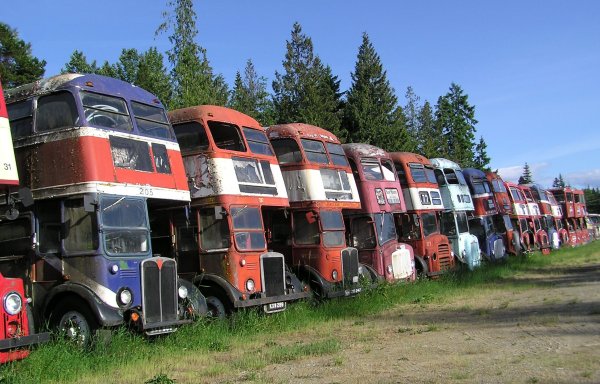
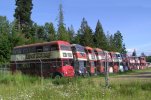
I
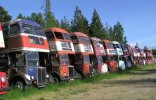
came across this double-decker bus bone yard along a
rural road outside of Parkville. What cool RV's these
would make! Of course, you couldn't take them very far -
they wouldn't fit under most bridge underpasses - but
they'd work as local live-aboards. I'd build the master
bedroom in the "loft".
|
|
The
central west coast of Vancouver Island was a mixed bag. It was
scenic, occasionally awesome, but the roads severely (and, it
seemed to me, intentionally) limited access to the land and sea.
There were almost no places to pull over to even stop and look
at the most beautiful views. Instead, the powers that be would
post "No Stopping" signs precisely where everyone
obviously would want to stop and look, such as alongside a
waterfall or at a panoramic viewpoint. How weird, to
purposefully prevent people from stopping to look at their own
public lands by designing roadways without any desirable
pullovers or access roads whatsoever. Most side roads that
did lead into the forest were logging roads, gated to keep
everyone else out. The few that were open were so torn up I
feared my RV would rattle apart. I could not follow them for
long.
Along the
west coast where everyone goes to see and enjoy the long, wild
Pacific Ocean beaches, the BC Provincial Park Service has
blocked off virtually all access and views except for a couple
of designated paved lots where they charge $10 to park and look
at the beach. I found it both shocking and offensive. It struck
me that Canadians must be an extraordinarily passive people,
especially where their government is concerned, to tolerate such
poor planning of their public roads and such audacity from their
elected officials and caretakers.
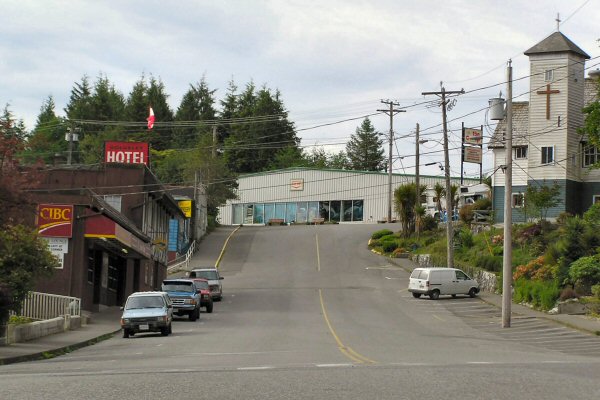
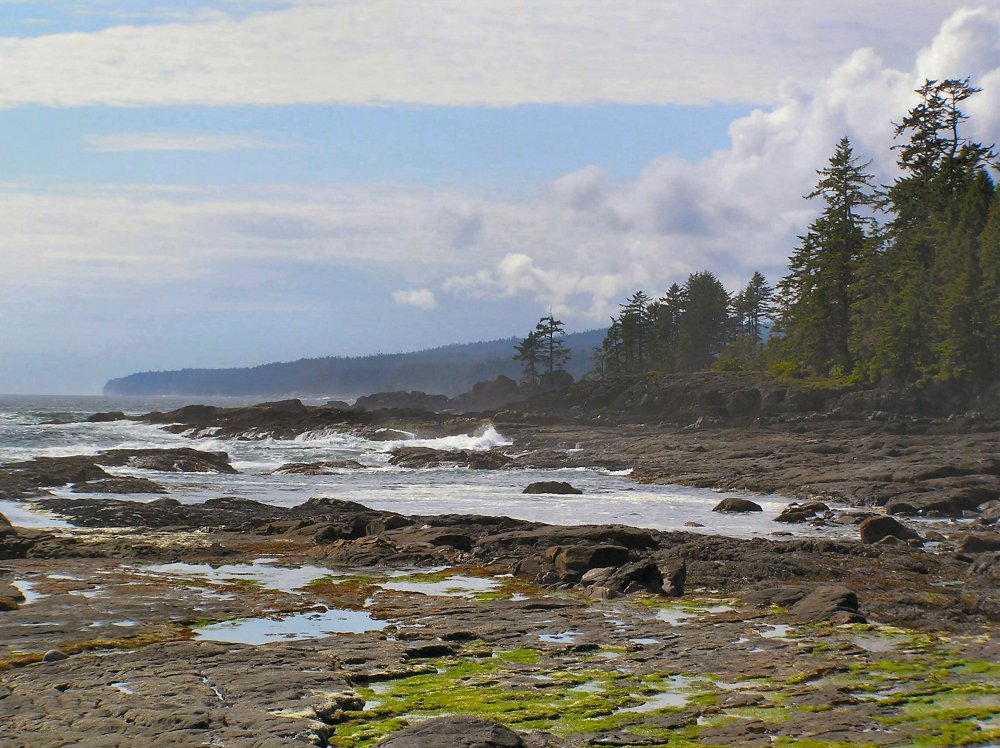
Nevertheless,
I did manage to see some pretty sights in spite of the
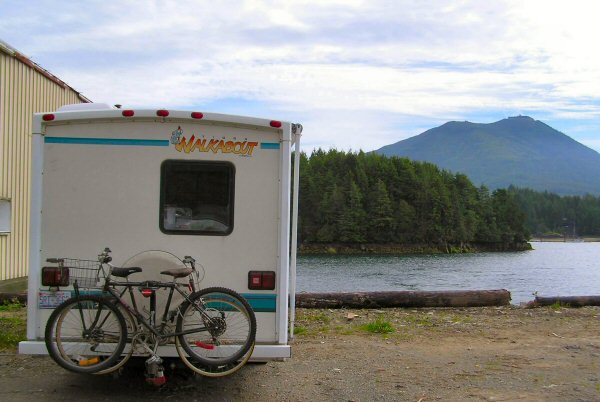
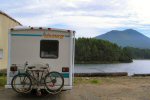
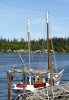
government's earnest attempts to prevent it. I stayed over one
night in a quiet fishing village that is fast being
overdeveloped into a yuppie vacation home community. For the
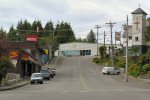
moment, downtown Ucluelet is still a quaint and quite
place and I was able to spend the night unchallenged parked
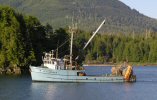
alongside a fisheries building right on the waterfront. Note my
photograph of Main Street at rush hour.
|

|
|
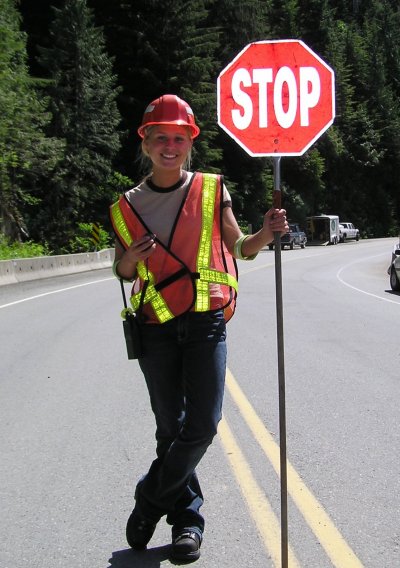
I
didn't mind so much being held up by road construction
on the way to Tofino.
|
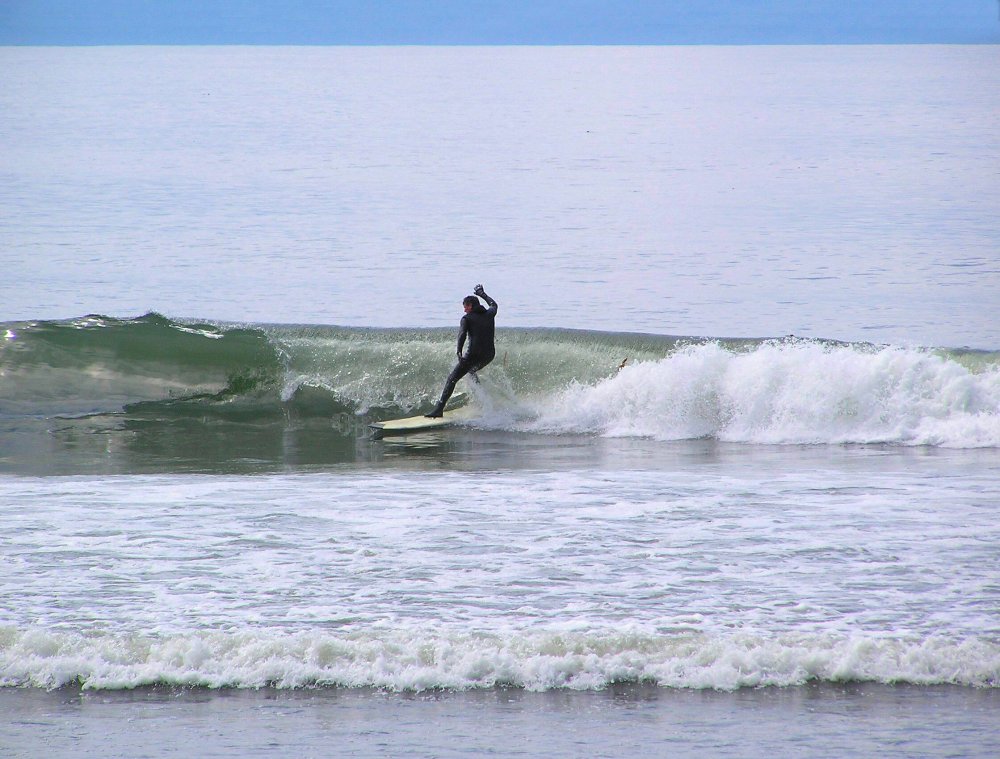
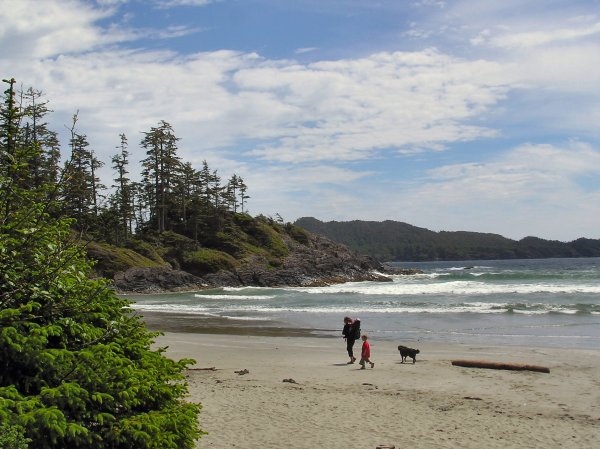
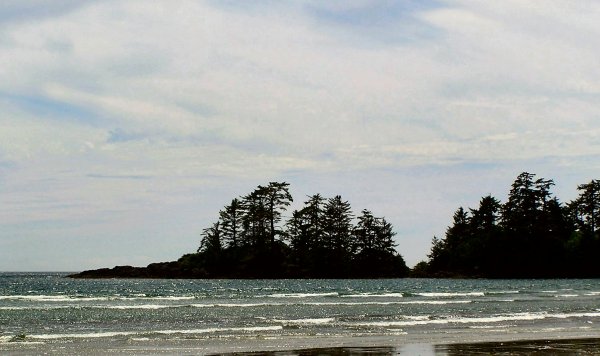
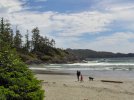
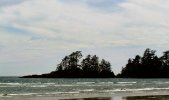
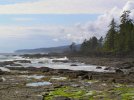
Vancouver
Island's untamed west coast beaches face the open Pacific Ocean.
They invigorate the spirit yet sooth the soul.
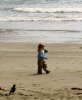
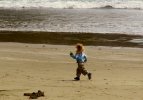
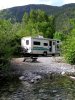 |
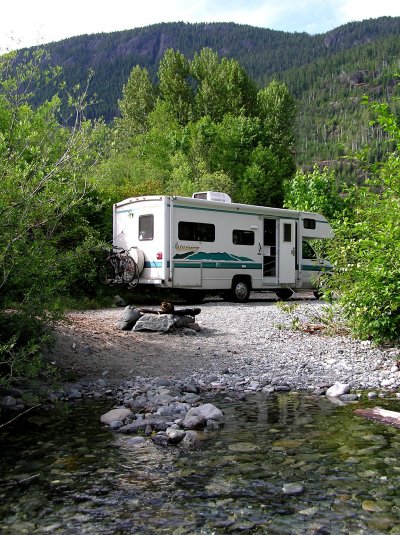
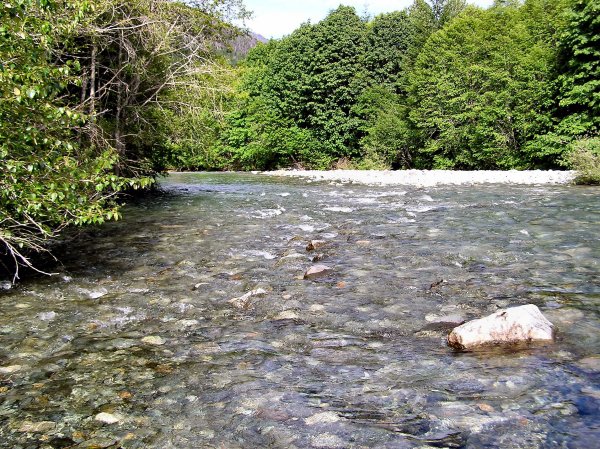
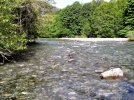
As
is my habit, I sought ways around the authority's
blockage of the off-road byways that lead into the
woods. I was particularly proud of finding this site
since there are so few of them here, alongside a clear
stream that gurgled merrily under gray skies.
|
 |
|
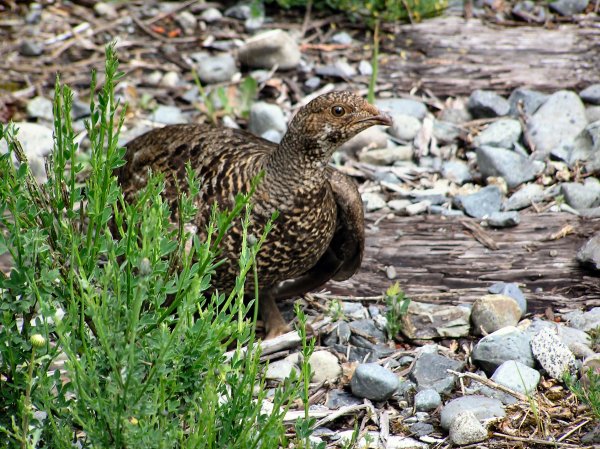
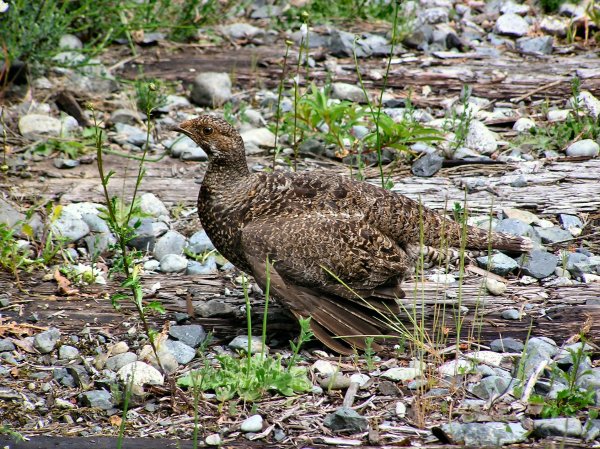
Heading
back along the central island's east-west road, I
stopped to hike up a small mountain. Halfway up the
slope I found an abandoned railroad track, which I
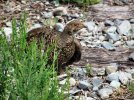
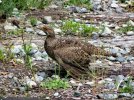
followed for a stretch. There I encountered this nutty
bird. Apparently, I was passing close to it's nest
hidden in some low shrubs alongside the tracks, and
this brave wildfowl decided I needed to be headed off.
In order to draw me away, it leaped around in front of
me pretending to have a broken wing. The idea was that
I, the predator, was supposed to be fooled into
thinking this was easy prey and so follow it as if
fluttered away from its nesting area. I played along
and followed the hen. She was doing her maternal duty
protecting her young, and I was curious how her little
charade would play out.
.
|
|
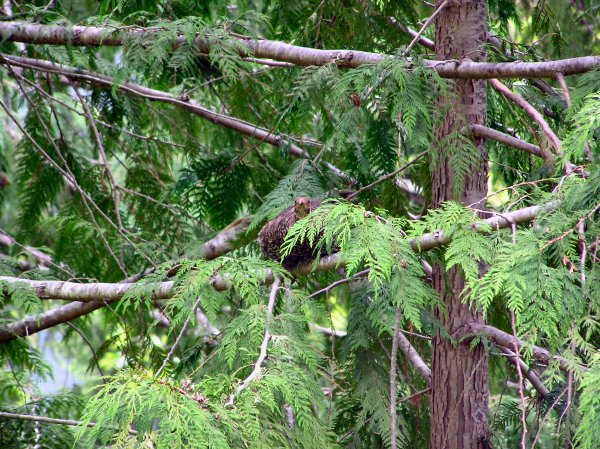
Well,
once she decided she had drawn me far enough away from
the nest, she abruptly stopped acting injured and flew
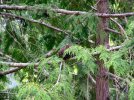
off to the safety of a high pine bow. There she sat
laughing at me with a loud clucking that echoed in the
quiet woods. (Can somebody out there tell me what kind
of bird this is? Is it a ptarmigan? If you know, let
me know.)
|
 |
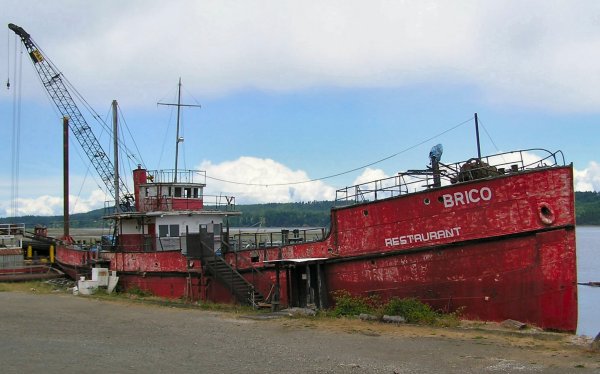
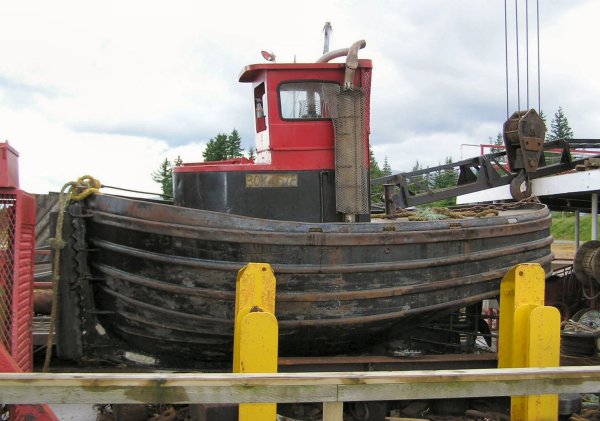
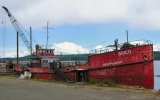
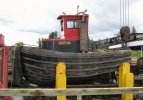
I cruised
farther up Vancouver Island's east coast. The suburban sprawl
finally gave way to a more rural atmosphere in between the
towns. By forsaking the highway in favor of a winding coastal
road, I got a look at an older, gentler island with a lingering
maritime heritage.

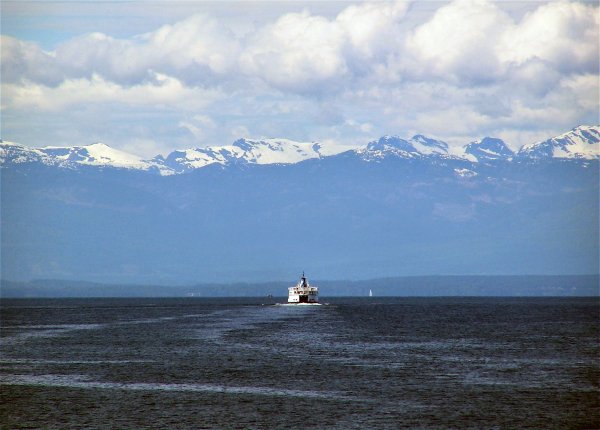
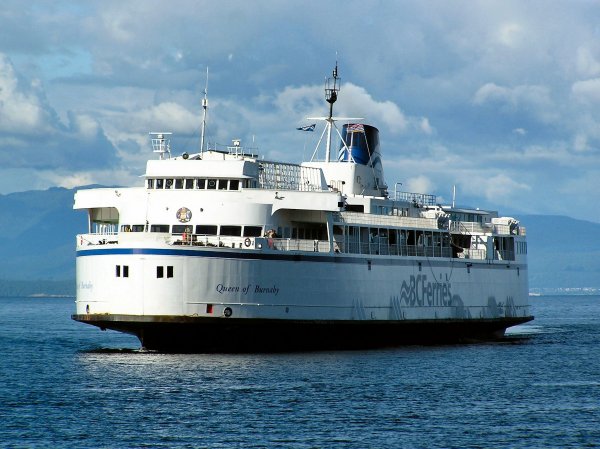
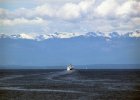
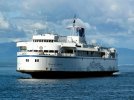
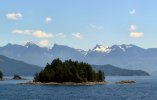
Well up
Vancouver Island's east coast I finally loaded my RV onto the
first of three ferries that would carry us back to mainland
British Columbia. This first leg of my Canadian visit was
gratifying, if not quite what I'd expected. Perhaps if I foster
fewer expectations in the future I will experience fewer
disappointments.
Next
Entry: 06/26/04