Thailand,
page 6
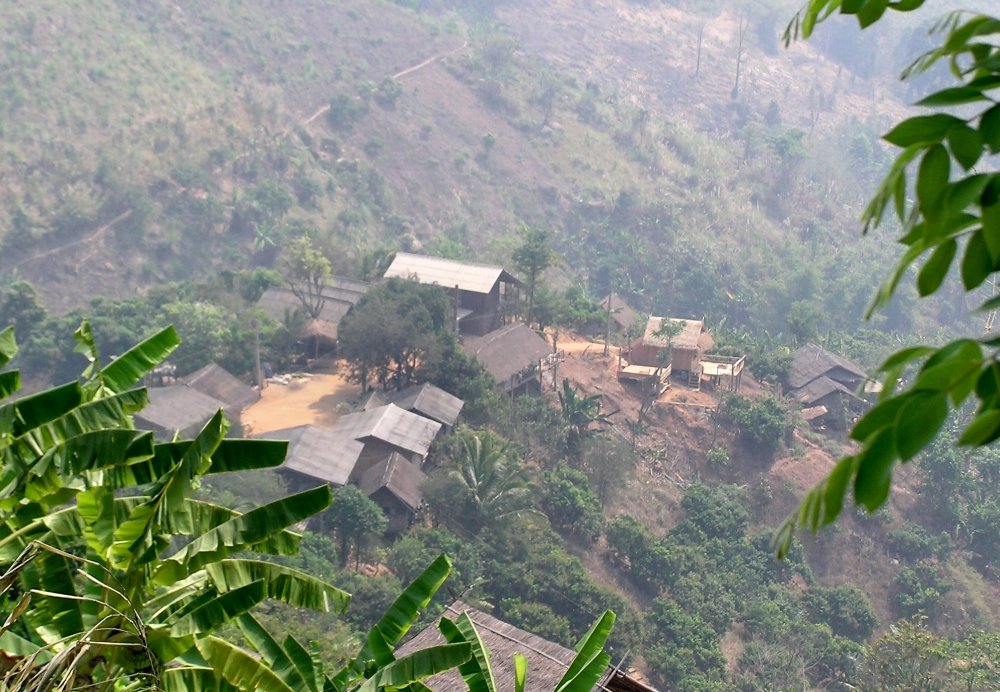
I've
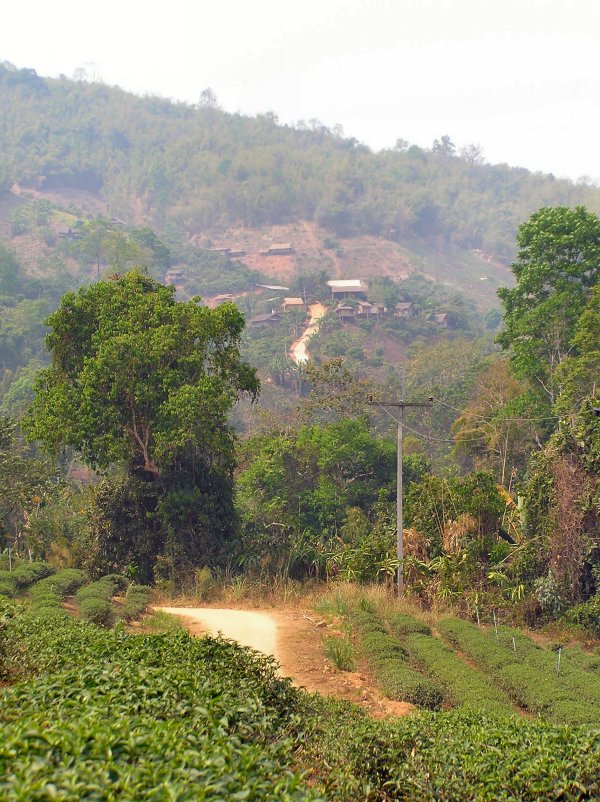
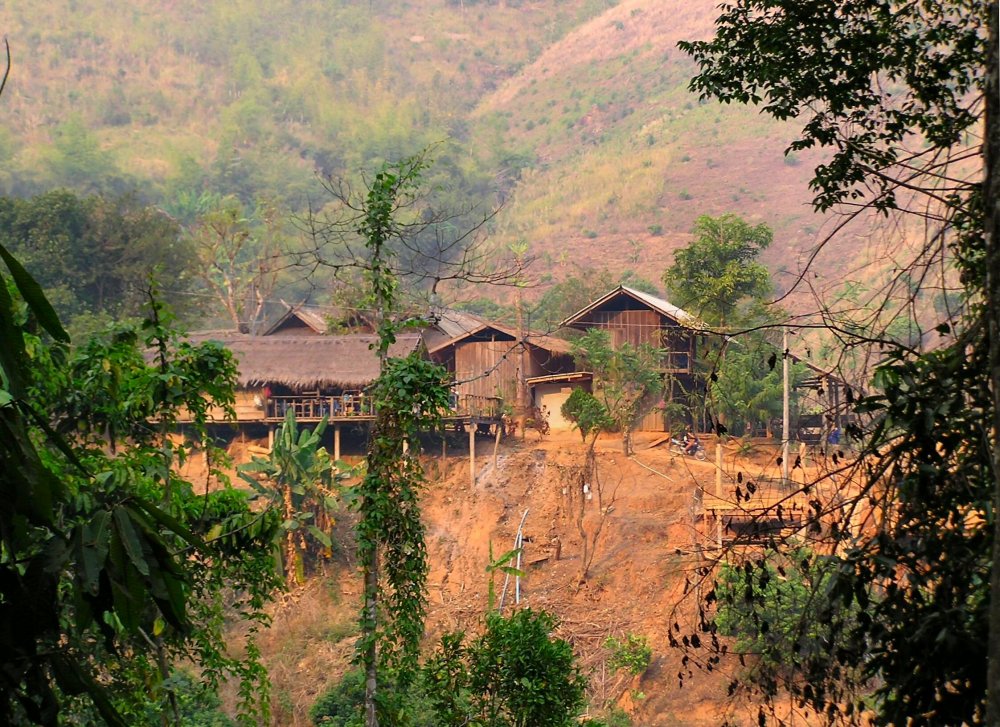
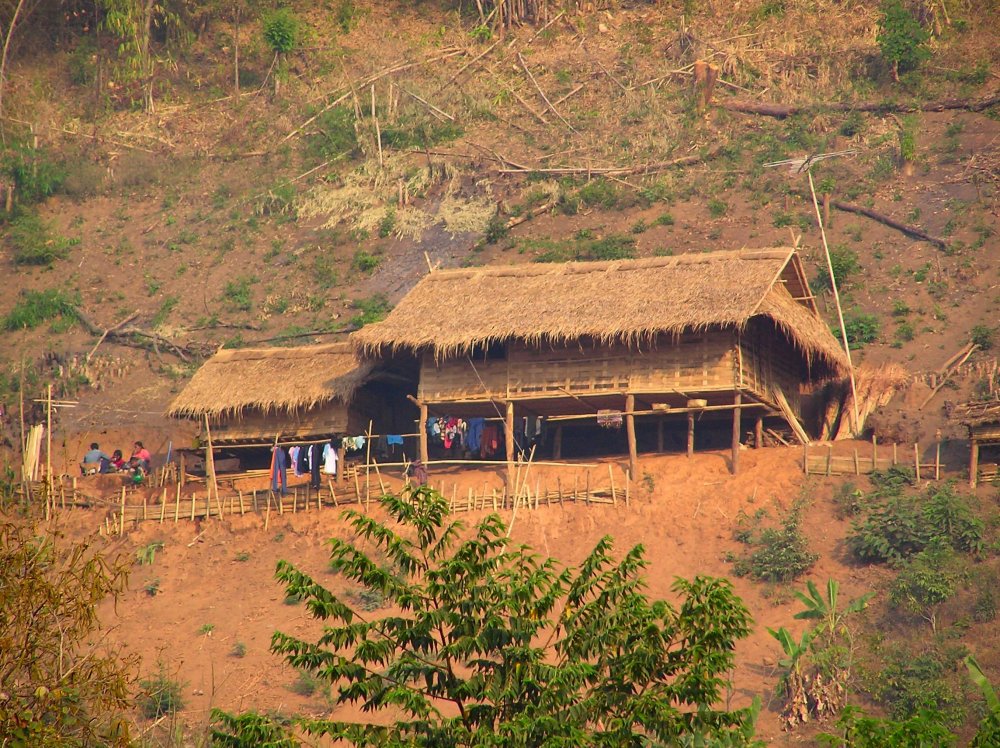
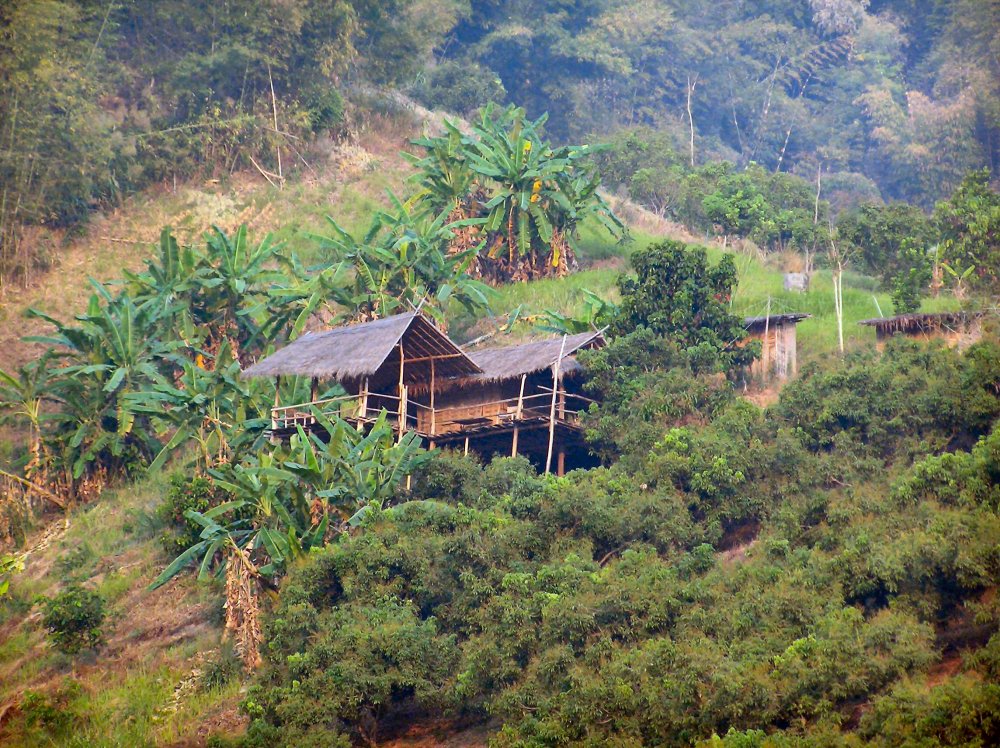
been living in an Akha hill tribe village northwest of
Chiang Rai, Thailand. The hill tribes, called chao khao
(mountain people) by the Thais, are said to have originated
in various parts of China and Southeast Asia. They are a
race apart, a small, tough people who prefer to live in
remote highlands. Comprised of at least 10 different tribes
scattered throughout southern China, Vietnam, Cambodia,
Laos, Burma and northern Thailand, they include Karen, Hmong,
Akha, Mien or Yao, Lahu, Lisu, Lawa, and a few others, each
with distinctive costumes, crafts and traditions dating back
many centuries. Although many have supposedly been
converted to Christianity or Buddhism, most remain animists
at heart.
My
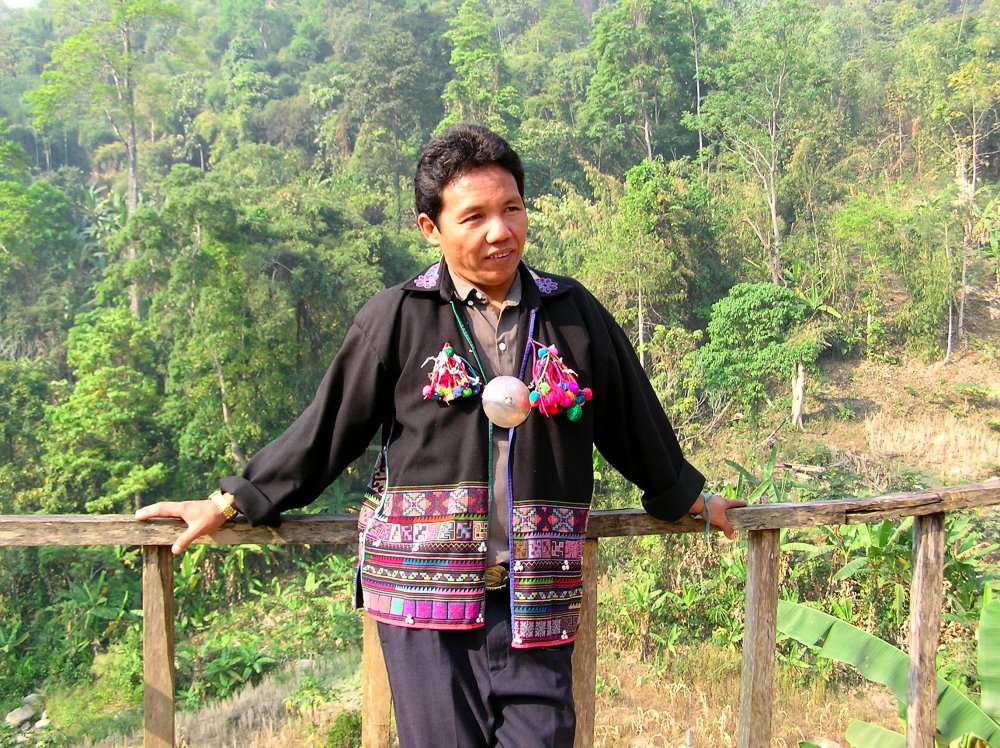
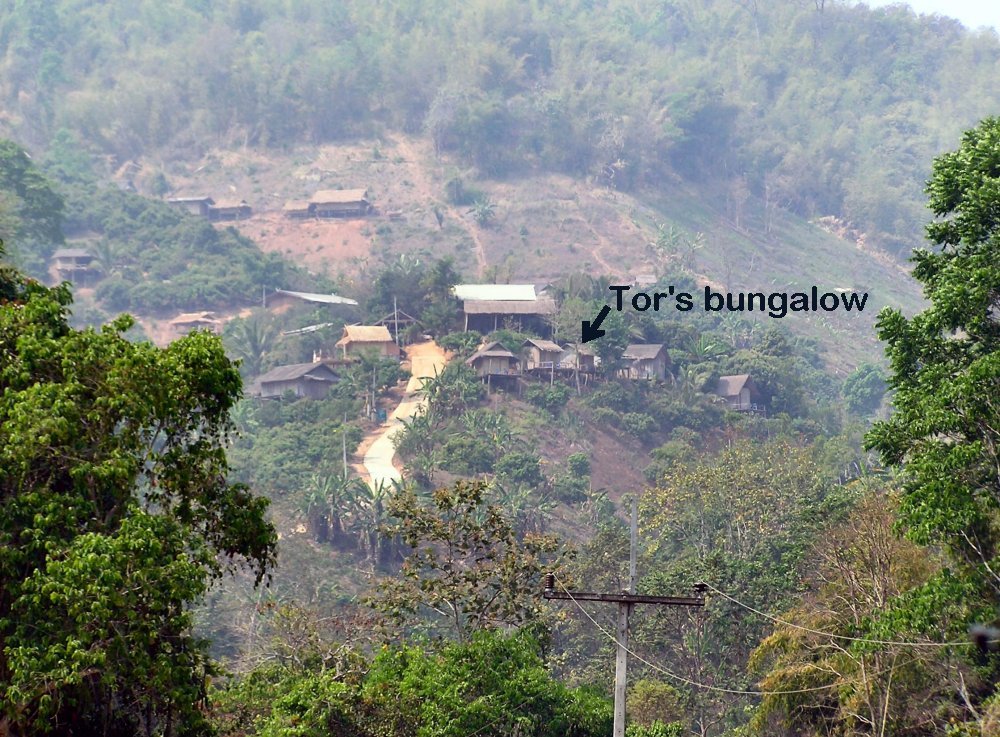
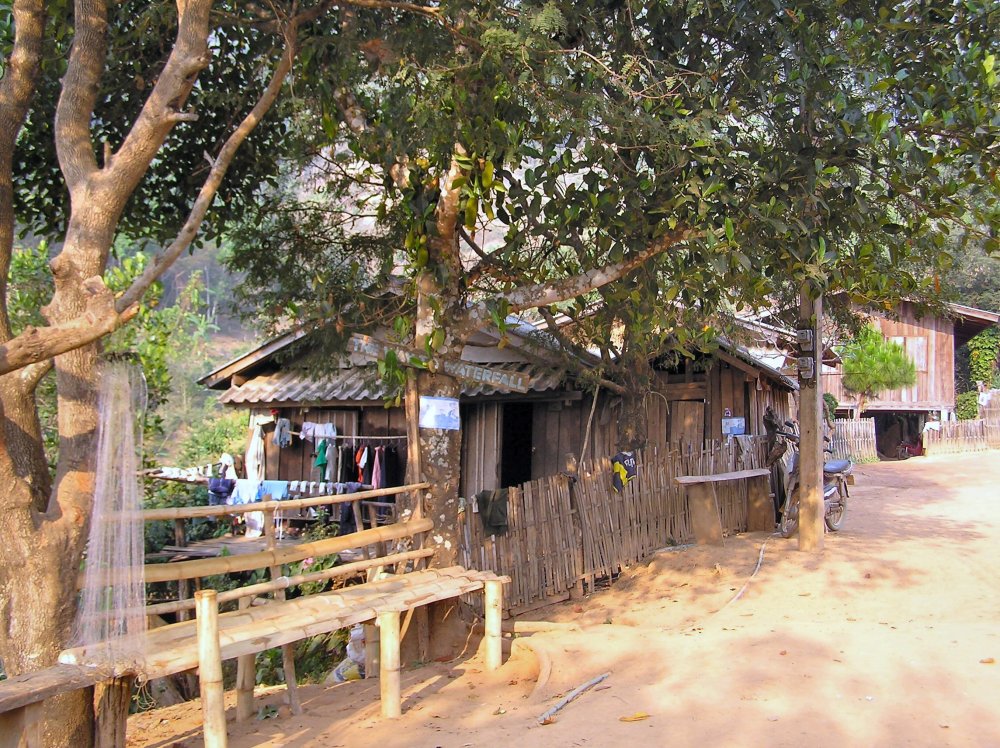
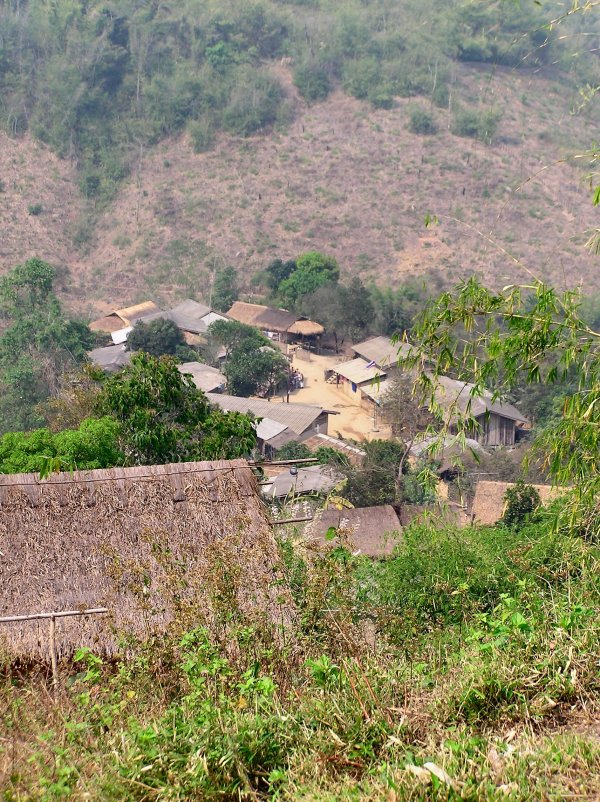
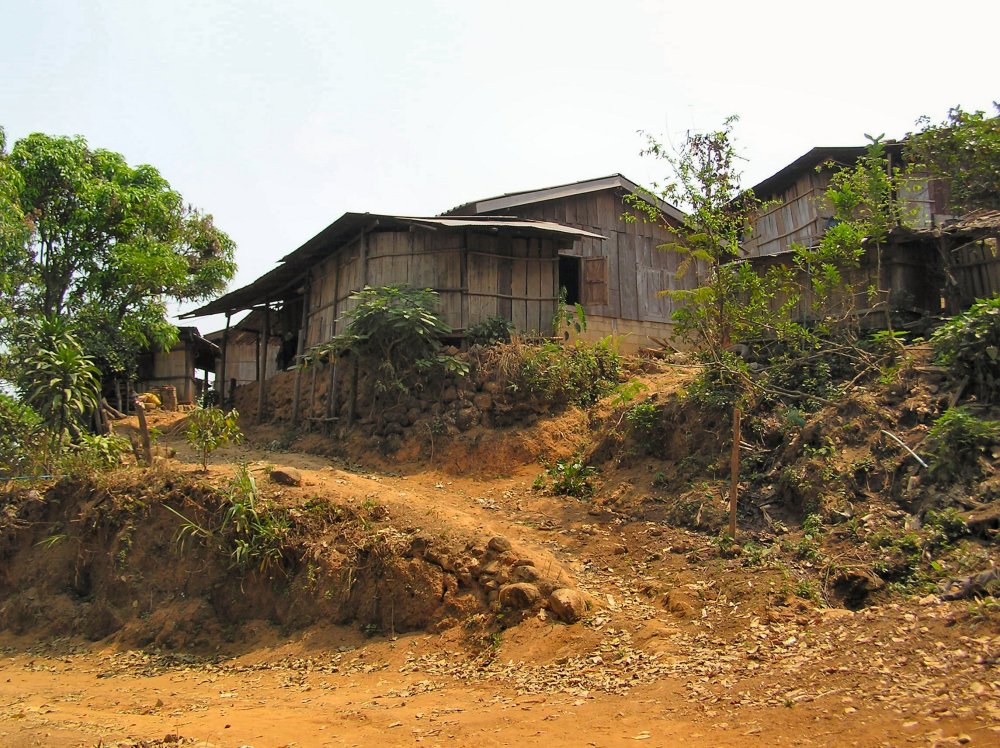
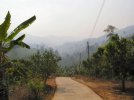
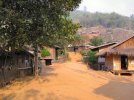
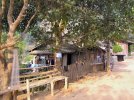
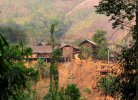
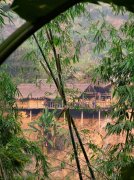
Akha village - I think of it as mine - is unusual in that it
has electricity and offers simple lodgings for guests. This
is due to the efforts of one man, Mr. Apae, an Akha native
and a natural entrepreneur who has single-handedly overcome
innumerable obstacles to develop a unique, low-key tourist
trade for his village.
 |
I'm
told Apae founded this village himself many years
ago with this idea of accommodating visitors. I'm
not aware of any other hill tribe village anywhere
that has done this, at least not to this extent.
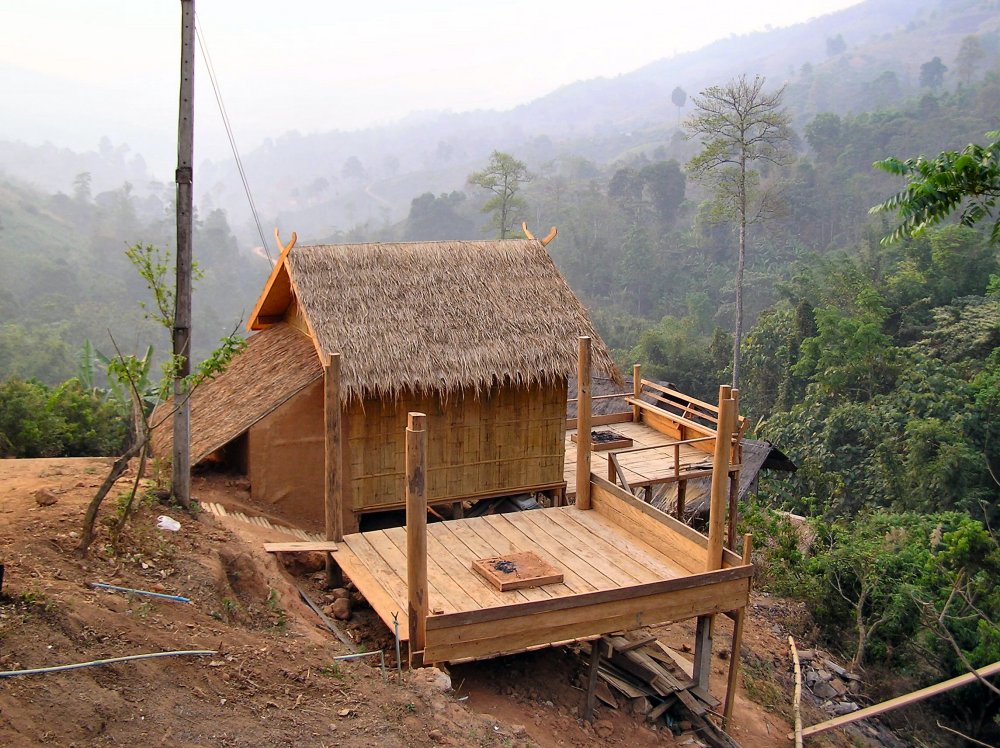
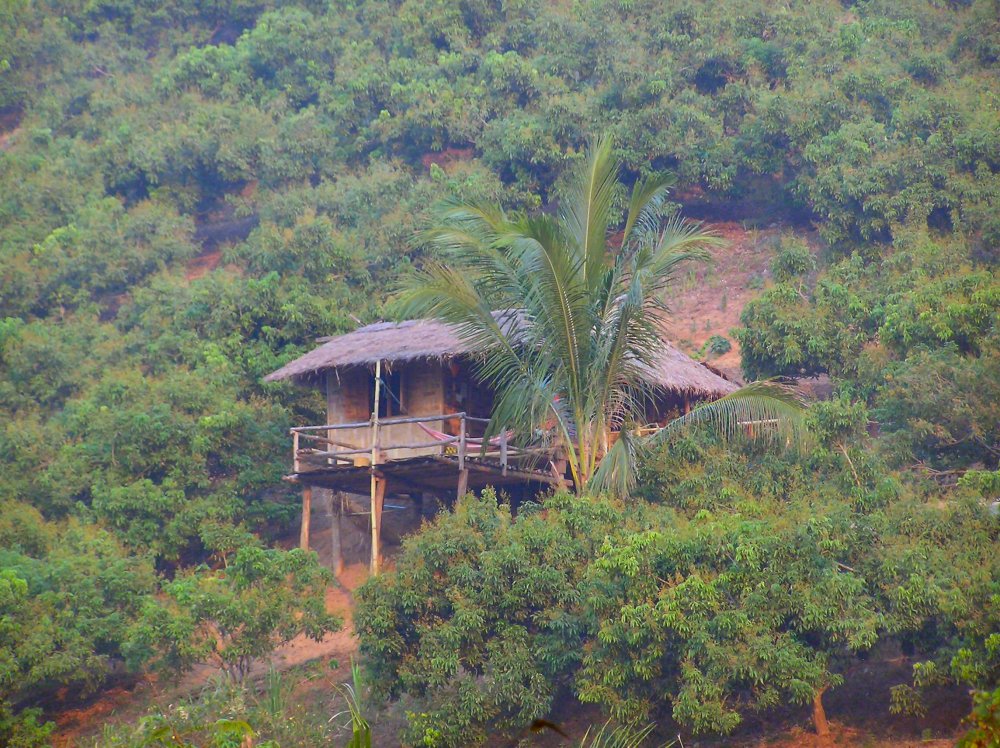
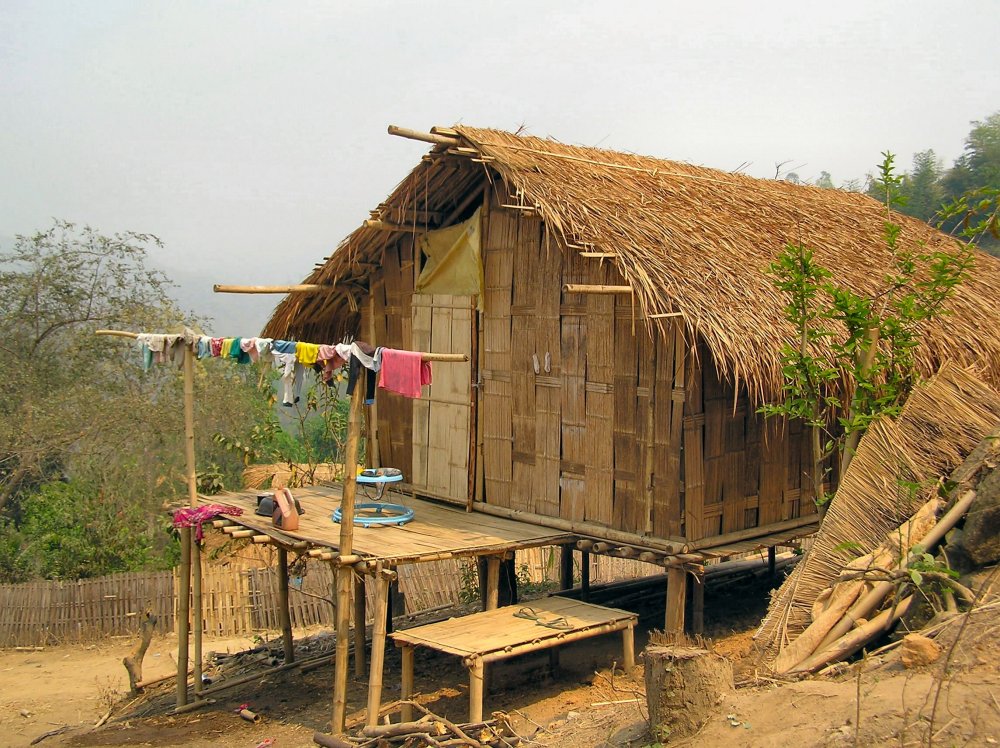
Over the years he has built half a dozen simple,
thatch-roofed bamboo bungalows to rent to guests
wanting to experience life in a hill tribe village
beyond the one-night stay that most of the
packaged trekking tours include.
|
Gradually
Apae earned a good reputation for himself and a moderate,
off-the-beaten-track tourist trade for his village. Still,
after 14 years this place remains virtually unknown outside
of the nearest large Thai town, Chiang Rai, and even there
you have to more or less luck into it as I did. During the
week I've been here the average number of guests on any
given night has been maybe half a dozen, mostly adventurous falangs
- Europeans and some Americans - with the occasional
Japanese backpacker. There is no question the presence of so
many outsiders has affected the village people, and yet they
are still pure Akha and in many ways, I believe, still
representative of their singular race.
Whenever
I've encountered hill tribe people in big-town market places
around Thailand, or in their small villages when I've
trekked through, they have usually been stone-faced and
remote, preferring to ignore outsiders. They have good
reason to be wary of strangers. Over the centuries and
continuing up to present times these people have been
harassed, persecuted, uprooted, relocated, imprisoned,
sometimes slaughtered and always treated as outcasts by the
established governments and people of the nations in which
their mountain villages happen to lie.
 |
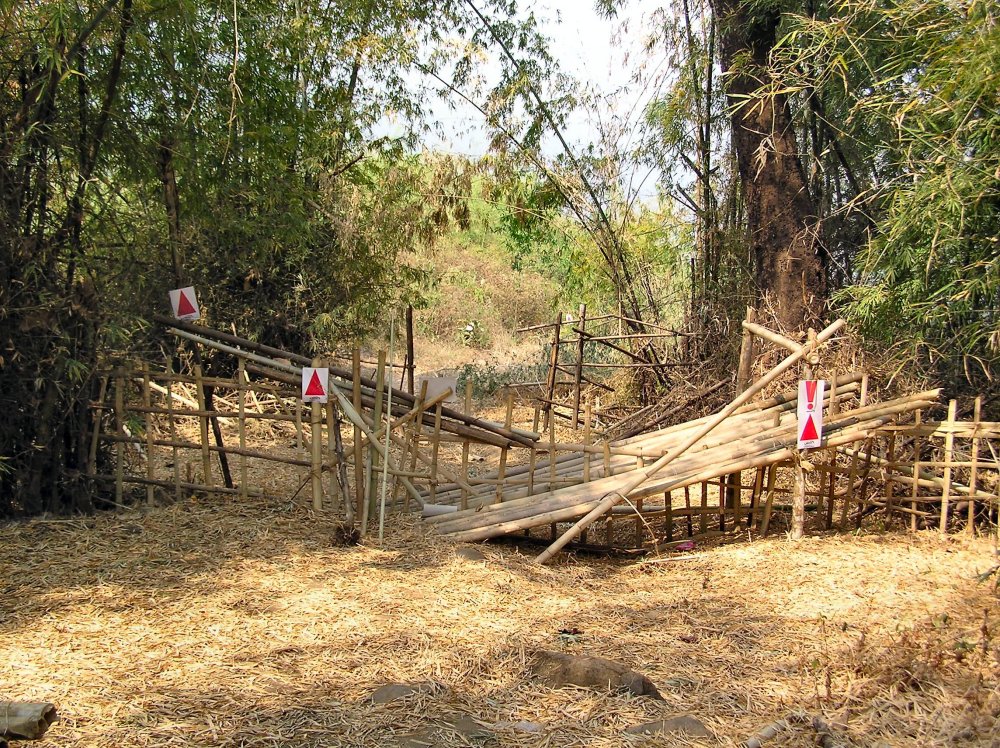
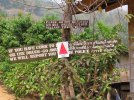
Not
many years ago some of the hill villages in this
region made extra money growing small crops of
opium-producing poppies. Then government troops
came to eradicate the illicit trade, killing
around 3,000 hill tribesmen in the process and
imprisoning as many more. Since then the villagers
are terrified of being associated with drugs of
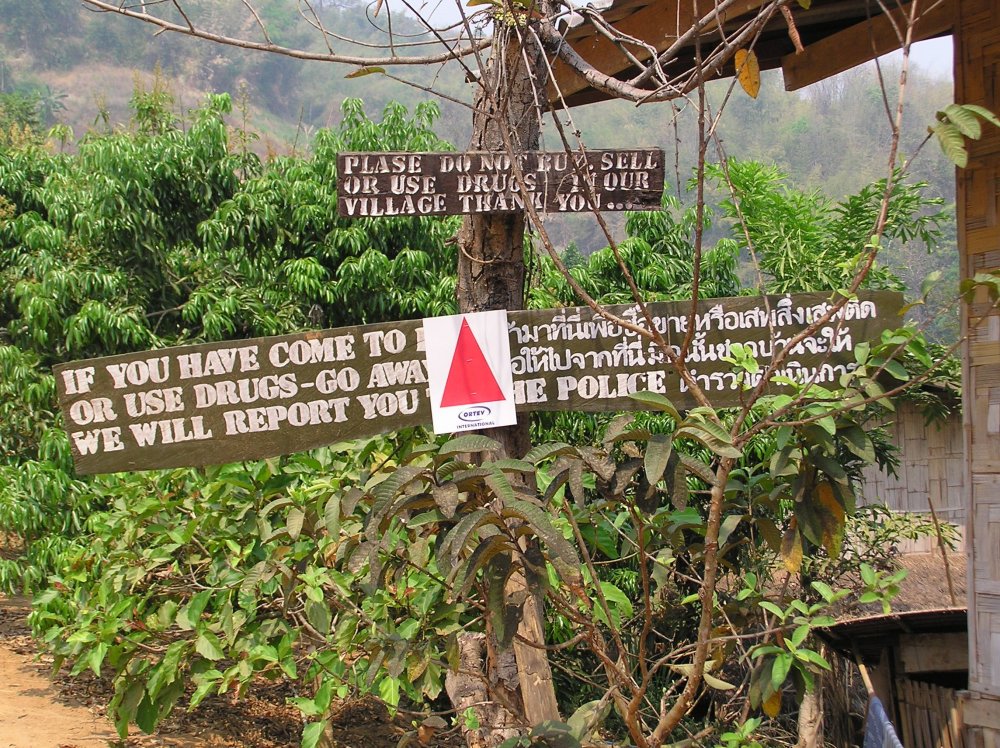
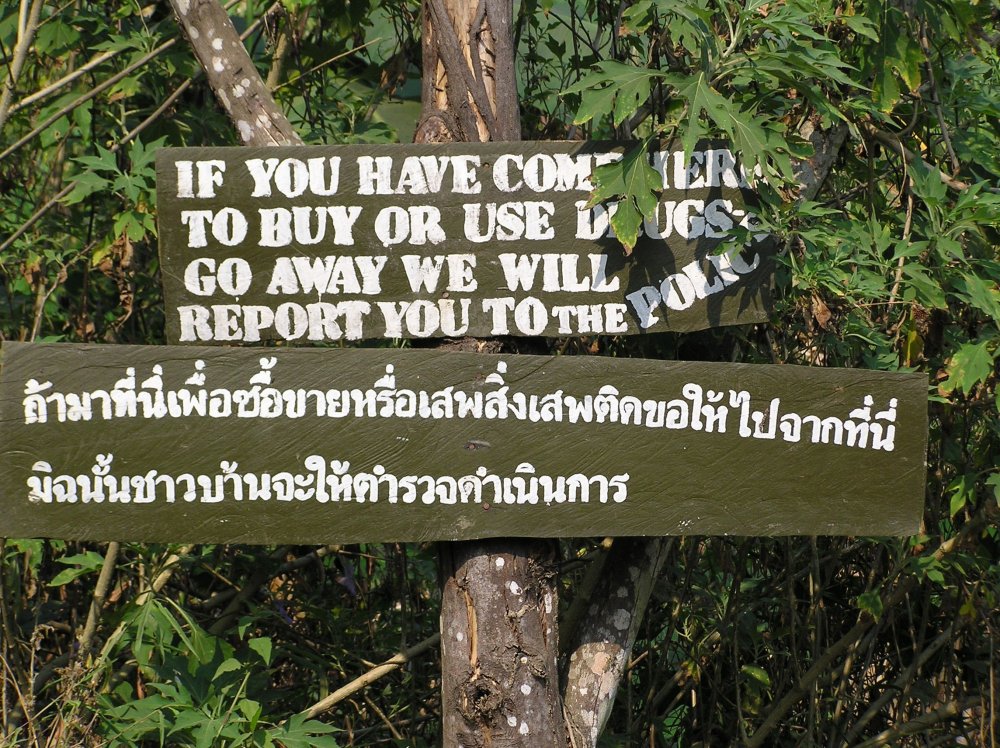
any kind. These painted signs warn visitors of the
zero-tolerance policy in this village. I heard
there is still a little opium around for the
occasional elderly villager that wants to smoke it
discretely, but I never saw it. And if I happened
to get a couple of joints of pot from a visiting falang
- I'm not saying I did, mind you, I'm saying if
I did - I'd have smoked them in the deep forest,
never in the village, out of respect for my hosts.
click
thumbnail photos to enlarge
|
In
spite of decades of mistreatment by outsiders these people
can be very warm and welcoming once they've accepted you as
a friend, even more so than the Thais, who are quicker to
smile but slower to befriend. Many of the Akhas I've come to
know possess a sharp intellect, a keen and ready sense of
humor, masterful skills in their various arts and crafts, an
innate respect for their natural environment and an ability
to embrace the modern world or to live off the land,
depending on what's available to them at the moment.
It
seems the wife of the King of Thailand, whom the Thais call
the Queen Mother, is fond of sponsoring benevolent and often
successful programs to help her more needful subjects, and
she occasionally likes to visit the outpost villages of her
realm. About 5 years ago she made a scheduled stop at Apae's
little hamlet. At the end of her brief appearance Apae, as
the village chief, presented her with a particularly
beautiful, handmade Akha shoulder bag as a commemorative
gift. Some time after she departed the queen discovered
a note from Apae inside the bag. The note said, in effect,
"Oh, great and noble Queen Mother, won't you please
help our humble village to develop and prosper by helping us
get electrical power lines run up here?"
Two
weeks later Apae received a surprise visit from the head of
the regional electricity commission, who angrily complained,
"You should have applied to us through normal channels
for electricity! How dare you go directly to the Queen
Mother! She has instructed us to run lines all the way back
here from the main highway. Ridiculous to do that for such
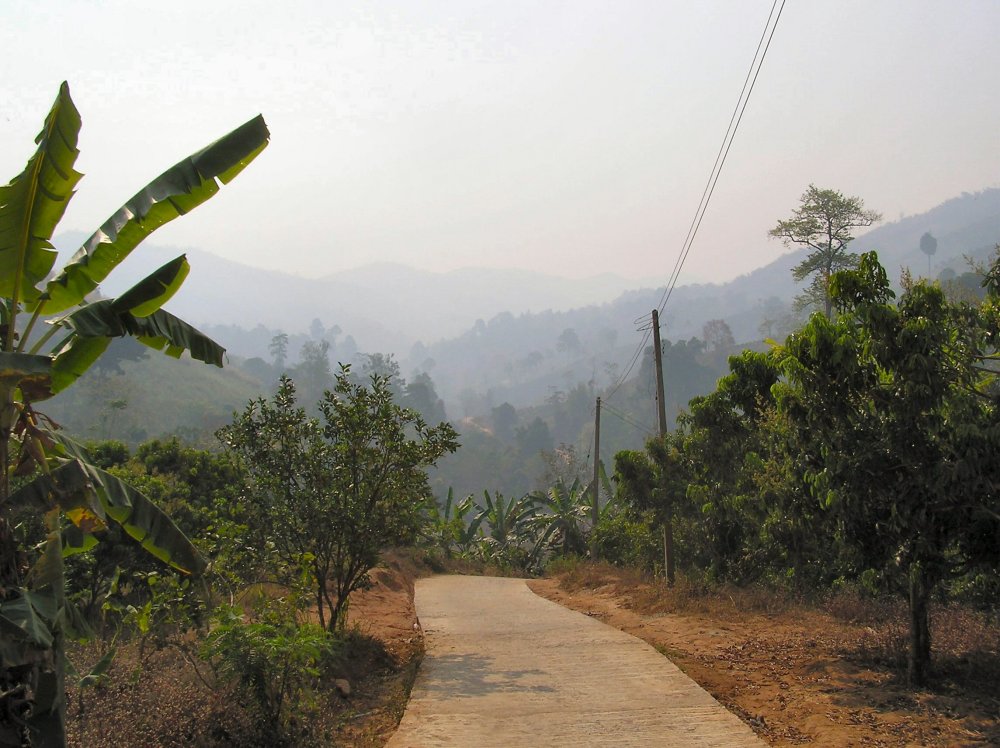
an insignificant village!" Nevertheless, almost
immediately poles were erected and 10 miles of electrical
cable were run straight into Apae's village, enabling him to
offer amenities that even the most adventuresome tourists
appreciate.
I
didn't know there was electricity here when I first piled
into the village pick-up truck in Chiang Rai for the bumpy,
45-minute ride to the village. I must say I was delighted to
find it, though, not only for the cold beer it made
possible, but because I can use and recharge my laptop
computer here, making this place very attractive as a
writer's haven.


 |
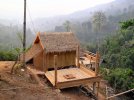
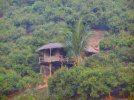
I've
been paying 150 Baht a night, about $4 US, for a
simple bamboo and thatch bungalow with en suite
bathroom and a hot shower. There's a small porch
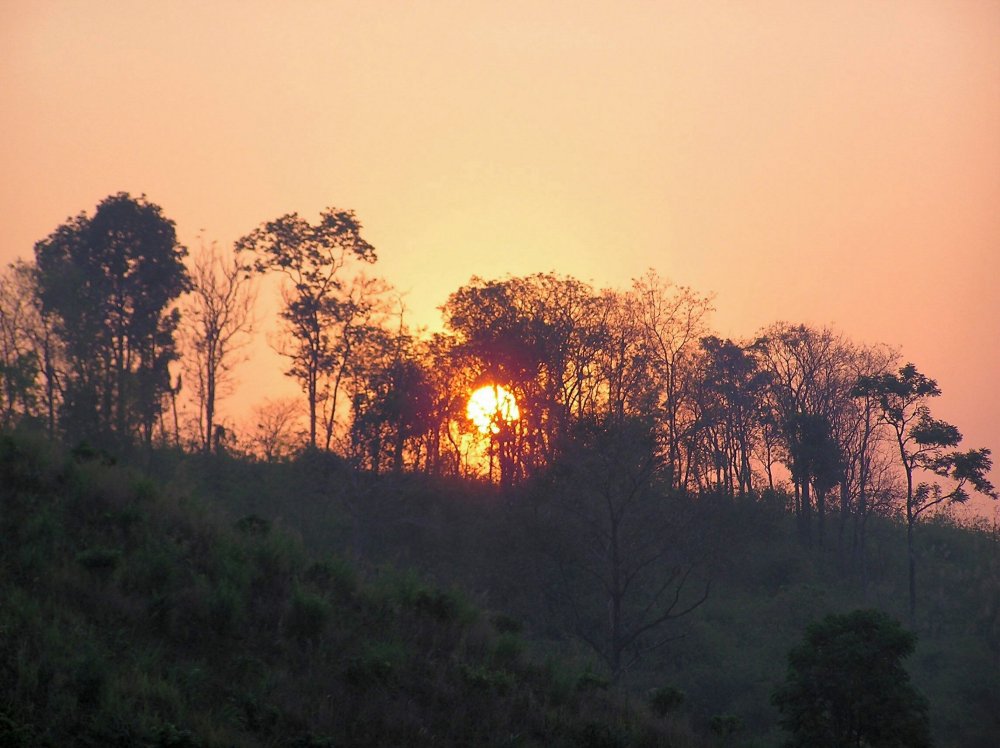
overlooking a deep ravine and the opposite
hillside over which the sun rises each morning.
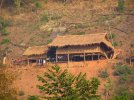
Also
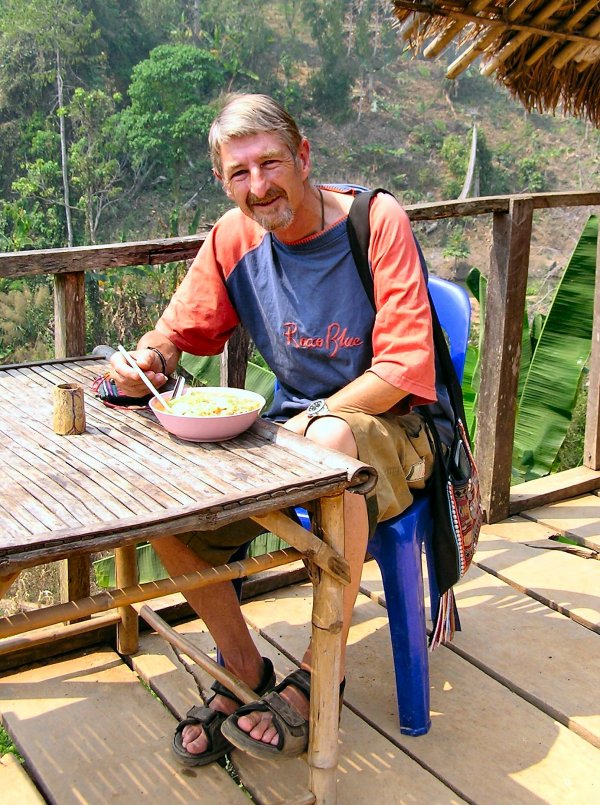
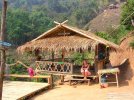
at this end of the village is an open-air canteen
for guests to take their meals, with a limited but
sufficient menu and a refrigerator filled with
bottles of drinking water and Chang beer. What
more could I ask? Well, I could ask for good
hiking, beautiful waterfalls, friendly natives and
a pretty girl, but there's no need. All that and
more was already here waiting for me when I
arrived.
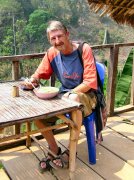
One
of the first people I met was Akha John, a
50-something year old Brit who has been living
here for the past 15 months and has no intention
of leaving. In fact, he has been so completely
accepted by the tribe that they allowed him to buy
a bit of land at the edge of the village and he's
about to start building his own bamboo house
there. John doesn't speak either Thai or Akha. He
communicates with the villagers mostly by grunting
and chuckling a lot, and this seems to suffice. Of
course the chief, Apae, speaks very good English
(and about 6 other languages), so anything that
needs to be made clear can be by asking him to
translate.
Several
other village men and a few of the women are
becoming conversant in English by listening to and
practicing with us visitors. The guests' canteen
is the evening social center for those who want to
speak or learn English, or just hang out together.
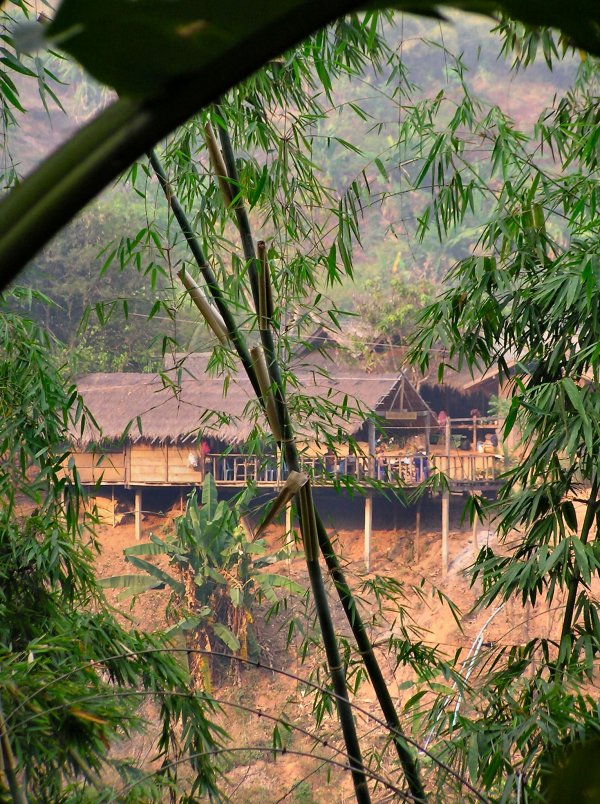
It's a big, thatch-roofed, wooden platform
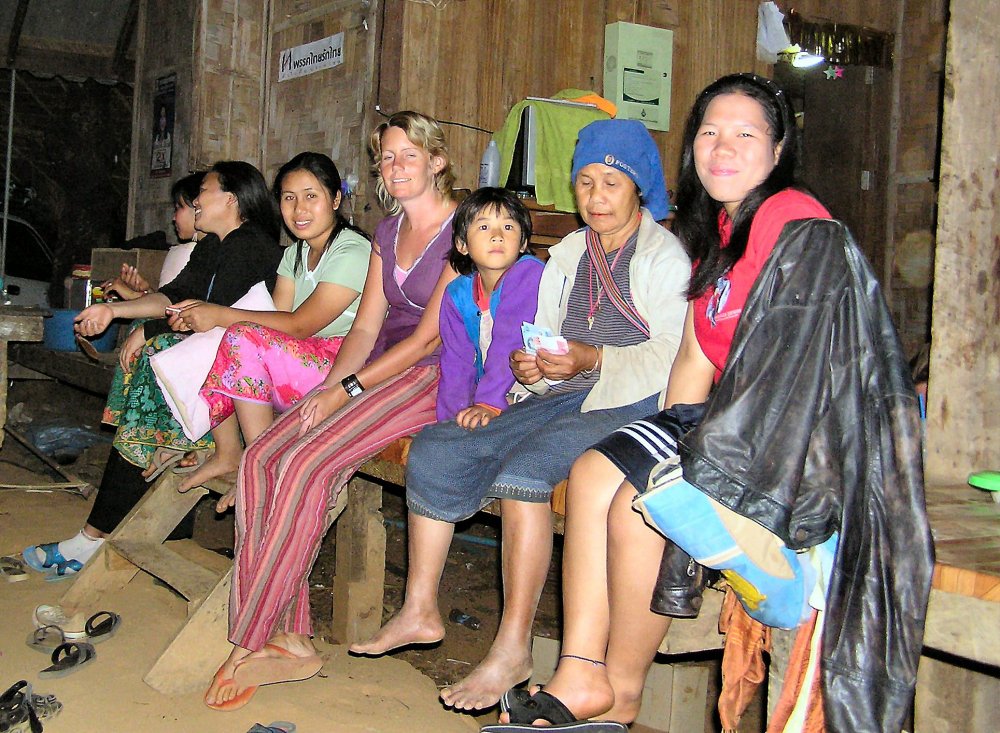
extending out over a steep hillside on a perch of
tall poles. The canteen features a fine view of
the rain forest across the ravine, and you can
hear the muted rumble of the 3-tiered waterfall
just the other side of next hill.
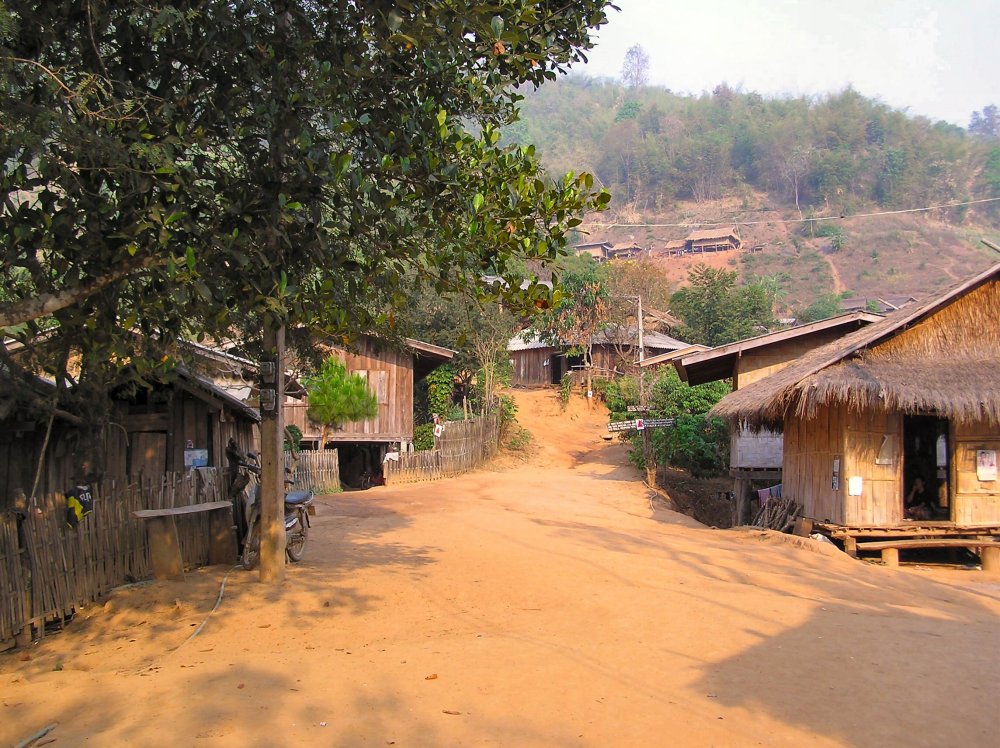
Across
the adjacent dirt road that is the village's main
(and only) street is the chief's house. His broad
porch is another social center where villagers
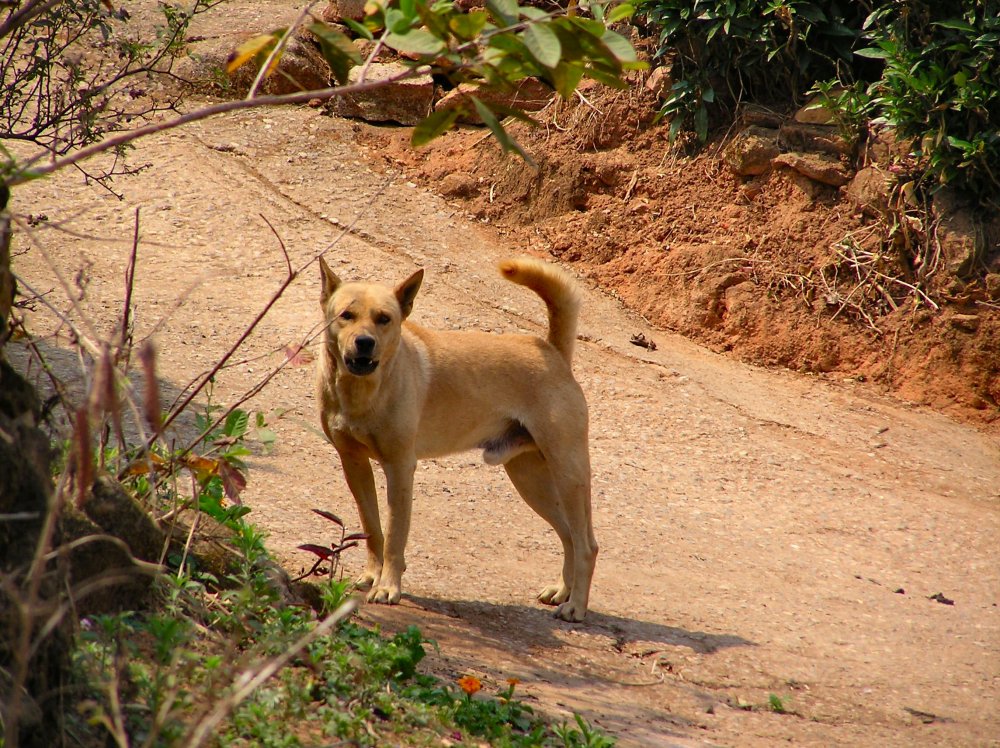
gather to chat and tell stories. Kids and pet dogs
play around them. Falangs and villagers
alike wander freely between the canteen, Apae's
porch and the rest of the village. There's a tiny
general store in a nearby hut with a limited
selection of snacks & drinks.
One
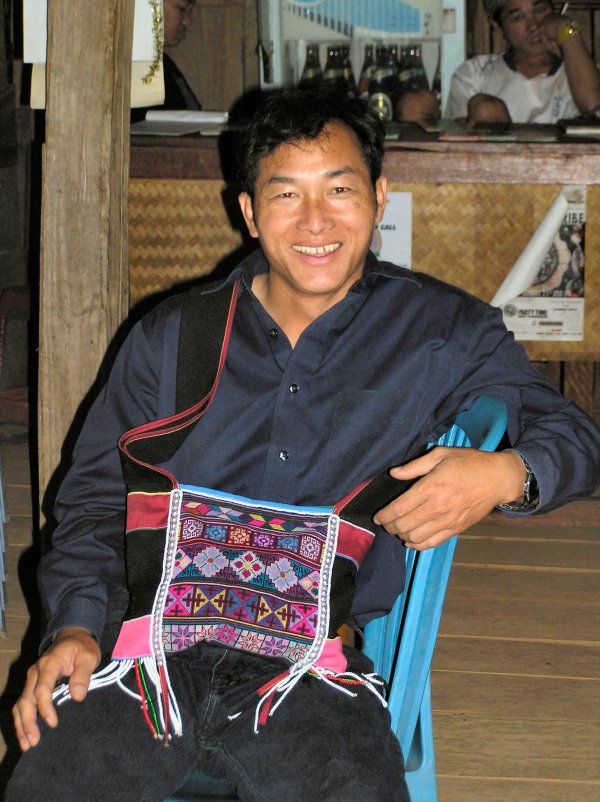
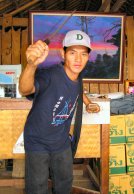
of my favorite Akha men is a wiry fellow they call
Apae Noi, not to be confused with Mr. Apae, the
chief. They just happen to have the same name (all
Akha names begin with the letter A, by the way).
To avoid confusion identifying these two in this
village, the smaller Apae became Apae Noi, meaning
"little" or "junior" Apae.
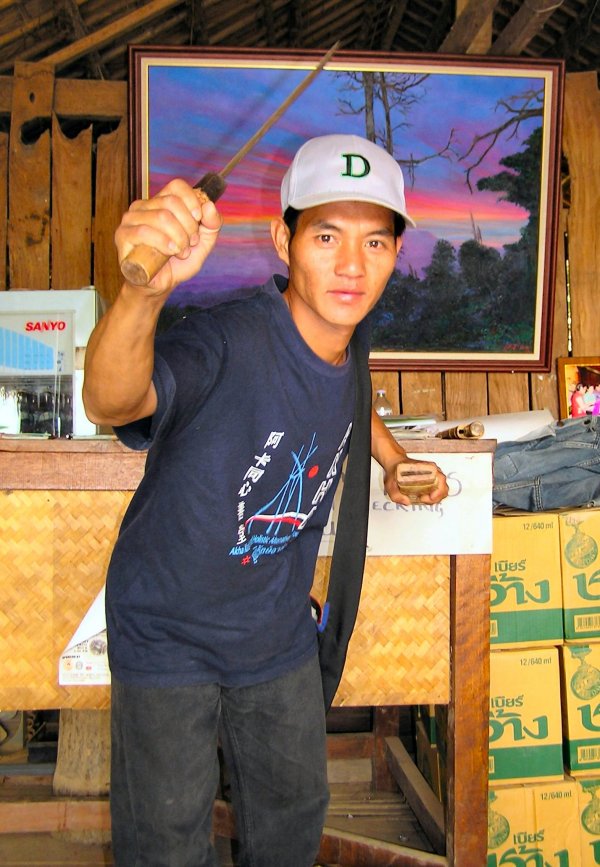
Clever, at times hilariously funny and a skilled
craftsman, Apae Noi makes good, sturdy bush knives
of the kind most hill tribe men carry. This is
their most basic and essential tool, a stout,
functional, heavy-bladed machete used every day
for chopping bamboo and wood and many other
chores. Whenever Apae Noi can make a few extra
knives not needed by one of his tribesmen, he
offers them for sale to the falang guests
at the canteen. My very first evening there I
bought a fine Akha bush knife from him for 450
Baht, bamboo sheath included.
|









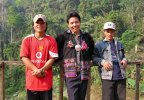
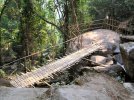
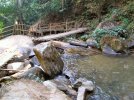
|
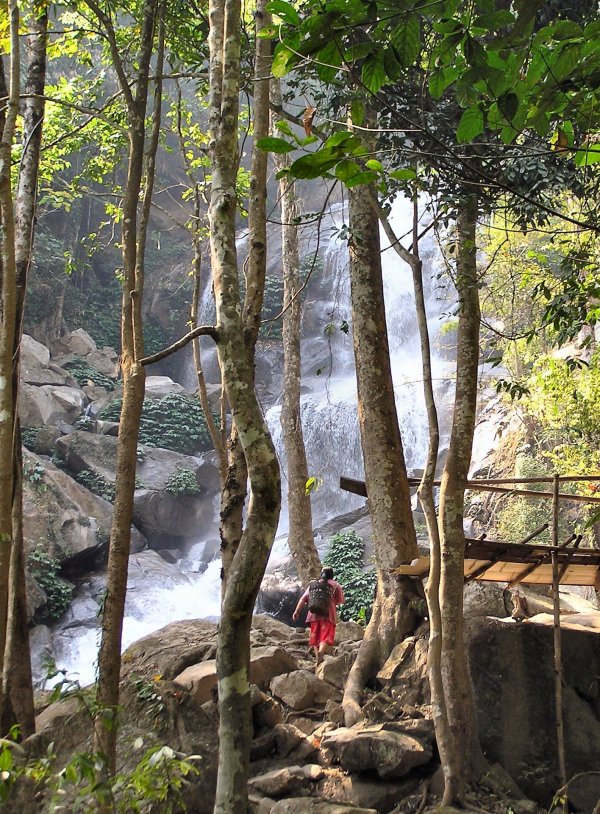
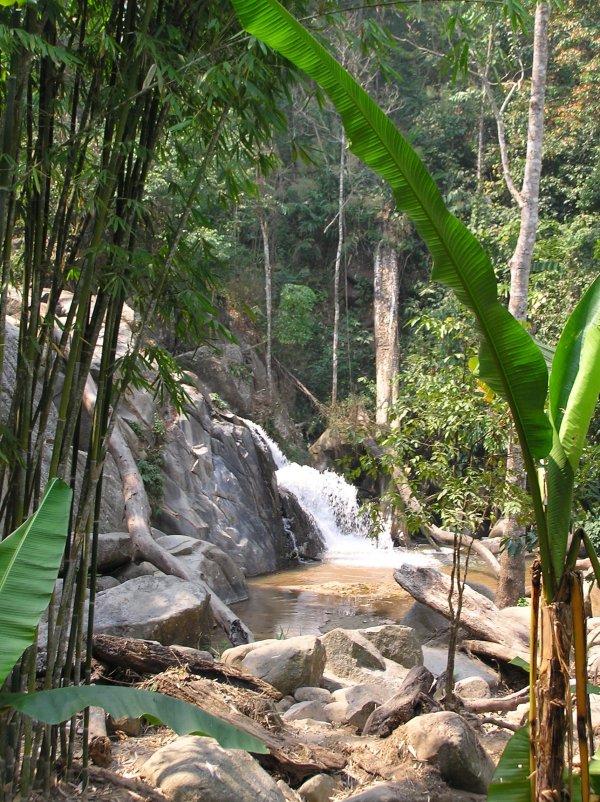
I
spent
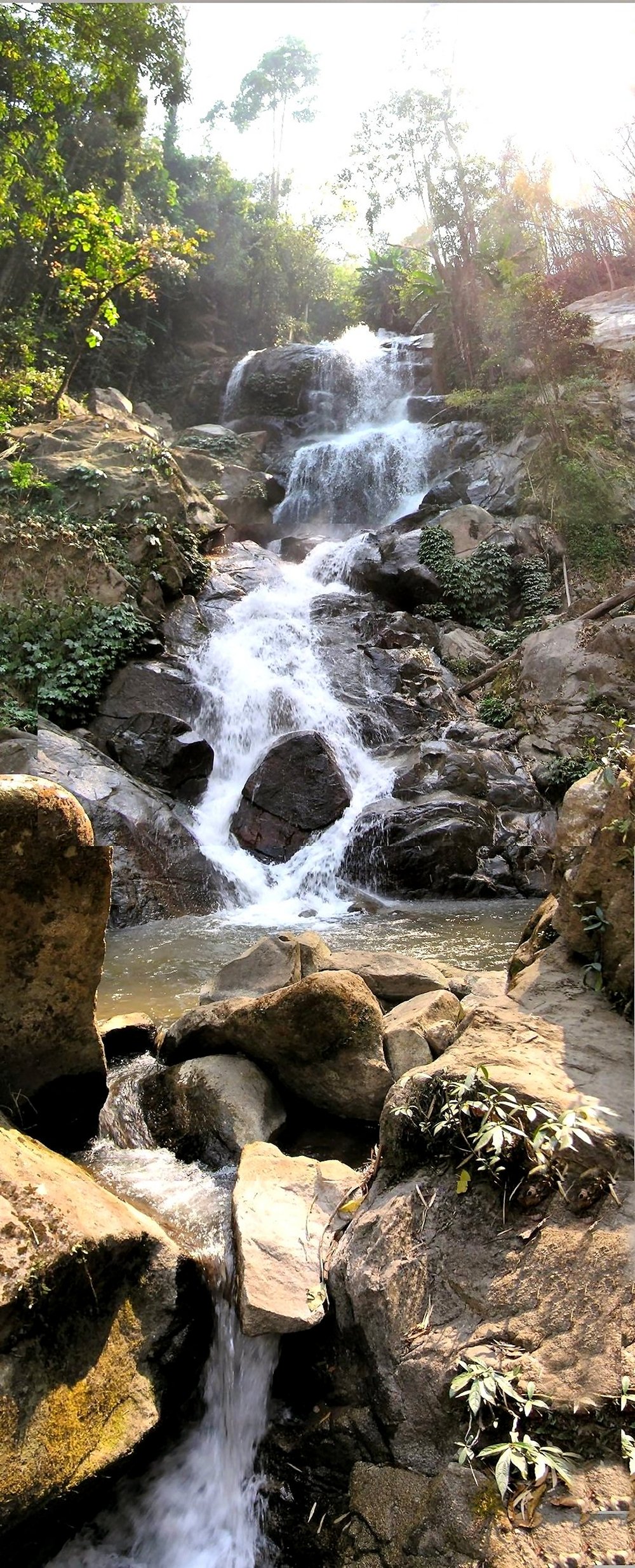
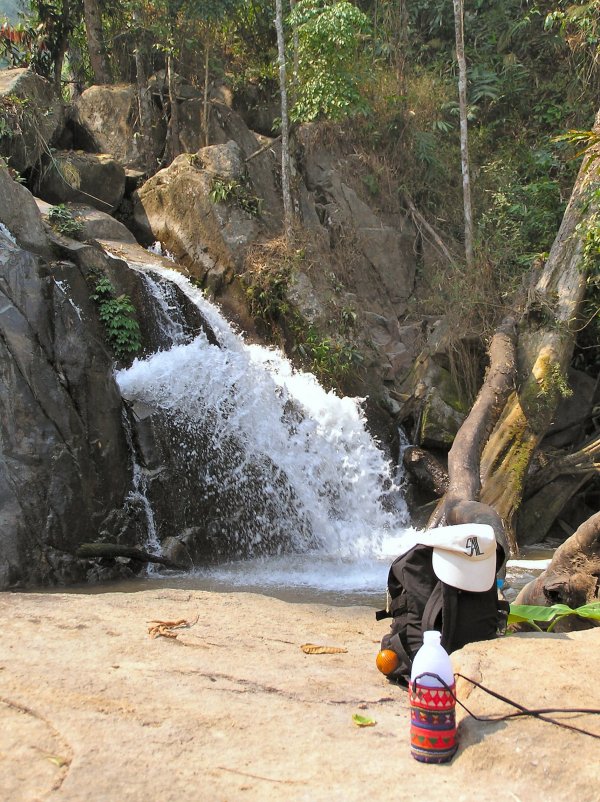
my first day in the hills hiking 'til it hurt. The
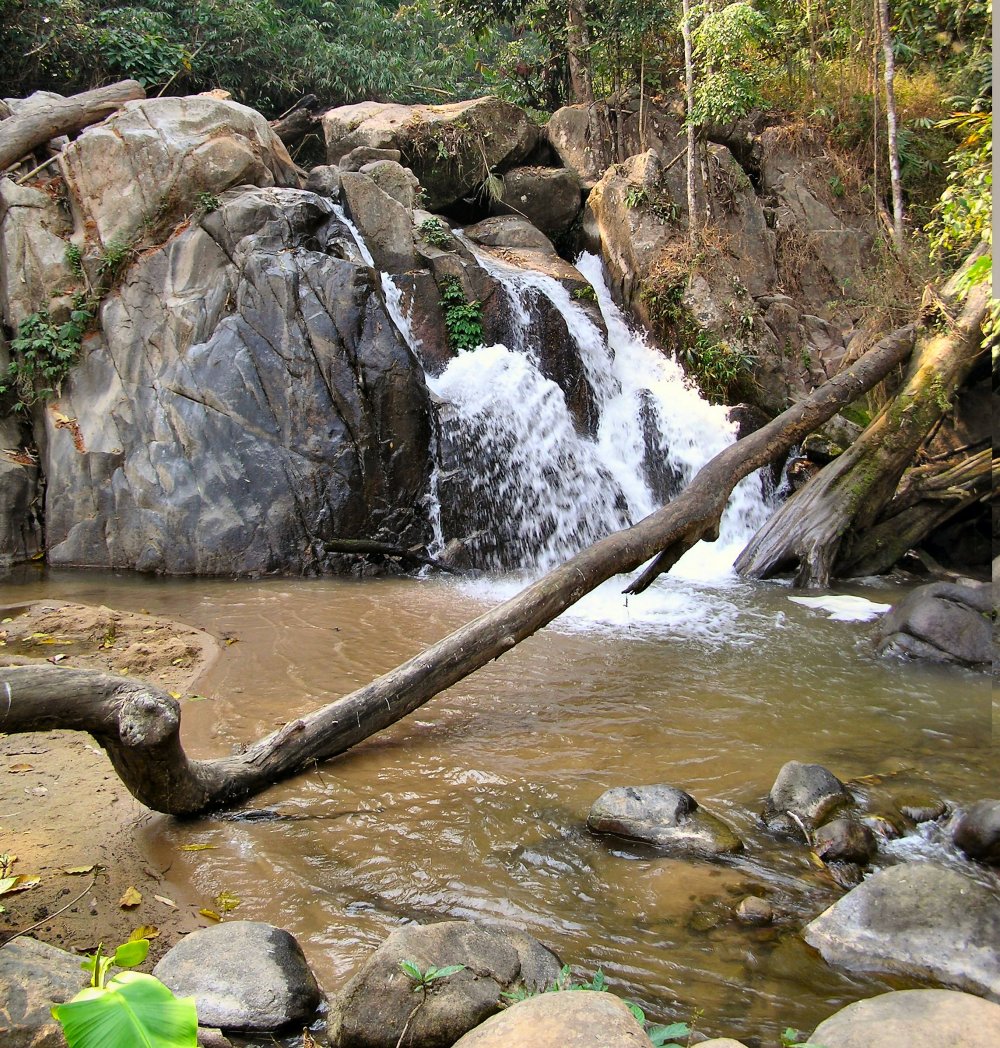
big waterfall closest to the village, which I call
#1 because I can't pronounce the local name for
it, is magnificent, by all accounts one of the
prettiest waterfalls in northern Thailand. It's
barely a ten minute walk from the village and I,
being a waterfall aficionado, went there first.
But it was too early in the day to linger, so I
set off along a footpath for a hot spring on the
banks of the Mae Kok River many steep, rough
kilometers away.
|
 |
Hiking
out of the hills to the river wasn't so hard, it being
mostly downhill. It took me less than two hours. Getting
back took a good bit longer and tested my endurance, pushing
my thigh muscles to their limit. The trek gave me a new
respect for the steepness of this terrain and the stamina of
the hill tribe people who literally take it in stride. En
route I passed through a quiet, shabby Lahu village where
the residents dutifully ignored me.
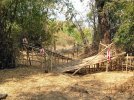
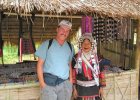
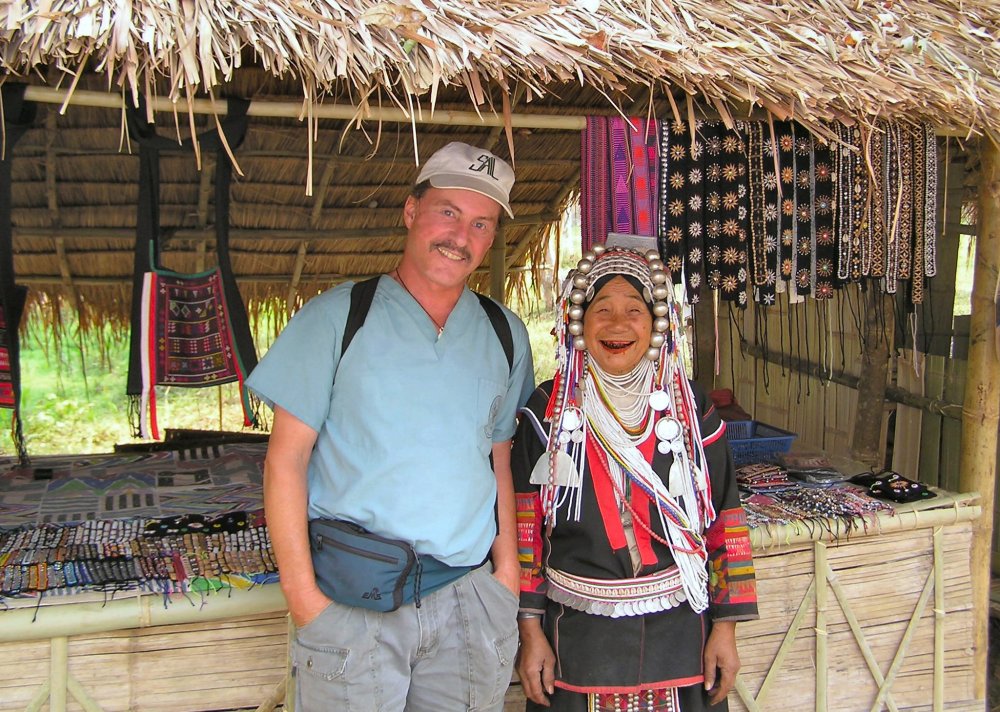
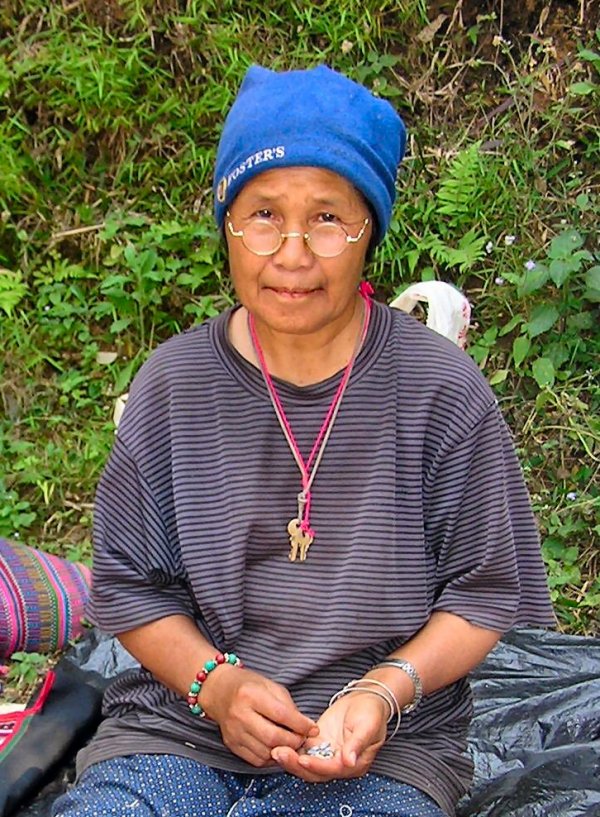
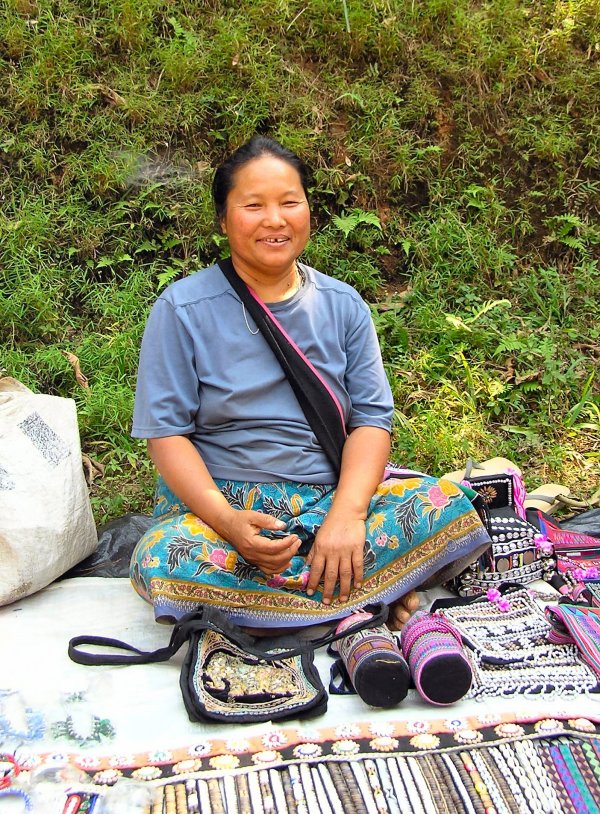
Incidentally,
the woman in the last photo above, who has a craft stand at
the hot spring, is not a vampire despite her bloody-looking
mouth. The red stain comes from chewing betel nut, a habit
still fairly common among older villagers. The chew, a messy
combination of the betel nut, the green stem of the plant,
and lime, produces a mild intoxicant and helps relieve the
pain of toothache and gum diseases, but it stains their
mouths red and, I gather, rots their teeth over time.
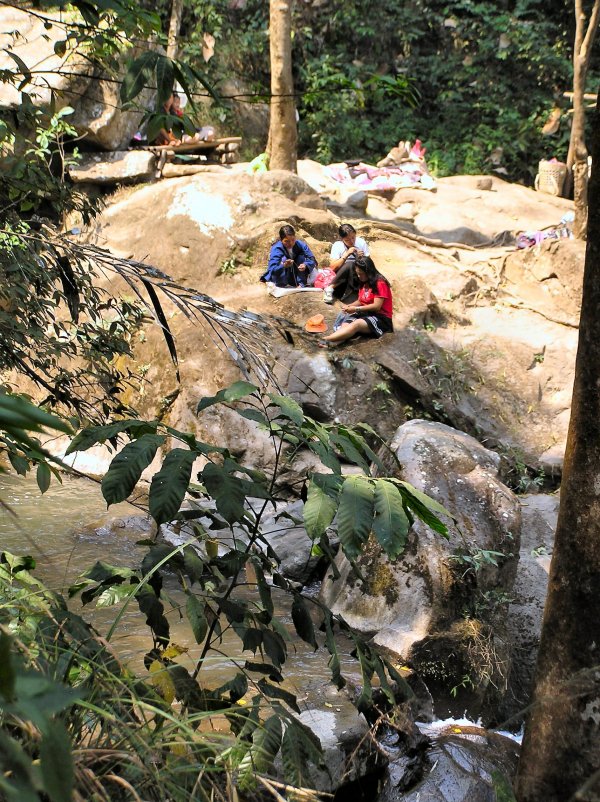
The
hot spring turned out to be pretty and park-like, accessible
to cars by a dirt road running alongside the river. It's a
place Thais are wont to take the family for a picnic on a
Sunday afternoon. As I ate a lunch of roast chicken &
rice in a small, outdoor restaurant, a teenage Thai girl
struck up a conversation with me. Her English was pretty
good and I asked her if she had learned it in school. No,
she replied, she had learned English by watching American
movies on TV and repeating the words the actors spoke. She
could generally deduce the meaning from the context of the
film and the body language of the actors. If some character
said, "OK, Bob, I'll catch you later," the girl
would repeat, "OK, Bob, I'll catch you later." It
seems almost comical, but this young woman spoke better
English than most Thais I've met. She was proud to tell me
she had just passed an examination to become an overseas au
pair, someone who hires out to live with a wealthier family
and look after their children. She thought she might be
going to work in America in another 6 months or so, a dream
many Thais share but few achieve. I have little doubt this
sharp girl will make it.
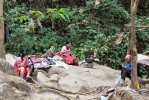
After
the hard, uphill climb back to my village I headed straight
for waterfall #1 where I stripped and dove into a cool pool
of clear water to rinse off the sweat and trail dust.


|
That
evening Apae Noi brought a guitar to the canteen
and I entertained the villagers and falangs
with a few songs. A native woman I'd heard people
call Mama sat near me by the campfire and sang
along with whatever I played. Of course, she had
no idea what the words were or what they meant,
but she managed a fairly good imitation
nevertheless. Together we made an unlikely,
bi-lingual, trans-cultural duet.
|
 |
After
a couple of strong Chang beers, I started making up songs
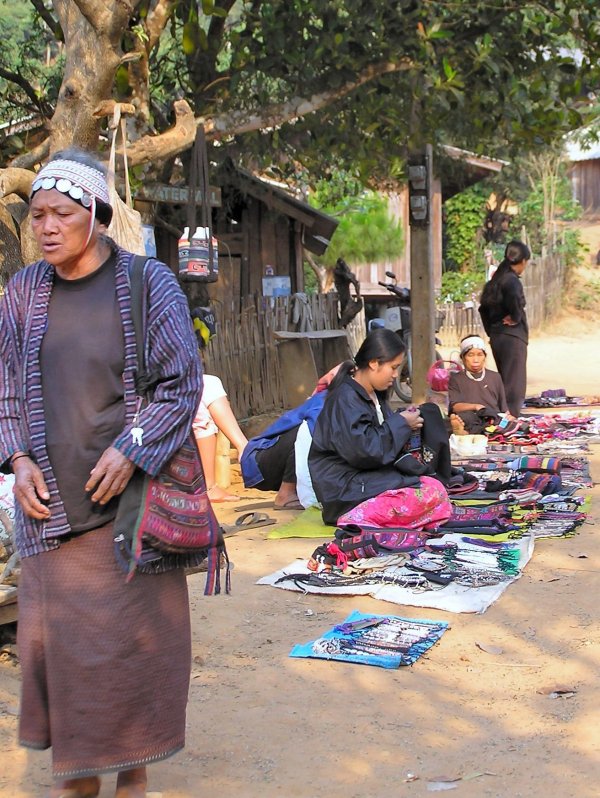
about the women peddling their crafts. Even though I had
already bought some souvenirs from them during the day, they
tended to be a bit pushy and nagging whenever I passed by
their blankets spread with handmade crafts for sale, always
bugging me to buy more. Also, it is customary to bargain
with them for anything you want to buy. This became the gist
of my joking as I made up a silly tune about our daily
intercourse. "Come, come, you buy, you buy one from me.
One hundred Baht, 100 Baaaaaht. No, no, I pay 30 Baaaht
plenty. No, no, for you 85 Baht, good price. Oh, no, maybe
60 Baht, sixty. OK, 60 Baaaaht. Buy two now, you buy two
only 100 Baaaaaht," and so on. The villagers,
especially the women, got a kick out of it and joined in the
singing and joking. After that, whenever I passed them
during the day they would sing out, "One hundred Baaaht,"
and laugh.
 |
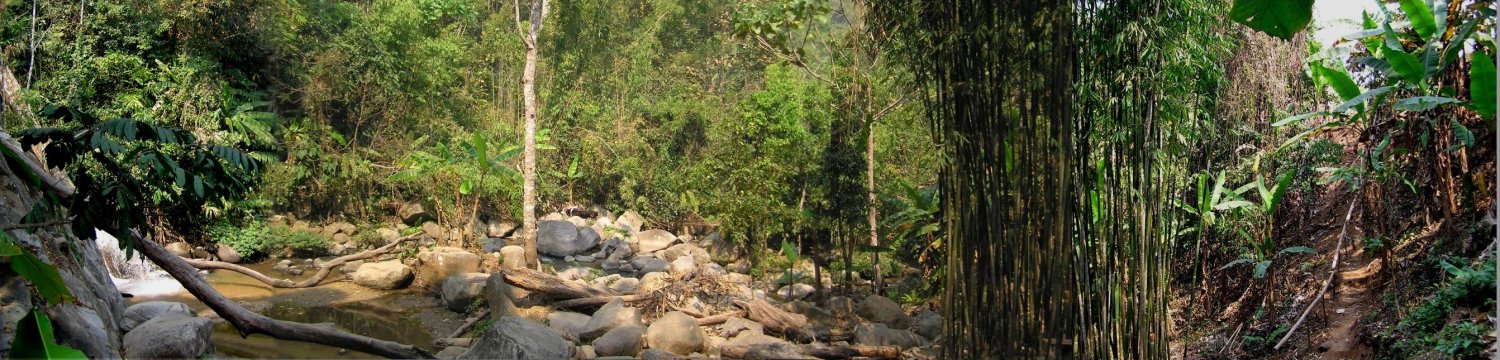
The
next day I found my way to a pair of waterfalls
about a half hour's hike away. They each have a
name, but I called them #2 and #3. The latter,
reached via a long earthen staircase down a steep
slope, is exceptionally pretty, with a wide pool
at its base surrounded by bamboo, ferns and jungle
greenery. IF I had possessed that mythical joint
someone gave me, this is surely where I would have
smoked it..
|
I
sat on a boulder with the water sluicing my bare feet and
played my wooden recorder to the accompaniment of the
thundering fall, communing with God and nature, and
afterwards remained for a leisurely picnic. This is my
idea of heaven on earth. It just doesn't get any better.
When
I finally tore myself away and started back up the long
slope to the dirt road, I encountered a Canadian man and we
struck up a conversation. He's living in Pataya, which is
Thailand's most notorious sex capital. A full-time
resident married to a Thai woman, he brokers condominiums
for a living (that's condominiums, not condoms). This poor
guy was more stressed out than a New York commuter and
complained constantly about Pataya, the people, the
politics, the over development, the pollution, the poor
water supply and so on. He seemed close to a nervous
breakdown and I thought it was good that he was taking a
little time off to get out into the forest. Even though he
seemed oblivious to the beauty of our surroundings and raved
on angrily about his life, I suspect the simple presence of
all this quiet, green nature may help soothe his troubled
mind.
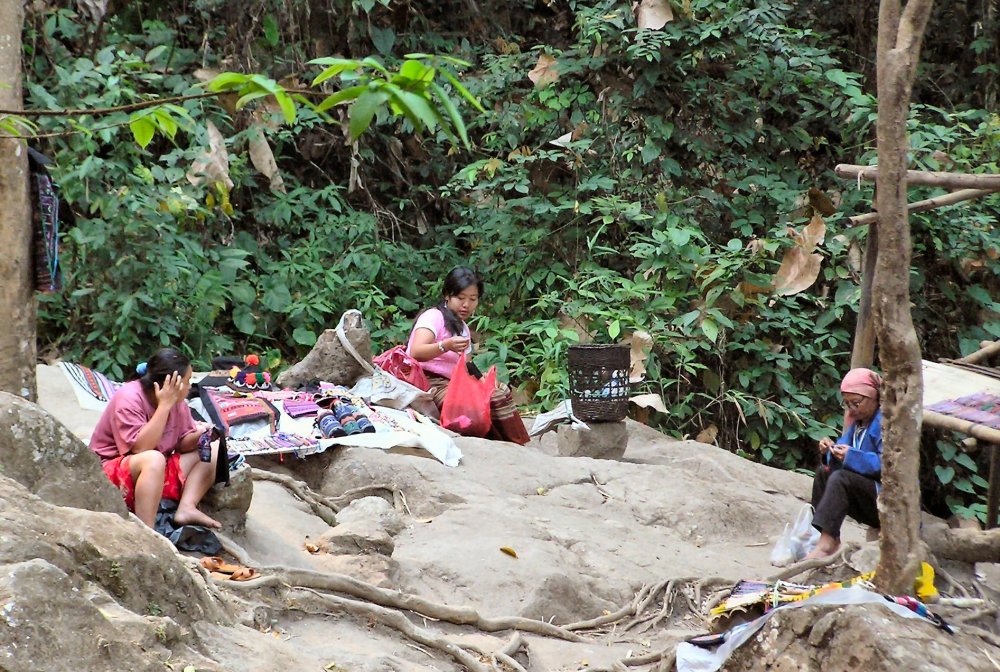
As
I neared the village I veered off to try an alternate trail
that seemed like it might lead up towards #1 waterfall.
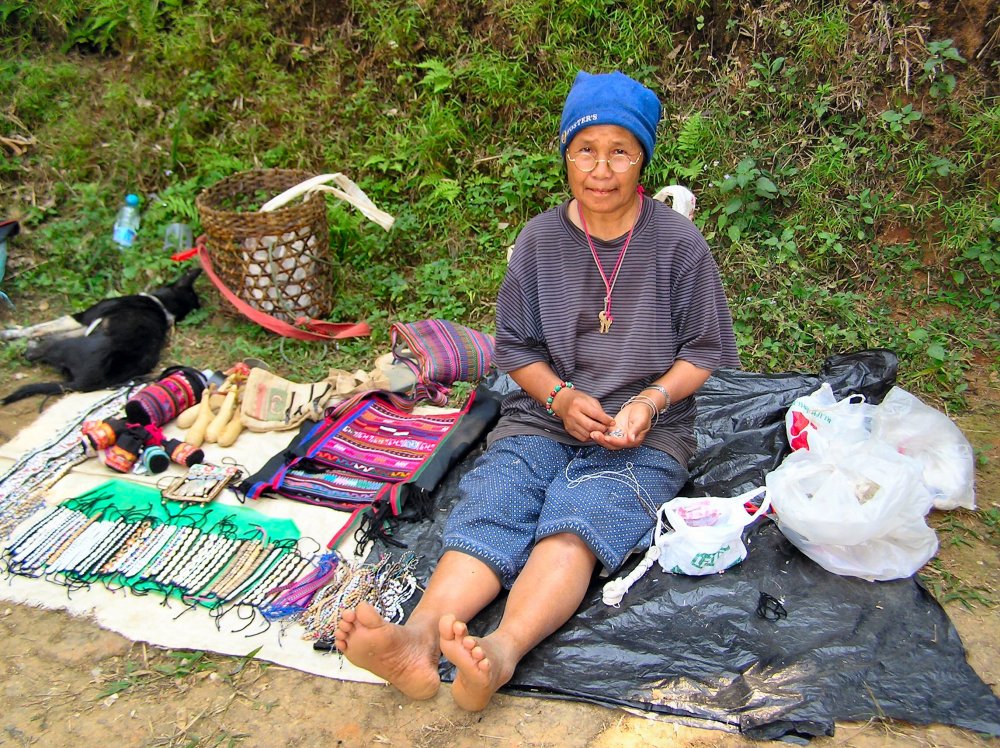
There I found several of the village women, including Mama,
set up to sell their crafts to any tourists or trekkers that
might happen by, but there were no customers that day. We
started joking about my "100 Baht" song. Then, as
they prodded me to buy something now, I sang them the tune
from the Broadway show, Annie, paraphrasing "Tomorrow,
tomorrow, I'll buy some tomorrow," and when I got to
the last line, "It's only a daaay awaaay," they
all laughed and sang "tomollow, tomollow!" Of
course, what made it so funny to them was that they hear the
excuse, "I'll buy something tomorrow," from
visiting falangs all the time.
Easy
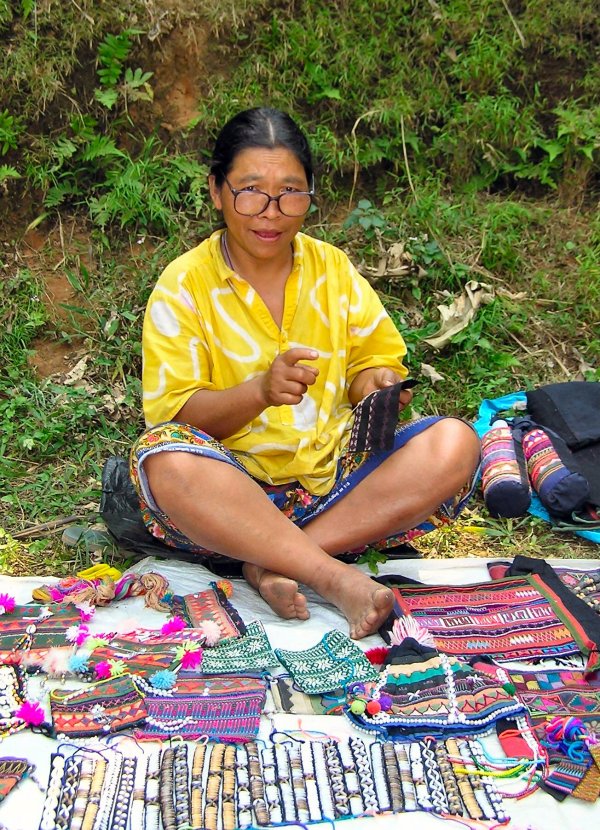
mark that I am, I wound up buying something from each one of
those women. Their crafts are beautiful, all made by hand
and embarrassingly inexpensive. I had to bargain with them
to avoid appearing foolish, but I did not bargain very hard.
Always I came away knowing I could have gotten whatever I'd
just bought for less money, but I would have taken no
pleasure in beating them down that last 25¢. A quarter
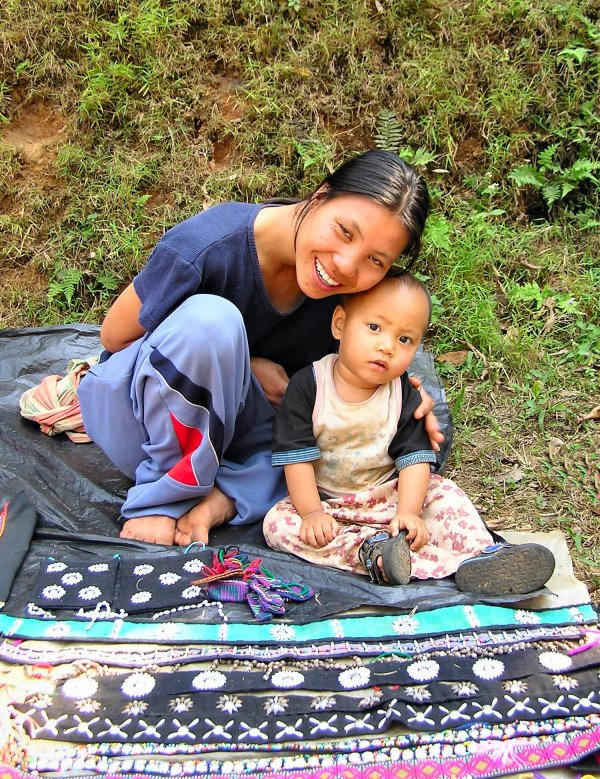
makes absolutely no difference in my life, but the
equivalent 10 Baht means a lot to these people. I enjoyed
these transactions much more knowing they had gotten what
they consider top dollar out of me for their wares. From my
perspective, most of it would be a steal at double their
initial asking prices.




I was
enjoying this place so much I didn't want to leave. However,
I had already reserved a flight to Bali in Indonesia and the
departure date was fast approaching. So I caught a ride back
into Chiang Rai, went to the travel agent there with whom
I'd booked the flight, and had them push the date back a few
days. I also emailed a friend I was scheduled to meet in
Chiang Mai, telling him I'd be delayed a few days. This
bought me three more days and four nights in my jungle
paradise and back I went aboard the afternoon pick-up truck.
 |
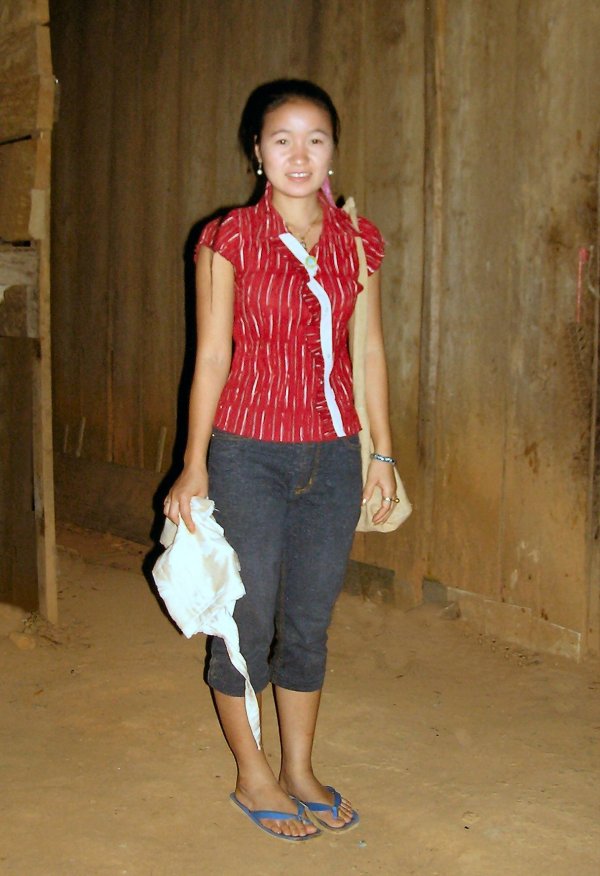
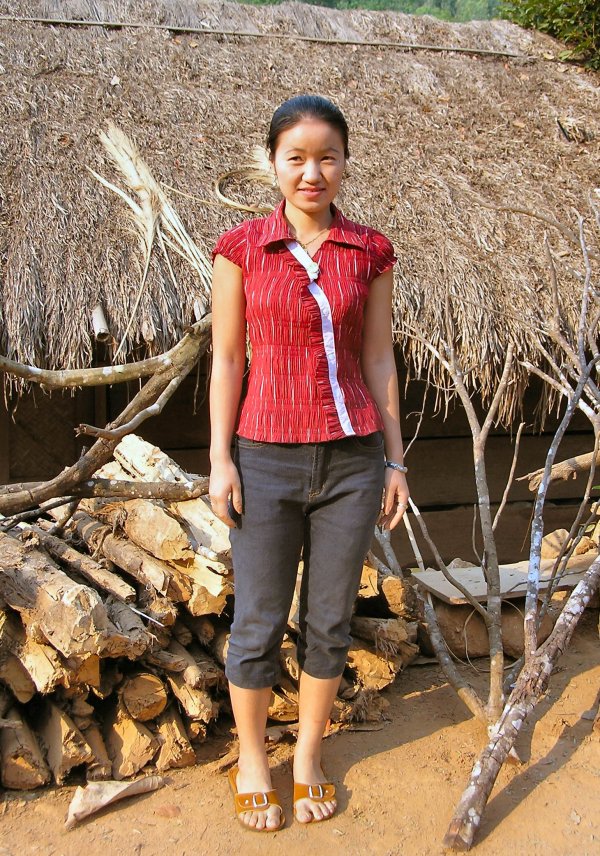
That
evening some of the village women introduced me to
Asuta outside the little general store, joking
with me that I should marry this shy hill tribe
girl. I'd been noticing her already, a slender,
demure young woman in her early twenties. And
while Asuta was too shy to acknowledge the older
women's half serious proposal, neither did she
chastise them for bringing it up. I guess she's
been noticing me, too.
|
After
that, she and I smiled at each other a lot and began to chat
once in a while. She doesn't speak much more English than I
speak Akha, but where there's a will there's always a way
and I have never found the lack of a common language an
insurmountable obstacle to communication.
|
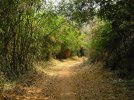
In
the morning I set off for a Yao tribe village way
back in the hills, the probable location of which
I surmised from a rough sketch map with no
details, and by asking a few Akha villagers before
I left. They waved an arm towards the west and
indicated it was an hour or two that-a-way. It
turned out to be a long, hard slog mostly uphill,
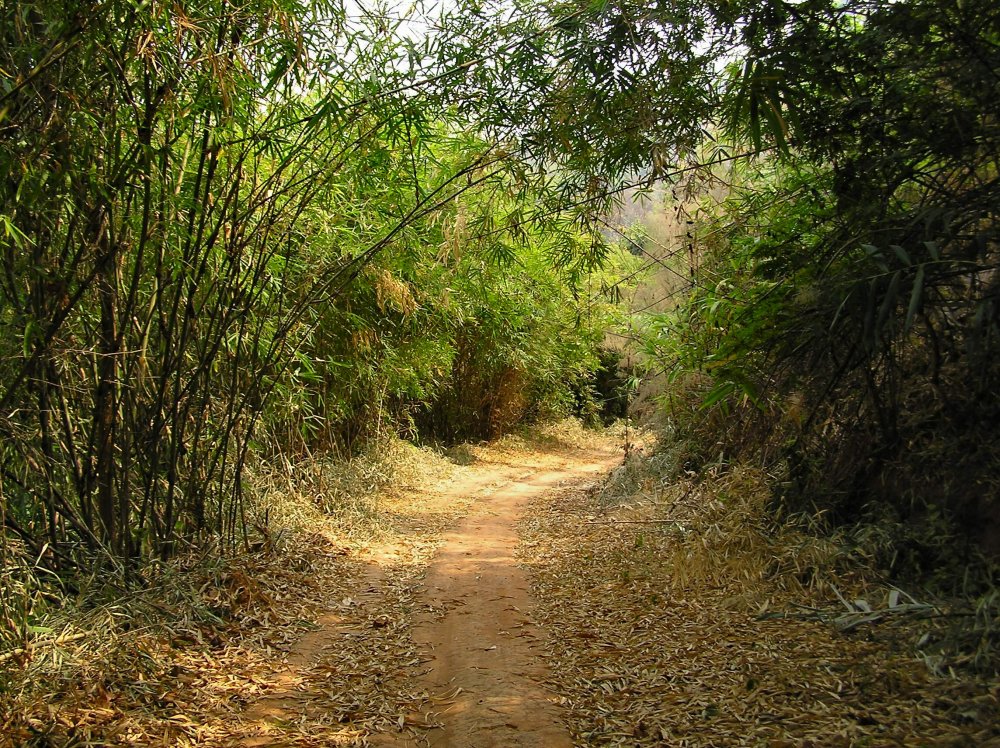
but I enjoyed the walk through the young
mountaintop forest.
.
|


|
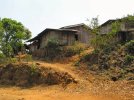
When
I arrived I found the Yao village to be a
colorless, uninteresting little hamlet with nary a
soul in sight. The only ones who took notice of me
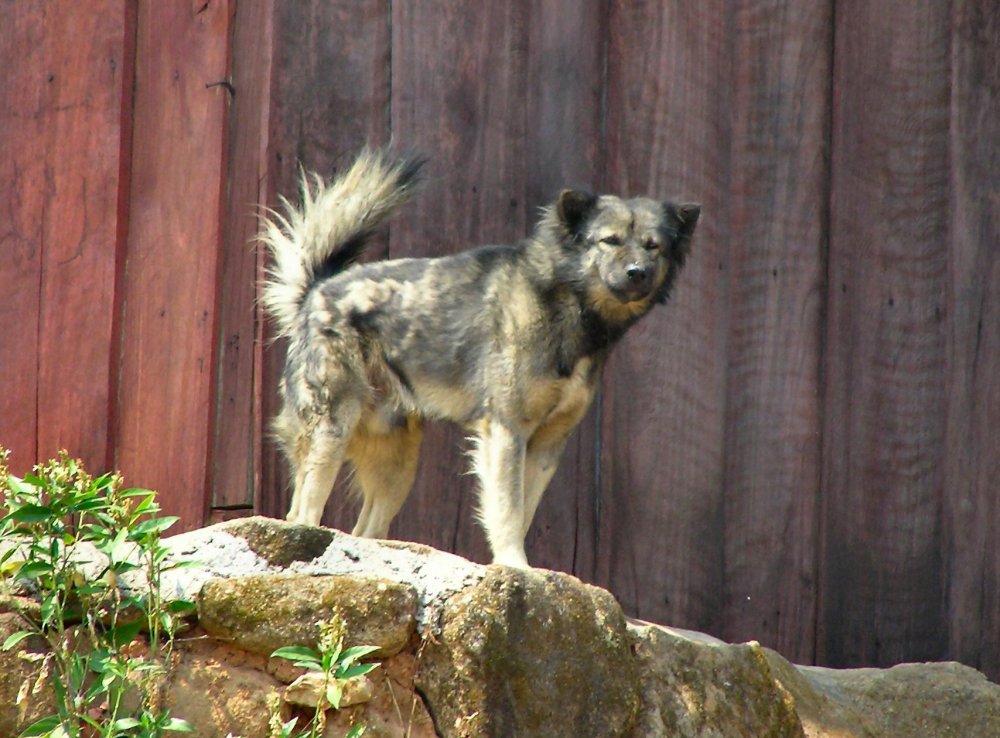
were the village dogs, several of which came
charging at me in a pack, barking and snarling
viciously. I've found that aggressive dogs usually
back off if I appear to be even more aggressive,
so I ran straight at them and roared out my best
king of the jungle imitation. Fortunately for me,
this stopped them. One mean old son of a bitch
tried to work around behind me where he might get
a piece of my ankle when I wasn't looking, but I
faced him down and soon the mongrels retreated to
a safe distance. Still, they kept barking.
Although I'd heard occasional human voices inside
some of the huts when I first entered the village,
no one came out to call off the dogs or
acknowledge my presence. May they eat the whole
mangy pack and get worms!
By
the time I got back to the #1 waterfall to cool
off I was one tired hiker. Late that night I was
suddenly awakened by a sharp, incredibly severe
pain in my thigh. A muscle had cramped up
rock-hard and persisted on and off for 20
excruciating minutes despite my desperate pounding
and massaging. Finally the spasms passed and I
fell into a deep, dreamless sleep.
|

|
Akhas
have a wonderful sense of humor. Once you've broken the ice
and are relating person to person, joking with them is easy
and lots of fun. The men are particularly fond of making
straight-face jokes, then waiting to see if you got it. They
clearly enjoyed the fact that I could respond in kind,
pulling off little jokes of my own. For example...
As
far as I know all hill tribe people eat dog meat. It's a
necessary part of the diet in most villages, where they're
just barely subsisting and must eat anything they can get
just to stay alive - dog, pig, snake, small fish, squirrels,
owls - anything. In this relatively affluent Akha
village they can usually afford chickens and pigs - some of
them raise their own - but they still eat dog simply because
they like it, and because it's cheap. I learned dog meat
sells for 40 Baht (about one US dollar) per kilo, whereas
pig meat, pork, costs 100 Baht per kilo.
Now,
the villagers prefer to keep their dog-eating habit to
themselves, knowing that most Thais and falangs think
eating a dog is primitive and repulsive. This struck me as a
perfect opportunity to rib them and so I started comparing
costs of things in the village to the price of dog, casually
at first and with a straight face. When Apae Noi offered to
sell me another of his knives, this one with a sharp point
"for sticking pigs," I complained that if I paid
him the 400 Baht he was asking for the knife I'd have to
kill two 5-kilo dogs just to break even. Then I stared at
him stone-faced, trying my damnedest not to smile. He did
the same. Finally, as if on signal, we both cracked up. When
the women called me over to buy something from them and I
saw one of the village dogs asleep off to the side, I asked,
"How much for the dog?" Thinking I meant to buy
the dog as a pet, the women said, "Five thousand Baht,"
and I looked shocked and said, "No, no, 40 Baht per
kilo, and I buy some rice, too," and we all laughed at
the exchange.
|
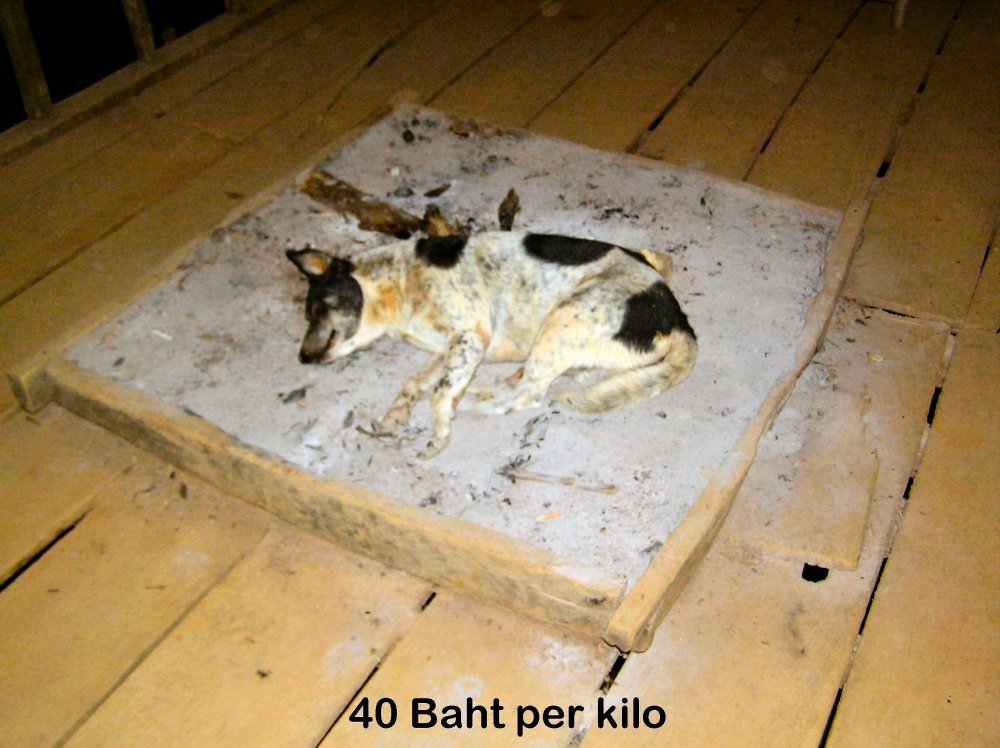
One
evening a big village dog fell asleep on the cold
ashes of the canteen fireplace, providing fuel for
a renewed round of joshing ("Hey, Ajou, got a
match?") In truth, however, the Akhas in this
village do not eat their own dogs, which are pets.
When they want dog meat they buy the animal from
another village.
|
 |
I tried
an Akha massage, which a few of the women were offering for
100 Baht, but it was poorly done compared to the
professional Thai massages available in the towns &
cities. Afterwards, some of the women half-joked with me
about marrying one of their daughters, offering me several
choices as the girls blushed and giggled, but the consensus
in the village is clearly that I should marry Asuta. She
remains bashful, neither agreeing with nor refuting the
idea. To keep things light I suggested I marry two or three
of the girls and have 5 babies with each. This was met with
more laughter and chattering in Akha, so that I could only
guess at the text of the banter.
Again
it was time for me to leave, and again I managed to postpone
the departure. Using Apae's cell phone, which works from the
village if he plugs it into a tall external antenna mounted
on the roof of his house, I called Chiang Rai and cancelled
my room reservation at Baan Bua Guesthouse. This meant that
I would not have a last day in that town as I has originally
planned, but would go directly to the bus station the next
day when I came down from the hills. My friend was waiting
for me in Chiang Mai and my flight to Bali was
non-refundable. I could stay one more day in the Akha
village, but no more.
My
last day there I was going to take it easy and just hang
around the village and #1 waterfall. Then I heard that the
men were cutting a fire break up on the ridge above the
village, so I set out to join them carrying my big Akha bush
knife, figuring to lend a hand and just sort of be with the
guys.
Brush
fires are an annual problem throughout Southeast Asia. This
time of year, as the dry season drags into its last month or
so, the land is parched and the forests catch fire easily.
The thick haze in the countryside that I assumed was
automobile-generated smog from the cities is, in fact,
mostly wood smoke from wildfires burning throughout northern
Thailand, Laos, Cambodia and Burma, mixed with a haze of
natural water vapor and yes, around the bigger towns, a
goodly dose of engine exhaust fumes, the whole held firmly
over the land by a prevailing high pressure system. Since
there are no fire brigades in these rural hill villages, the
tribesmen must protect themselves and their crops against
brush fires. The fire break that the Akha men were cutting
that day, a lane through the forest cleared of vegetation
and encircling the village on the surrounding high ridges,
is their first line of defense.

 |
On
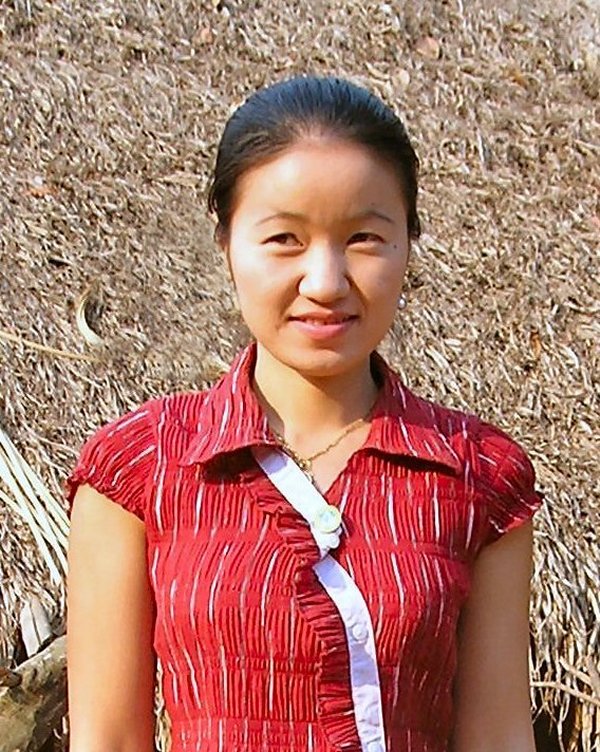
my way out of the village I spotted Asuta sewing
in what I took to be her house on the uphill side
of town. We chatted a while and I learned a little
more about her. She's 23 and, she said, the only
Catholic in the town. She referred to the others
in this village as "Christians." She
goes into Chiang Rai every weekend to attend a
Catholic church with her sister there. Asuta's
parents are both deceased; she seems to be on her
own and getting along well enough.
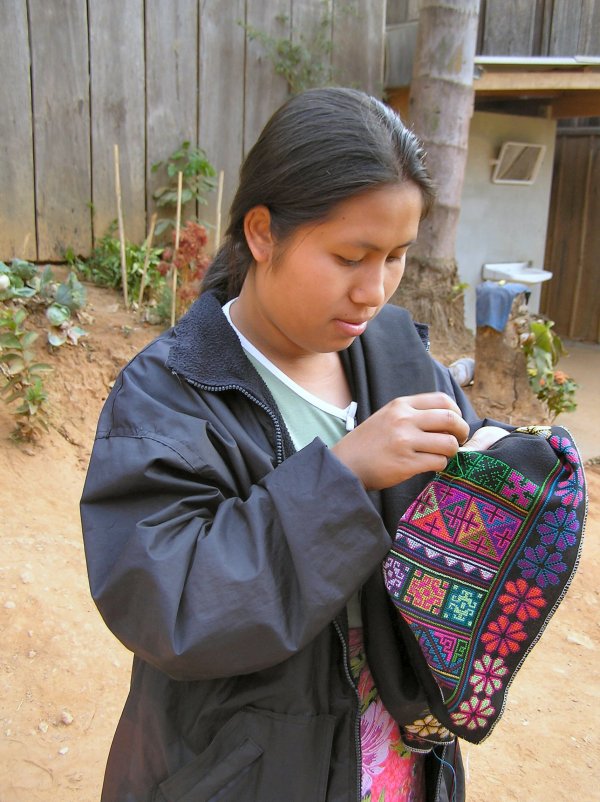
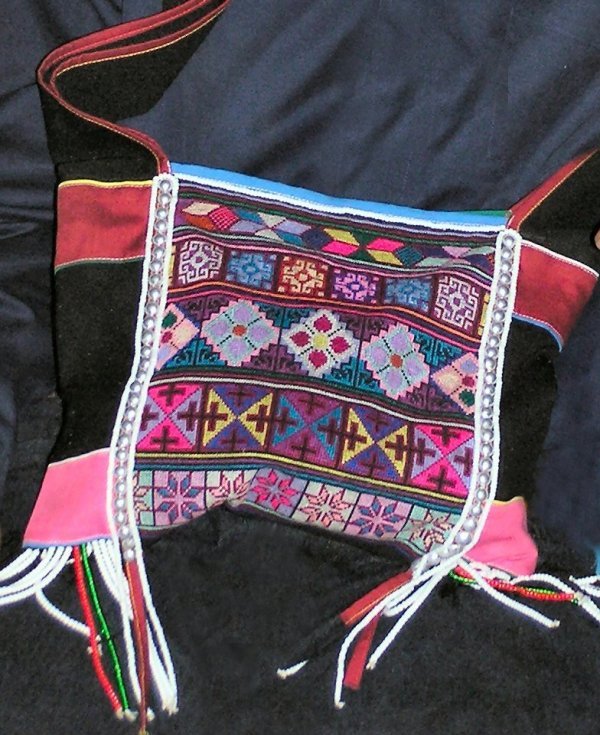
Like
many of the women here, Asuta sews beautifully.
Pictured to the left is a traditional Akha bag she
made for one of the villagers. The entire pattern
is hand-stitched.
.
|

 |
.

|
Again
I set off to find the men cutting the fire break,
but only got a short distance on my way when I met
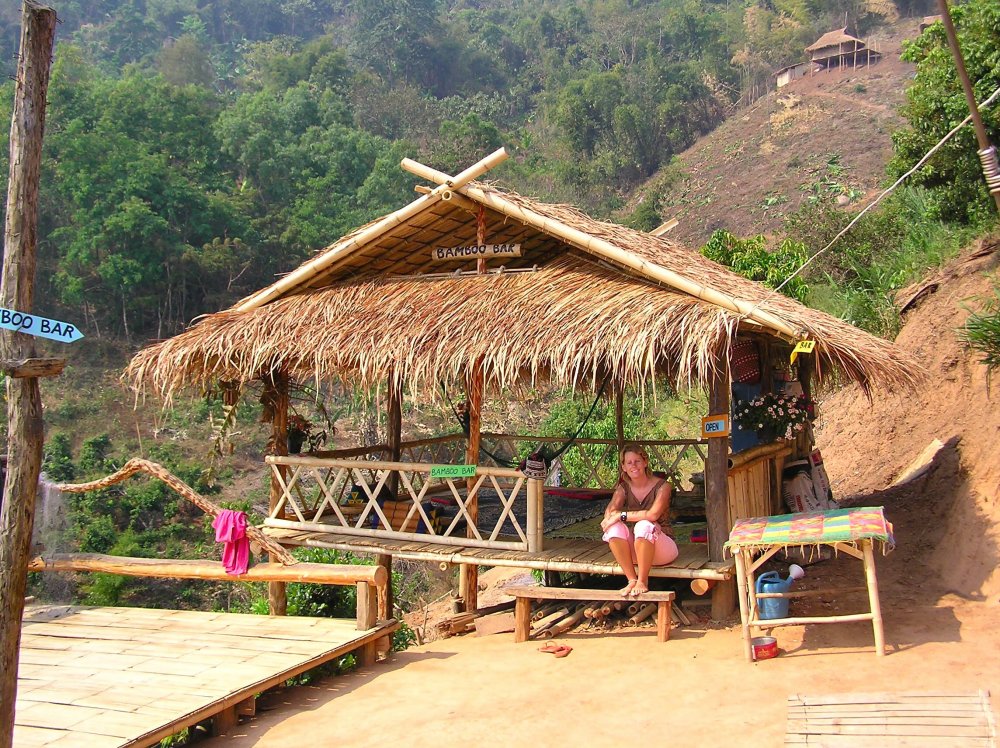
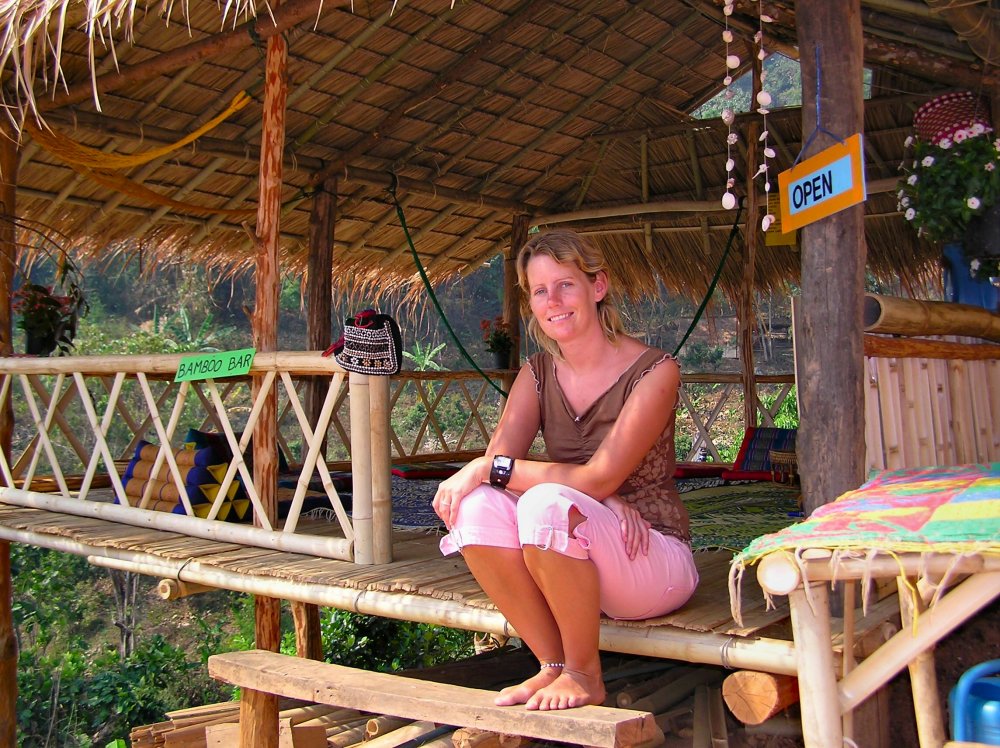
the blonde-haired Dutch woman I'd seen around the
village with her Akha boyfriend. We got to talking
and I learned that back home she was a
professional physical therapist. She found her way
to this village during a vacation, fell in love
with one of the men here, and stayed. Now she has
opened the Bamboo Bar up the hill, an idyllic
little watering hole that practically no one goes
to because the tourists tend to congregate at the
guesthouse canteen at the lower end of the
village.
She
also mentioned that there was going to be a dog
meat feast that night to reward the men who were
cutting the fire break. I'm sure I could have
gotten myself invited, but while I have no problem
with other people eating dog I don't feel inclined
to it myself. This is not due to any high moral
position or lack of curiosity, but because I've
been so attached to particular dogs at times in my
life. Unless I were starving I would no sooner eat
a dog than a dolphin. Or a person.
|
I
searched all over that day but never did find the trail to
the top of the ridge to join the fire break crew. Every time
I doubled back and asked someone the way I got another vague
direction accompanied by a wave of an arm indicating that
the trail was that-a-way. My search took me deep into the
rain forest and I spent many happy hours there just hiking
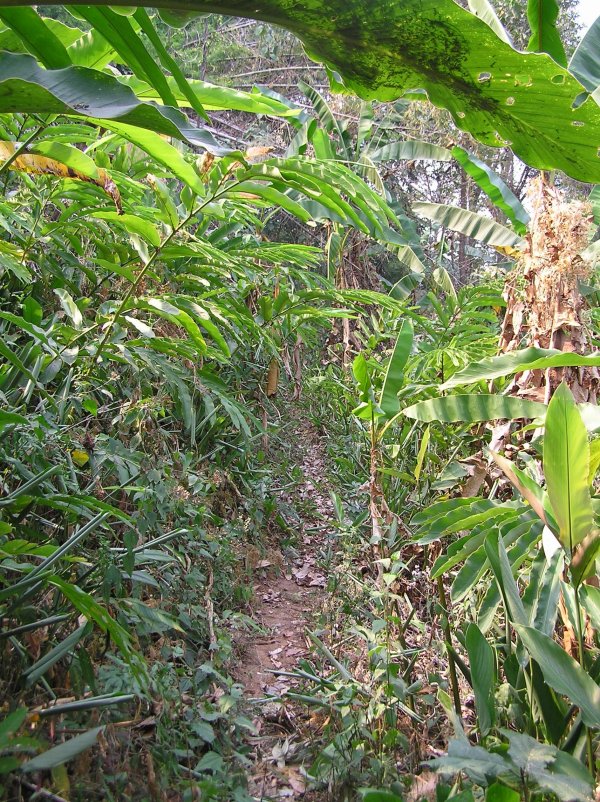
around. I must've discovered a dozen obscure footpaths and
little-used trails that I hadn't seen before.
Using
my trusty bush knife I cut a stout green bamboo walking
stick, strong and lightweight, to help me navigate the rough
terrain. I eventually wound up picnicking high above the #1
waterfall, having scaled an especially steep, almost
ladder-like staircase hacked into the hillside. Later I
found my way out onto the Yao village road. I was so happy
with my life and my situation at that moment that I found
myself singing Zip-a-dee-doo-dah
out loud and twirling my bamboo walking stick like a baton
as I marched merrily down the forest lane, butterflies
actually dancing before me just like in a Disney cartoon.
Had one of the villagers seen me then I'd have been in for
some hard ribbing at the canteen that evening.
Back
in my bungalow late that afternoon I heard what I thought
could only be gunfire - lots of it! - from the hill above
the village. I rushed out, fearing an attack by Thai army
troops or opium warlord bandits, recalling scary stories I'd
heard of how things were not so long ago in these parts.
What I saw instead was a small brush fire sweeping up the
hillside. As it heated the bamboo, the trapped air in the
stalk sections exploded with a loud bang. There was so
much of it, it sounded like a small revolution.
My
last evening was much like the others except I brought out
my laptop computer and gave the villagers a "slide
show" of the photos I'd been taking since I got there.
It's one thing common to all people everywhere. Everybody
loves to see themselves in a photograph, and the Akhas were
no exception. Afterwards I gave chief Apae a CD onto which
I'd burned all the photos and I made him promise to get
prints made in Chiang Rai to give to each of my
"models."
I
chatted with the falangs - a woman from Israel, a
French couple, a Brit, a Jap and two Danes. Akha John and I
discussed village life, Apae Noi sat with us listening to
our English. I flirted a little with Asuta, but not too
much. I was leaving.
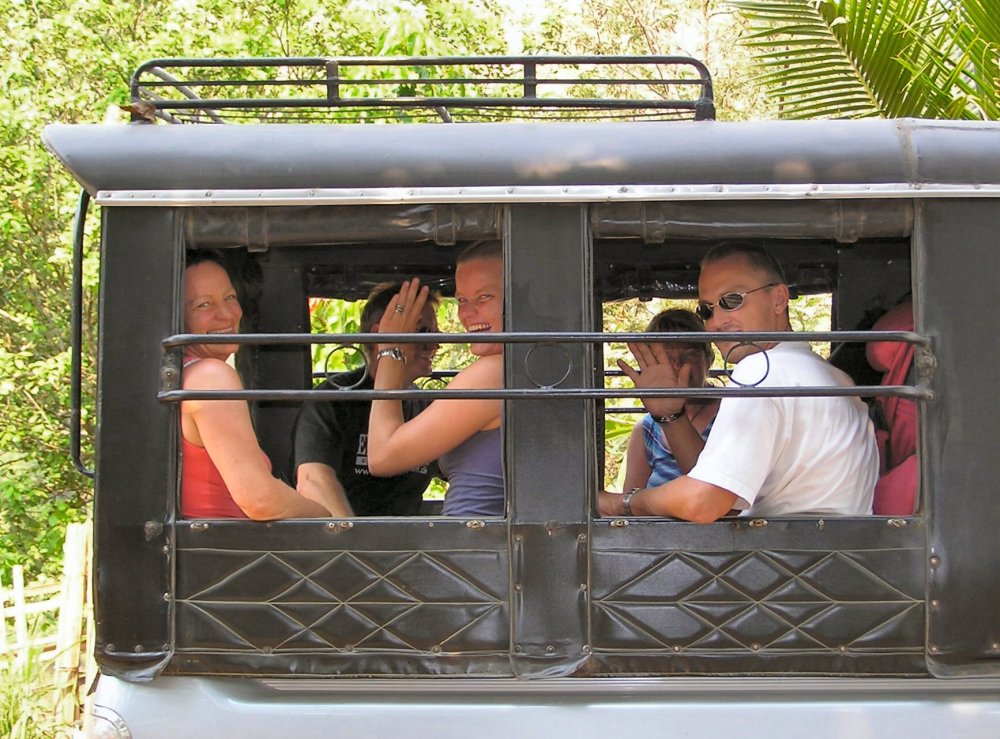
In
the morning I rode into Chiang Rai in the back of the
pick-up truck with a few other departing guests. Once there
Apae offered to give me a lift to the bus depot. When we
were alone together he talked to me seriously about marrying
Asuta. The village favored the match and he, as their chief,
also approved. It wasn't necessary to say that I, as a rich
American, would be a good catch for any hill tribe woman,
and good for the village as a whole were I to become a part
of it. This was not a business proposition. It was an honest
token of the villagers' good opinion of me and I was deeply
moved. Asuta, darling of her community, a favorite of the
chief and his wife, and a sweetheart by any standards, would
make any man a fine wife. Apae said he would build us a
house at the edge of the forest, where there's a view across
the valley to the steep-sided hills beyond. It was without a
doubt the nicest proposal I've ever had and, truth be known,
I gave it some thought and continue to do so.
|
With
gratitude and straightforwardness I explained to
Apae that even if I do make it back for a longer
stay in his village, which I very much hope to do,
I'm probably not a candidate for getting married
and raising a family there or anywhere else. I
said I didn't suppose Asuta was in the market for
just a boyfriend and he concurred. We both agreed
she deserves the real thing and, each in our own
way, I believe we both felt some genuine regret
that I wouldn't be the lucky man to get her.
|
 |
Next
stop: Bali!